THE Bangsamoro region faces electoral and security risks as it enters the final stretch toward its first parliamentary election on Monday, with reports of vote buying and political violence threatening the credibility of the historic polls, even as the Commission on Elections (Comelec) completed the final testing and sealing of vote-counting machines.
In its Sept. 11 bulletin, Climate Conflict Action Asia (CCAA), a peacebuilding group, warned that the risks could extend beyond Election Day, potentially affecting post-election stability and the broader Bangsamoro political settlement.
“Vote buying was observed in Cotabato City and some municipalities in Lanao del Sur,” CCAA said, with offers ranging from P1,000 to P5,000.
The organization said vote buying had been a feature of previous elections as candidates sought to secure their vote banks or expand their reach in communities where they had limited political influence.
Violence also persisted in the run-up to the polls.
A village chairman in Basilan was targeted in a shooting incident on Sept. 7, while a village councilor in Datu Odin Sinsuat, Maguindanao del Norte, was injured in a shooting the following day.
Separate clan feuds erupted in Pagayawan and Malabang, Lanao del Sur, on Sept. 8 and 9, respectively.
CCAA said most of the violence recorded by its Critical Events Monitoring System (CEMS) since the filing of candidacies began on May 5 remained concentrated in the Maguindanao provinces, Lanao del Sur and the Special Geographic Areas.
Comelec ready
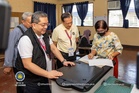
The Comelec completed the final testing and sealing of vote-counting machines (VCMs) in the Bangsamoro Autonomous Region in Muslim Mindanao (BARMM), with Chairman George Erwin Garcia saying the exercise was aimed at ensuring the machines are ready to accurately record and count votes on Monday.
All VCMs allocated for the Sept. 14 BARMM parliamentary elections underwent final testing and sealing on Saturday, Sept. 12, as part of measures to identify and address technical issues before Election Day, Garcia said.
Garcia said the testing process also helps ensure that no unauthorized programs or instructions are present in the machines that could affect the integrity of voting and vote counting.
“It would be more difficult if we were to test the machines for the first time on Election Day itself,” he said in Filipino.
The final testing and sealing process allows election officials to verify the operational readiness of the VCMs before they are secured for use on Election Day.
The Comelec said the machines will be sealed and kept in their designated polling places or rooms until they are opened on Sept. 14.
The completion of the testing is part of Comelec’s preparations to ensure that voting, counting and transmission operations proceed properly during the region’s first regular parliamentary elections.
The exercise also forms part of measures to strengthen public confidence in the accuracy and reliability of the election results and minimize the risk of technical disruptions during the polls.
Representatives of political parties, candidates, poll watchers, citizens’ arms and civil society organizations were expected to witness the testing and sealing procedures as part of Comelec’s transparency measures.
Beyond the VCM testing, election authorities have also been completing logistical and operational preparations, including the deployment of election personnel, distribution of election paraphernalia, and coordination with security forces assigned to polling centers.
The Sept. 14 elections will mark the first regular parliamentary polls in BARMM and a major step in the region’s transition from the Bangsamoro Transition Authority to a fully elected parliamentary government.
Special Assistant to the President Anton Lagdameo earlier said President Ferdinand Marcos Jr. viewed the elections as the fruition of decades of peacebuilding efforts in the Bangsamoro and a historic milestone for the region and the country.
In the province of Basilan, a vital pillar in the BARMM, a total of 248,245 registered voters are ready to cast their ballots, officials reported on Saturday.
As the region counts down its final hours before Monday's historic vote under the Bangsamoro Organic Law, election authorities, security forces and community stakeholders have locked down comprehensive operational and security frameworks to guarantee a peaceful, orderly and credible electoral exercise.
Sensing the gravity of the looming political transition, Lamitan City Mayor Roderick Furigay issued a strong call to action on Saturday, urging his constituents to actively safeguard the integrity of their votes.
Appealing to the people of Lamitan two days before the historic exercise, Furigay emphasized that the long-term success of the newly minted BARMM Parliament relies strictly on the foundational trust established at the local polling precincts.
"Public trust remains vital to a successful democratic exercise," Furigay said. "I appeal for absolute transparency, fairness and cooperation from every sector to guarantee a peaceful, orderly and credible vote throughout Basilan. Let us steer entirely clear of any actions that could generate public doubt, controversy, or unnecessary friction during this final stretch."
Furigay also highlighted the unique strategic importance of the city's representation, noting that Lamitan City has been established as a stand-alone, single parliamentary district.
He emphasized that this distinct configuration ensures a powerful and undivided voice for Lamiteños within the regional parliament, provided the democratic process is allowed to unfold cleanly.
He noted that this structure ensures a fair, powerful and unified voice for Lamiteños within the regional parliament, provided the democratic process is allowed to unfold cleanly.
Acting Basilan Provincial Election Supervisor Miguel Roberto dela Peña said the people in Basilan and across the BARMM are eager and ready to elect their members of parliament.
"Our priority is to ensure that the elections are peaceful, orderly and credible, and that every registered voter can exercise the right to vote safely and properly," dela Peña said.
Massive security deployment
The Comelec has identified more than 90 municipalities across the region as election hotspots, including 26 towns classified as “red areas.”
The red areas are those characterized by serious armed threats, a history of election-related violence, and/or intense political rivalry.
While most of the red areas are in Lanao del Sur, CCAA’s Early Response Network identified Maguindanao del Sur, Cotabato City and the Special Geographic Areas as key pressure sites.
The areas are also where the United Bangsamoro Justice Party (UBJP) and Bangsamoro Federalist Party (BFP) are engaged in a tight race and where Moro Islamic Liberation Front (MILF) base commands are present, the CCAA said.
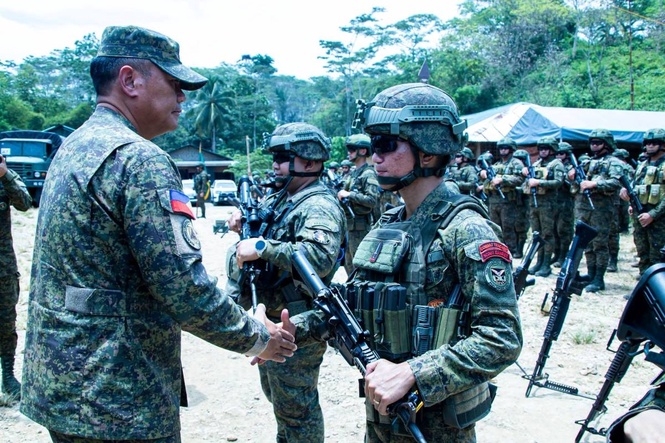
The government has deployed about 20,000 security personnel across the region, including more than 9,000 Philippine National Police (PNP) personnel and nearly 10,000 Armed Forces of the Philippines (AFP) troops.
CCAA described the deployment as the largest in the region’s recent election history.
The security augmentation includes elite military units and high-powered land, air and sea assets, reflecting the government’s effort to prevent violence and secure the polls.
However, CCAA warned that the deployment could also create risks, including possible human rights violations, excessive use of force, and retaliation by armed groups who may perceive security forces as obstructing their interests.
The presence of international observers and heightened national and international attention on the election has added pressure on the government and security forces, it said.
“Any serious incident or failure to ensure the peaceful and credible election could damage the credibility of the security forces, the national government, and the peace process itself,” CCAA said.
Peace process at stake
The first parliamentary election is a critical juncture in the Bangsamoro political settlement, but the competing narratives and strategies of the region’s ruling parties could test the future of the peace process, CCAA said.
The UBJP, led by the MILF Central Committee, has previously described a victory as a victory for the peace process.
The BFP, meanwhile, has positioned itself against what it considers excessive influence from Malacañang, which it says undermines the autonomy envisioned for the region.
“Whichever side prevails will have significant implications on the direction of the peace process beyond the election,” CCAA said.
Recent verbal exchanges between the government and the MILF have also raised security concerns.
These followed Commander Bravo’s declaration that the military and police would be barred from entering MILF communities in Lanao del Sur.
The AFP responded that any unilateral declaration placing MILF communities off-limits to security forces would violate its legal mandate.
CCAA said the issue was particularly problematic because the MILF was participating in the election while still armed.
Concerns have also surfaced over the future of the MILF-UBJP should it fail to win enough seats in parliament.
Katungod Bangsamoro, a nonpartisan civil-society observers’ group, said the historic polls must go beyond replacing political leaders, warning against intimidation, political dynasties, money politics and factional maneuvering that could influence the outcome.
“Secure the ballot, but do not intimidate the voter. The ballot must reflect the free will of the peoples in the Bangsamoro — not the power of political dynasties, warlordism, patronage, money, intimidation or factional maneuvering,” the group added.
Katungod Bangsamoro said it will deploy observers before, during and after Election Day to monitor the electoral environment, voting, counting and canvassing, as well as incidents that could undermine voters’ political rights.
“The first parliamentary election should not simply reproduce the old politics under a new institutional name. The promise of the Bangsamoro transition is precisely to create a political order in which people have a genuine voice in determining their future,” Katungod Bangsamoro said.
Post-election risks
CCAA warned that the security risks would not necessarily end once the polls close.
While the heavy security presence could help ensure that Monday’s elections proceed peacefully, violence could escalate afterward as candidates and supporters contest the results and political rivalries intensify.
The risk could become more pronounced once security forces pull out of the region, it said.
The organization said the Bangsamoro political settlement does not rest solely on which party holds power but on the institutional and legal framework established by the Comprehensive Agreement on the Bangsamoro (CAB) and the Bangsamoro Organic Law (BOL).
The first parliamentary election could provide the Bangsamoro government with credible evidence of its political legitimacy and lay the foundation for democratic institutions that advance the aspirations of its people, CCAA said.
Ultimately, it said, the peace process belongs to the Bangsamoro people, who will decide whom they trust to implement and carry it forward.
With the final testing and sealing completed, attention now shifts to the conduct of voting, counting and transmission of results on Election Day.