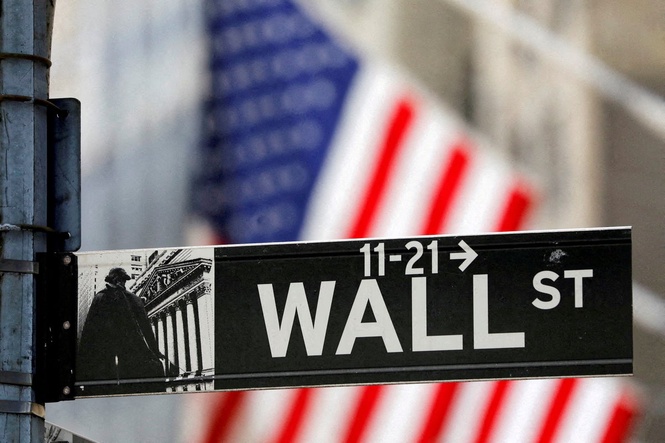
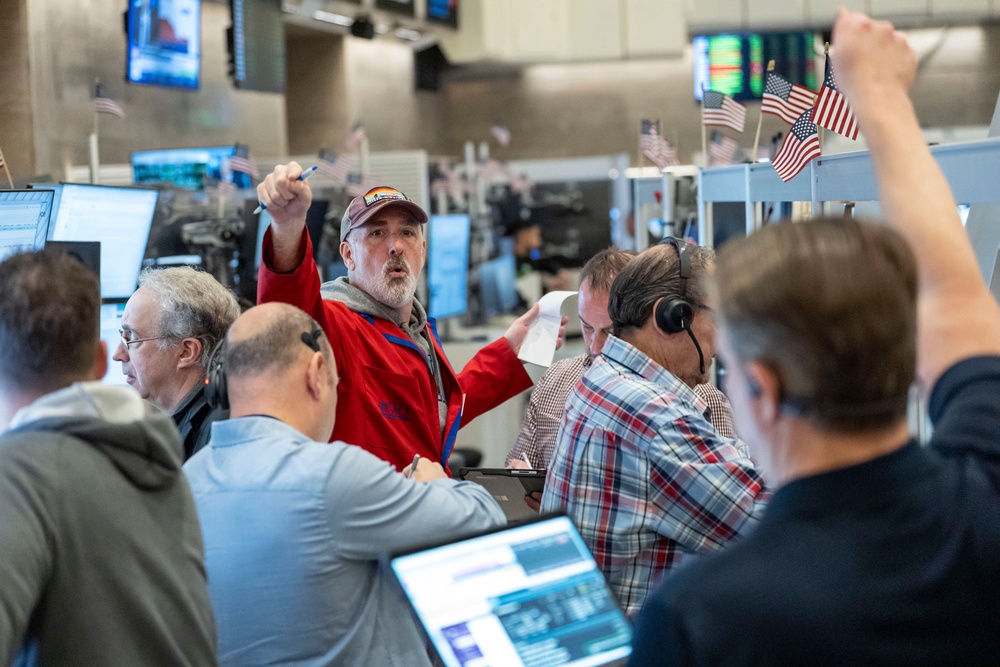
Wall Street rallied on Monday, recovering more of its steep losses from last week as oil prices fell lower.
The market advance occurred despite a drop in Nvidia, one of Wall Street's most influential stocks.
The S&P climbed 2.3% and was on track for a second straight gain following a sell-off driven by concerns that Democratic victories in U.S. midterm elections could slow the construction of AI data centers. Despite recent swings, the benchmark measure sits just 3.8% below the record high set last month.
The Dow Jones Industrial Average rose 1,043 points, or 2%, by 12:42 p.m. Eastern time, while the Nasdaq composite gained 2.6%.
Broader markets were boosted by a 4.8% drop in Brent crude to $93.59 a barrel. Prices have fallen from above $112 earlier this month amid uncertainty over the war with Iran.
The drop followed comments from President Donald Trump to CNN over the weekend stating that a resumption of strikes is "highly unlikely" if progress is made in negotiations, though U.S. Secretary of State Marco Rubio said Sunday that Iranian demands to end the war had been "outrageous and ridiculous."
Companies facing high fuel bills helped lead the rise on expectations of lower costs. United Airlines climbed 5.9%, while cruise operator Carnival rose 3.4%.
Market sentiment was also aided by several strong earnings reports from major U.S. companies.
Constellation Energy jumped 9.5% after reporting summer profit and revenue that beat analysts’ expectations, supported by recent deals to supply power to Big Tech data centers.
Those data centers face increased scrutiny following Democratic victories in statehouses nationwide, with voters blaming the facilities for rising electricity bills. The concern is that new government restrictions could reduce purchases of AI chips, power, and related infrastructure.
That added to existing worries that rising borrowing costs could slow data center construction. Critics had previously warned that AI stock valuations were overinflated.
Other stocks tied to the AI supply chain also posted gains on Monday. Advanced Micro Devices rose 11.7%, recovering from an 11% loss last week, while CoreWeave rose 5.6% following a 15.4% drop.
The gains came despite a 4.7% fall in Nvidia, the centerpiece of the AI boom. The chip manufacturer said it is investigating its CEO, Jensen Huang, after he disclosed an intimate relationship with an executive who, according to The New York Times, was determined by U.S. intelligence to be gathering information for China.
Nvidia’s board stated it has "no reason to believe" national security or company secrets were compromised, but said the inquiry will review all available information.
Guo Jiakun, spokesperson for China’s Ministry of Foreign Affairs, dismissed the allegations as "nothing but smears against China."
Markets abroad were mixed in China following modest moves. Shares gained 0.3% in Shanghai and fell 0.1% in Hong Kong. Japan's Nikkei 225 surged 2.3%, while France’s CAC 40 rose 1.2%.
In the bond market, Treasury yields remained steady after large swings last week. The 10-year Treasury yield rose slightly to 4.88% from 4.86% late Friday.
It remains below a peak of over 5.30% reached last month, its highest level in two decades, driven by concerns over inflation and federal debt. The recent pullback in yields has helped ease borrowing rates for mortgages and loans, providing a boost to equity markets.
Read MoreAI saw its worst day on Wall Street after midterms blue wave. Here’s what to know
Wall Street takes a beating with markets and tech stocks tumbling amid AI concerns
Even McDonald's is hit by the brutal economic crunch bleeding US wallets
Popular athletic brand moves to change pricing at outlet stores
These are the five states where Airbnb hosts earn the most
Hoping for a rapid drop in gas prices after the midterms? It’s unlikely