
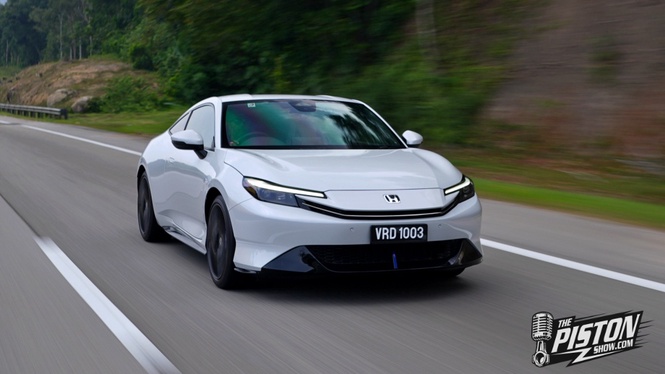
The Honda Prelude gives up some driver involvement, but makes far fewer compromises everywhere else
I have said before that if you are buying an automatic Toyota GR86, you probably do not care enough about the purity of its naturally aspirated, rear-wheel-drive recipe to begin with. That sounds harsh, maybe it is, but after driving the new Honda Prelude, I am even more convinced.
The Prelude is trying to do something else entirely, and perhaps that is where some of the criticism surrounding this car has gone wrong.
I joked to friends that people seem angry at it because they are judging it as though Honda was trying to build a Porsche or McLaren, when the philosophy here is closer to a mini Bentley.
Obviously those are completely different classes of car, but the point stands. The Prelude is more interested in making the journey enjoyable than setting a lap time. Honda does not even call the default drive setting Normal, it calls it GT.
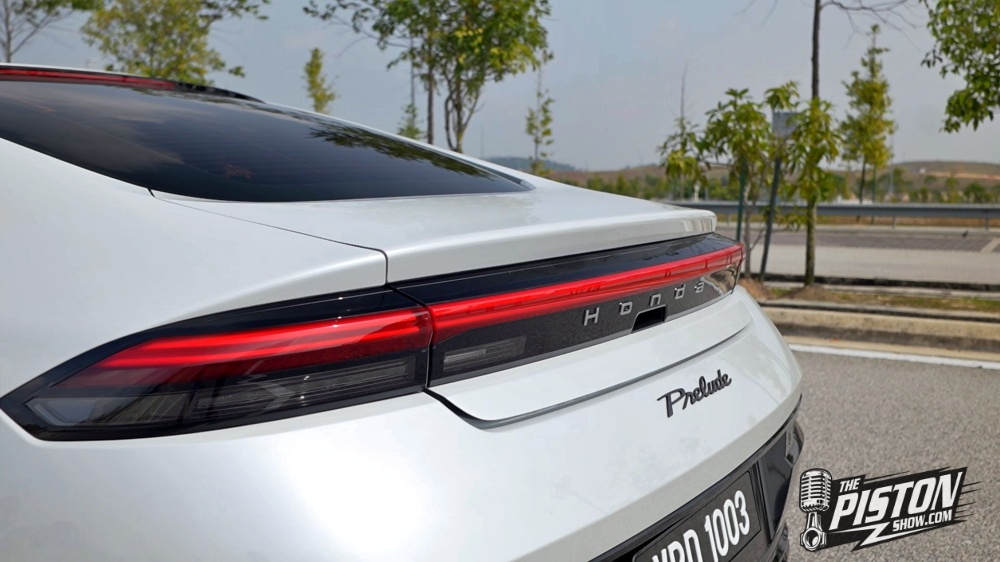
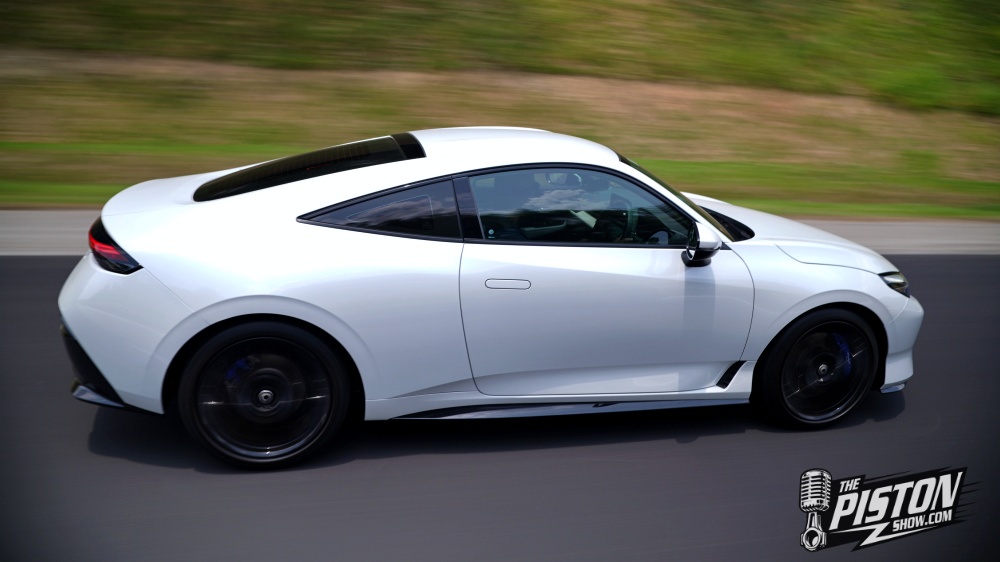
And it certainly looks the part. The Prelude is sleek with its teardrop silhouette, sitting low without desperately trying to look aggressive.

There is enough separation from the Civic visually that it feels like a proper standalone model rather than a two-door derivative, although frameless doors would have added another sense of occasion and separated it further from its Civic roots.
Several people told me the rear reminded them of a Porsche Taycan, and while some of the attention it gets is undoubtedly novelty, it remains a handsome and distinctive thing.
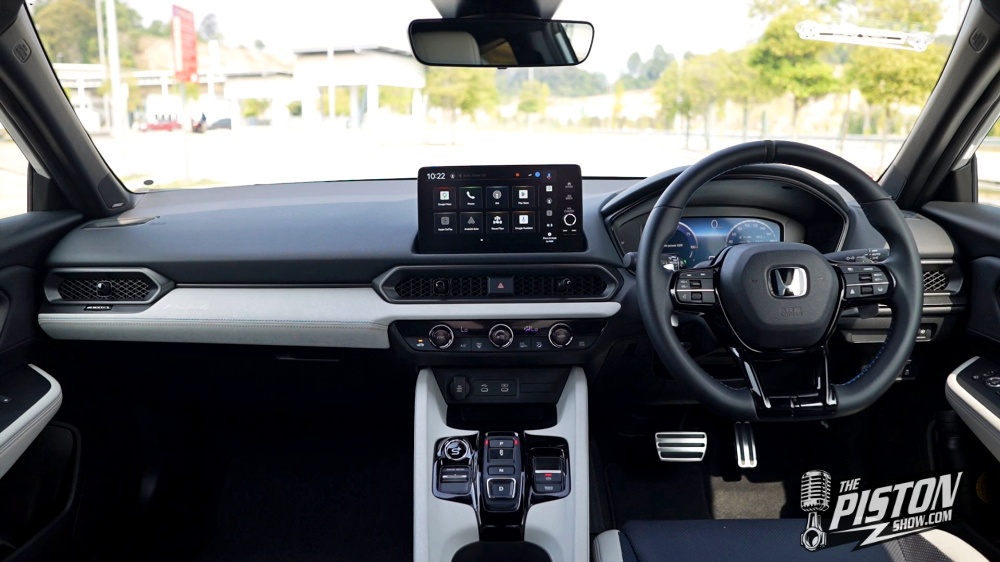
The cabin is less adventurous. Anyone familiar with the current Civic will recognise plenty of switchgear and the general Honda layout, so it does not necessarily feel like you have stepped into a RM278,000 car.
The driving position is excellent, but the Civic already gets this right. You sit low enough, the steering wheel comes towards you generously, and the relationship between the seat, pedals and wheel feels natural.
The bigger improvement over the Civic is the seat itself. The regular Civic can eventually give me a bit of numb bum on longer journeys, whereas the Prelude’s seat remains comfortable and properly sculpted.
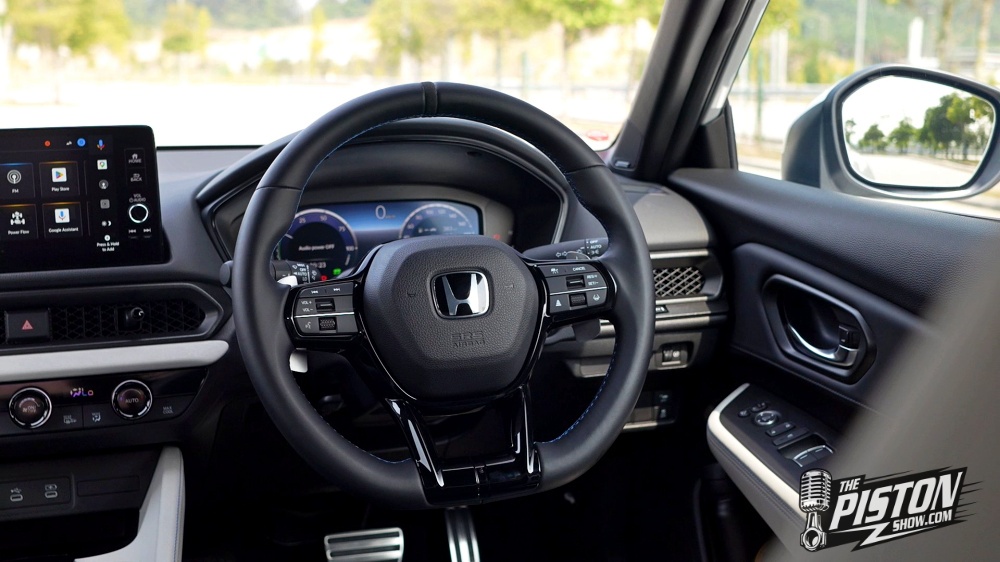
I like Honda’s idea of giving the driver more support and the passenger a more comfort-oriented seat, although I would still like a little more shoulder support on the driver’s side.
The Bose sound system is another welcome upgrade and frankly feels like the system the regular Civic should have received in the first place.
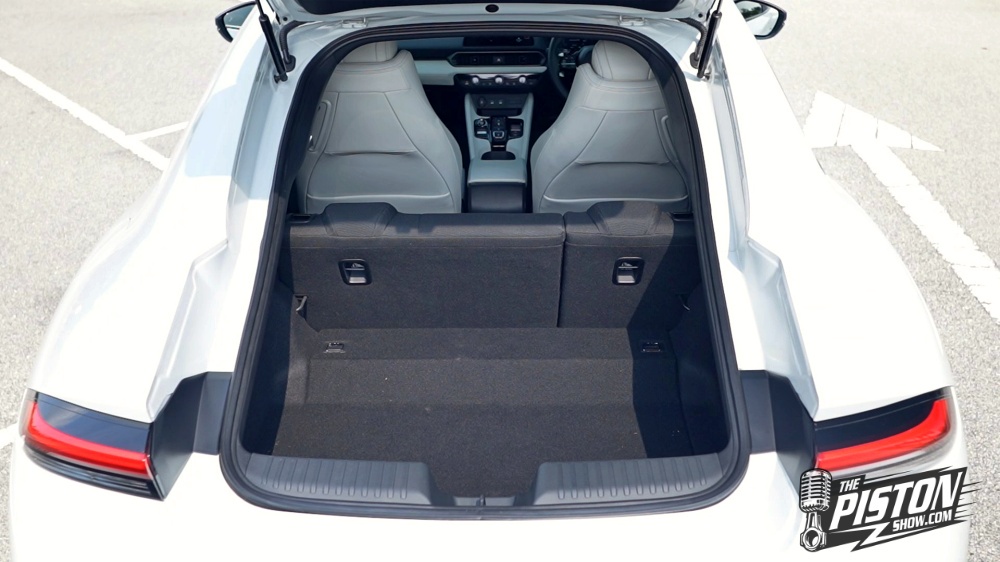
Practicality is decent too. Outright boot space is not dramatically greater than the GR86’s, but the large hatchback opening makes it much easier to use.
The rear seats are marginally more accommodating than the Toyota’s, though headroom is severely limited, so they are still best treated as occasional seats.
On the move, the Prelude uses the 2.0-litre e:HEV system, so the basic day-to-day experience remains very Civic-like. The powertrain behaves in much the same way, the controls have familiar Honda fluidity, and around town or on the highway, it feels rather familiar.

The differences become clearer to keener drivers. Its shorter wheelbase gives the Prelude slightly more natural agility, while the ride is probably the most obvious improvement.
The regular Civic already rides well but can feel slightly wafty over longer highway undulations. The Prelude retains that pliancy while controlling its movements more tightly. It compresses, settles and moves on without floating around afterwards.
The steering complements the suspension beautifully. Its weighting feels organic, the rate of response is natural, and the way the body follows your hands gives the Prelude a pleasant sense of fluidity.
It is not far removed from a Civic, but the slightly quicker reactions and tighter body control become apparent when the road starts winding.
This is also where the philosophical difference between the Prelude and GR86 becomes obvious. The harder you drive the Toyota, the more it explains why it exists.
Its balance becomes clearer, the rear axle becomes part of the conversation, and throttle, steering and weight transfer can be used together in a way the Prelude cannot replicate.7
The Honda still flows beautifully down a back road, with plenty of grip and excellent body control, but I never felt particularly encouraged to keep digging deeper.
The Prelude is competent and fluid rather than playful. The GR86 becomes more rewarding as commitment rises, whereas the Prelude is lovely long before you get there. Considering most public-road driving happens well below the limits of adhesion, there is a lot to be said for that.
The powertrain follows the same philosophy. With 203 PS, the Prelude is not especially fast by modern standards, but it is brisk enough. What stands out is its smoothness and linearity.
The electric motor gives immediate shove, the petrol engine blends in naturally, and acceleration builds without much drama.
A GR86 still feels quicker if you are already in the right gear, and its naturally aspirated engine provides a clearer relationship between throttle, engine speed and what happens at the driven wheels.
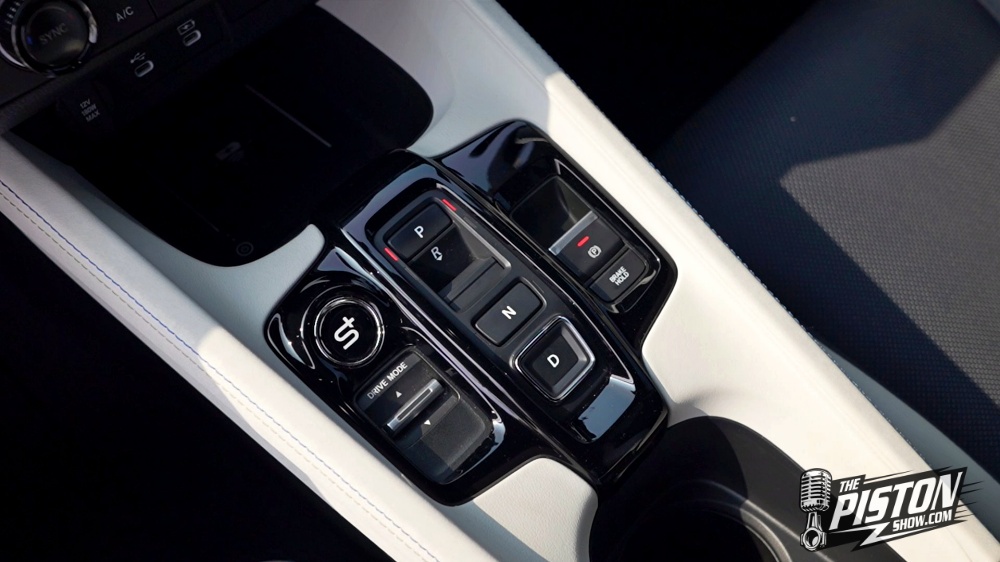
Honda tries to add some interaction through S+ Shift, which simulates an eight-speed transmission using the paddles, engine revs, sound and interrupted torque delivery. Yes, it is fake, but I still like having it.
Honda has done an excellent job recreating the rhythm of a conventional gearbox, enough that I found myself using it regularly on a back road.
The amusing part is that S+ Shift can actually make the Prelude slower because the system deliberately interrupts its otherwise smooth propulsion to simulate gear changes.
Eventually, you do realise the limit of the illusion because your right foot is not genuinely connected to what the powertrain is pretending to do.
It adds involvement rather than true mechanical connection, but for the sort of GT coupe the Prelude wants to be, that is fine.
The brakes are another highlight. Brake blending remains something many electrified cars get wrong, but the Prelude is among the best calibrated examples I have driven. The pedal is predictable, smooth stops are easy, and the brakes remain consistent corner after corner.
In Sport mode especially, the calibration felt spot on and gave me confidence to depend on the pedal repeatedly.
Taken as a whole, the Prelude is a masterclass in calibration and cohesiveness. Nothing overwhelms you with a headline number, but the steering, damping, throttle response, brakes and powertrain feel like they were developed to work together.
It is a high-resolution driving experience where the small details and transitions between controls matter as much as outright performance, if not more.
As an everyday car, the Prelude is easy to live with. It is considerably quieter than the GR86, although Honda has still not defeated its ancient enemy called road noise.
Tyre noise remains present and it is only a little quieter than a regular Civic, but it never grated on me the way the GR86 can over coarse surfaces.
Honda Sensing is similarly well sorted, with smooth adaptive cruise control and assistance systems that generally stay in the background rather than constantly panicking about something.
Fuel consumption adds another layer to the daily appeal. The Prelude averaged around 7.0 litres/100km indicated during my time with it. Drive roughly the same route with the same driver in a GR86 and you are looking closer to 12 litres/100km.
And that brings me back to the automatic GR86. If you want a GR86 because you appreciate its simple naturally aspirated, rear-wheel-drive recipe and a chassis designed to involve the driver, buy the manual.

For a Sunday morning, I would take the manual GR86 without hesitation. It has the better chassis, greater adjustability and mechanical connection that the Prelude cannot reproduce.
But once the manual gearbox is taken off the table, the equation changes. Maybe you sit in traffic, simply do not want to shift gears yourself, or your other half has made it clear that three pedals are not happening.
At that point, why accept the GR86’s harsher ride, louder cabin, worse fuel consumption, less practical boot opening, and an even more basic interior when you have already removed one of the biggest pieces of interaction from the experience?
The Prelude embraces that compromise instead. It is pleasant to steer at ordinary speeds, rides beautifully, uses far less fuel and remains more than practical enough to live with every day. It also helps that the officially sold Prelude at RM 278,000 is cheaper than a brand-new automatic GR86.
There is, of course, a recon-market elephant in the room. Toyota GR86s can now be found around the RM 150,000 mark, which makes a RM 278,000 Prelude look absurdly expensive.
But once the used and recon market enters the discussion, the comparison becomes way more complicated. The Prelude is brand new, officially sold by Honda Malaysia and comes with local warranty and aftersales support.
A buyer with an RM 150,000 budget wouldn’t even look at the Prelude, so it is simply a different conversation. The more uncomfortable comparison for Honda is sitting inside its own showroom.
The Civic e:HEV already has the same fundamental hybrid architecture, similarly effortless performance and plenty of the Prelude’s easy-going road manners.
The Prelude adds sharper chassis tuning, adaptive dampers, excellent brakes, better seats, Bose audio, S+ Shift and, of course, that coupe body.
I like pretty much every addition Honda has made, but whether they add up to another hundred grand is much harder to answer.
For me, probably not. But cars like the Prelude are not always bought by adding up suspension components and equipment. Some people will buy it because they love the way it looks, while others have been waiting decades for the Prelude name to return.
Honda Malaysia’s first owners include people who had wanted one since the 1990s, and for someone finally buying the car they once could not afford, they probably stopped listening to me several paragraphs ago.
2026 Honda Prelude Specs
Engine: 2.0-litre naturally aspirated inline-four e:HEV
Power: 203PS combined system output
Torque: 315Nm electric motor
Transmission: Electric drive with fixed reduction gear and engine lock-up clutch, with S+ Shift
Drivetrain: Front-wheel drive
0-100 km/h: 8.2 seconds
Claimed fuel consumption: 4.2L/100km
Price: RM278,000 OTR without insurance