
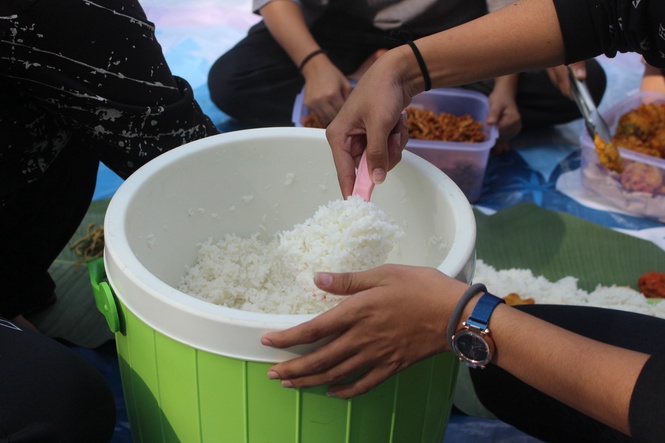
The rising cost of imported rice and global grain shortages have become pressing concerns, casting a shadow over parts of the world. However, amidst these challenges, there appears to be a deeply ingrained habit of food wastage among Malaysians.
C. Krishnan, the Vice-President of the Malaysian Indian Restaurant Owners Association, expressed his concern, saying, "Malaysians are so 'generous' in wasting food." He pointed out that there is often leftover rice on plates, whether in large or small portions. Even his restaurant staff consistently find uneaten rice when clearing tables.
In response to this issue, Krishnan explained that restaurants have made concerted efforts to reduce rice wastage and mitigate the impact of rising prices. He even mentioned the possibility of introducing dining options with smaller portion sizes to cater to those with lighter appetites, enabling them to enjoy a meal at a lower or similar price point, while larger servings would be available for those who desire them.
Krishnan also stressed the importance of government initiatives to educate the public about consuming appropriate portions and avoiding food wastage, especially in light of the increasing prices of imported rice. He noted that rice, once a budget-friendly staple, now costs between RM2 and RM3 per serving, a significant increase from its previous range of 50 sen to RM1.
To address this issue, Krishnan suggested that restaurants adjust their rice preparation to avoid wastage. Cooking the entire quantity in the morning is unnecessary, as storing it for the next day is wasteful. By preparing rice in smaller batches as needed, they can minimize excess and save resources.
Che Mamat Chemod, an adviser to the Sahabat Tomyam Prihatin Semalaysia Association, acknowledged that Malaysians do waste food, but he pointed out the dilemma faced by restaurant owners. While they hope customers order more to boost their revenue, seeing uneaten meals on tables is disheartening, especially considering the rising costs of ingredients.
Che Mamat stressed that restaurant owners typically prepare food based on customer orders to prevent wastage. They continue to cook the same quantity of rice daily, repurposing any excess for fried rice or staff meals to minimize waste.
In Chinese restaurants, Justin Hor Chee Keong, Deputy President of the Malaysia Selangor and Federal Territory Ku Su Shin Chung Hung Restaurants Association, observed a shift in customer behavior. Many individuals have been reducing their food intake, including white rice consumption, often skipping it altogether for health reasons. White rice is typically served in small bowls and costs between RM2.50 and RM3, with the option to order more if needed.
Wong Teu Hoon, President of the Pan Malaysia Koo Soo Restaurants and Chefs Association, emphasized the traditional value of not wasting food, citing a Chinese saying: "Who knows the toil involved in every grain of rice in the bowl?" To combat wastage, some restaurant owners now serve rice based on the number of customers, adding more only if necessary. They also limit rice preparation to avoid excess, as it takes approximately 20 minutes to cook rice.
It is worth noting that the issue of food wastage is a broader concern in Malaysia, as revealed by Deputy Local Government Development Minister Akmal Nasrullah Mohd Nasir. During Ramadan last year, 44.5% of the 252,521 tonnes of solid waste collected by the Public Cleansing Management Corporation was food waste.
In conclusion, as the price of imported rice continues to rise and global grain shortages loom, Malaysians must confront their deeply rooted habit of wasting food. Restaurant owners are making efforts to address this issue by adapting portion sizes and cooking practices, but government-led initiatives and public awareness campaigns are also needed to foster a culture of responsible consumption and minimize food wastage.
Kamarul Azwan is a content creator under the Newswav Creator programme, where you get to express yourself, be a citizen journalist, and at the same time monetize your content & reach millions of users on Newswav. Log in to creator.newswav.com and become a Newswav Creator now!
The User Content (as defined on Newswav Terms of Use) above including the views expressed and media (pictures, videos, citations etc) were submitted & posted by the author. Newswav is solely an aggregation platform that hosts the User Content. If you have any questions about the content, copyright or other issues of the work, please contact Newswav.
