

Forty years ago, the world came together for a song. It wasn’t just any song. It was a promise. A belief that humanity, despite all its differences, could unite when people were suffering.
In 1984, Africa was experiencing one of the worst famines in modern history. Entire regions were devastated by drought and starvation. Millions of people were dying slowly, painfully. Families were forced to eat things no human should ever eat like soil, tree bark, even leaves just to stay alive. Some stories were so horrifying that newspapers barely dared to print them. Yet for people living far away, in comfortable homes in America, Europe, and Asia, this catastrophe was mostly distant. It appeared as cold words in newspapers or a few seconds of footage on television before the next program began. The suffering felt far away.
But Michael Jackson and Lionel Richie believed music could do something powerful. Instead of simply watching tragedy unfold on the news, they decided to act. In just three days, they wrote a song that would soon echo across the entire planet: We Are the World.
The idea was simple but bold, gather the biggest voices in music and sing together for humanity. After the American Music Awards, 45 artists quietly gathered inside A&M Studios in Los Angeles. Some were global superstars who rarely shared the same stage. But that night, none of it mattered. Race didn’t matter. Gender didn’t matter. Fame didn’t matter. For a few hours, they left their egos outside the recording room and stood together behind a microphone. One by one, their voices joined the chorus:“We are the world, we are the children…”
When the song was released in 1985, something extraordinary happened. More than 8,000 radio stations played it simultaneously. The record sold over 20 million copies worldwide. The project raised over 70 million US dollars to help combat famine in Ethiopia and other parts of Africa (Source: Country Music Hall of Fame and Museum's Video Caption). For a moment, it felt like humanity had remembered something important that compassion could cross borders, languages, and politics.
Music had united the world.
But today’s world? It looks very different.
Right now, war rages across the Middle East as Iran and Israel, backed by the United States; clash in a conflict that threatens to reshape global stability. Missile strikes, air raids, and military operations have killed thousands and displaced countless more. Cities once full of daily life are now dotted with rubble and sirens. Civilians like children, students, families are trapped in the crossfire.
Recently, the image that shocked many people was not a music video, but a burial ground. In an open field, there were 160 neat square pits in the ground. Graves.
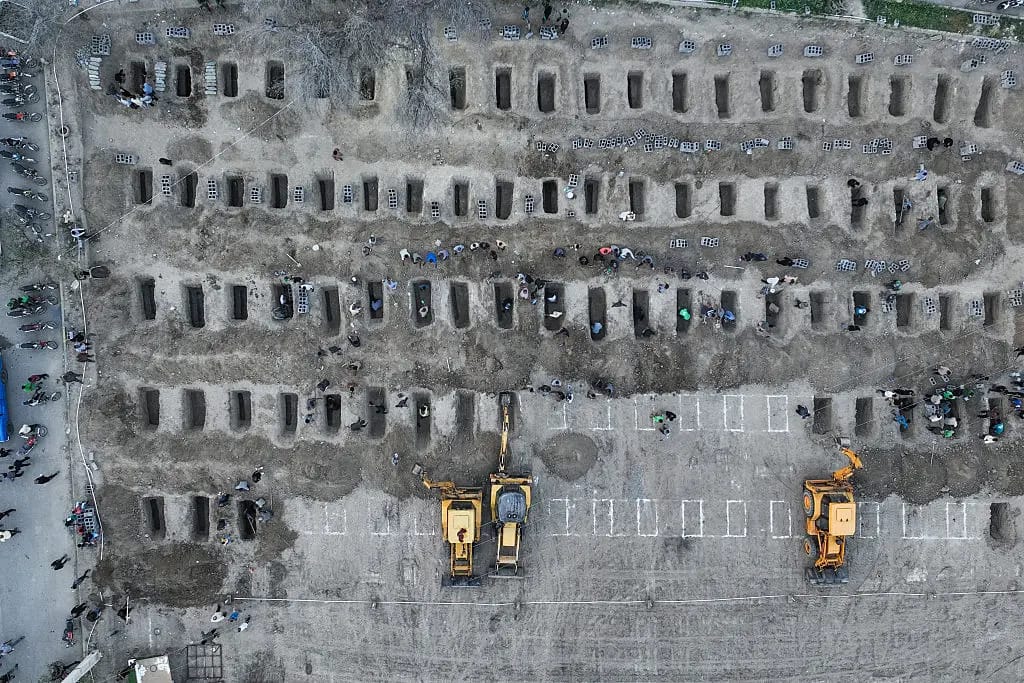
Each one belonged to a girl who should have been sitting in a classroom, laughing with friends, worrying about homework and exams instead of war. Instead, their school became rubble during an attack linked to the ongoing conflict involving Israel and its allies. Their textbooks were found covered in blood. Their bodies were torn apart. Their futures erased. The contrast is unbearable.
Forty years ago, the world sang “We are the children.” Today, the children are the ones buried.
At one point, Melania Trump said: “The US stands with all of the children throughout the world.” (Source: The Straits Times) It is a beautiful sentence. But when bombs fall near schools and playgrounds, those words feel painfully hollow."]
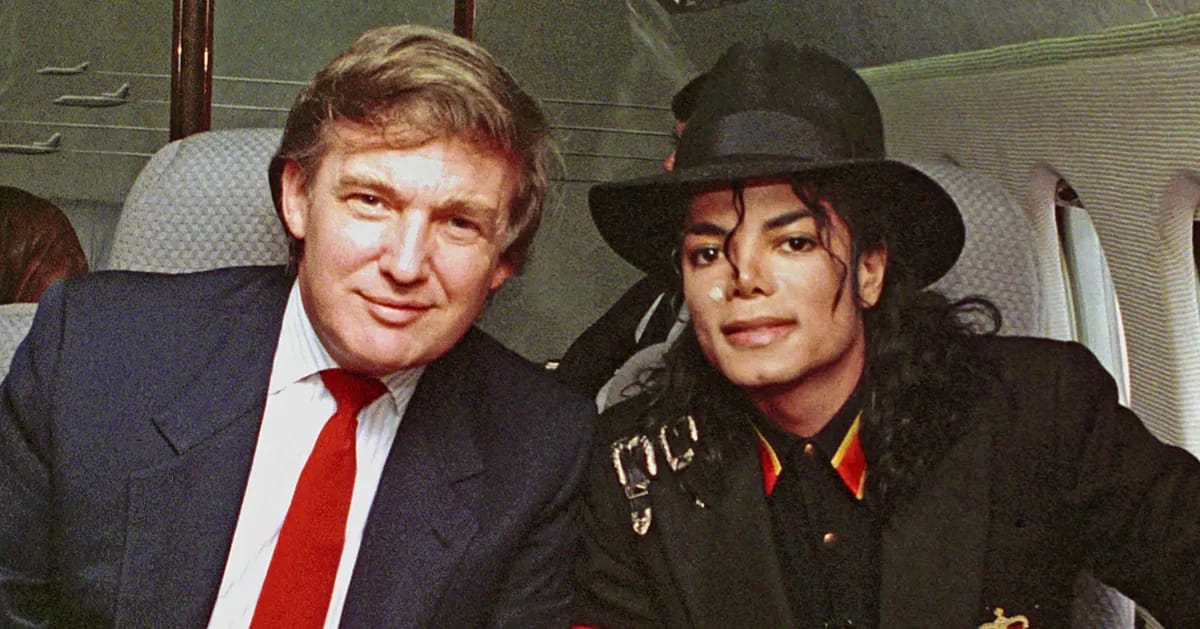
History also adds a strange layer of irony. In the 1990s, Donald Trump and Michael Jackson were known to be friendly acquaintances in celebrity circles (Source: MJ Biography's FB Reels). Photographs showed them attending events together, smiling for cameras. One man used music to promote global compassion. The other later became one of the most powerful political figures in the world, making decisions that influence wars, alliances, and military actions. It’s a strange reminder of how close the worlds of celebrity, politics, and power can be. One voice sings for peace. Another commands armies. Forty years ago, the world believed a song could change everything. Today, we are not so sure.
The melody of We Are the World still plays on the radio sometimes. When it does, it reminds people of a moment when humanity briefly felt united, when artists believed compassion could overpower indifference. But listening to it now can feel bittersweet. Because while the song asks us to remember that “we are the children,” the world still struggles to protect them. Maybe the real tragedy is not that the song failed. Maybe the tragedy is that we stopped living by its message. The world once sang together for peace.
Now the question is simple, but uncomfortable: Was that song a promise… or just a moment we have already forgotten?
And today, more than anything else, what I hope for is simple: world peace.
Felicia Yoan (feliciayoan11@gmail.com) is a content creator under the Newswav Creator programme, where you get to express yourself, be a citizen journalist, and at the same time monetize your content & reach millions of users on Newswav. Log in to creator.newswav.com and become a Newswav Creator now!
The User Content (as defined on Newswav Terms of Use) above including the views expressed and media (pictures, videos, citations etc) were submitted & posted by the author. Newswav is solely an aggregation platform that hosts the User Content. If you have any questions about the content, copyright or other issues of the work, please contact creator@newswav.com.