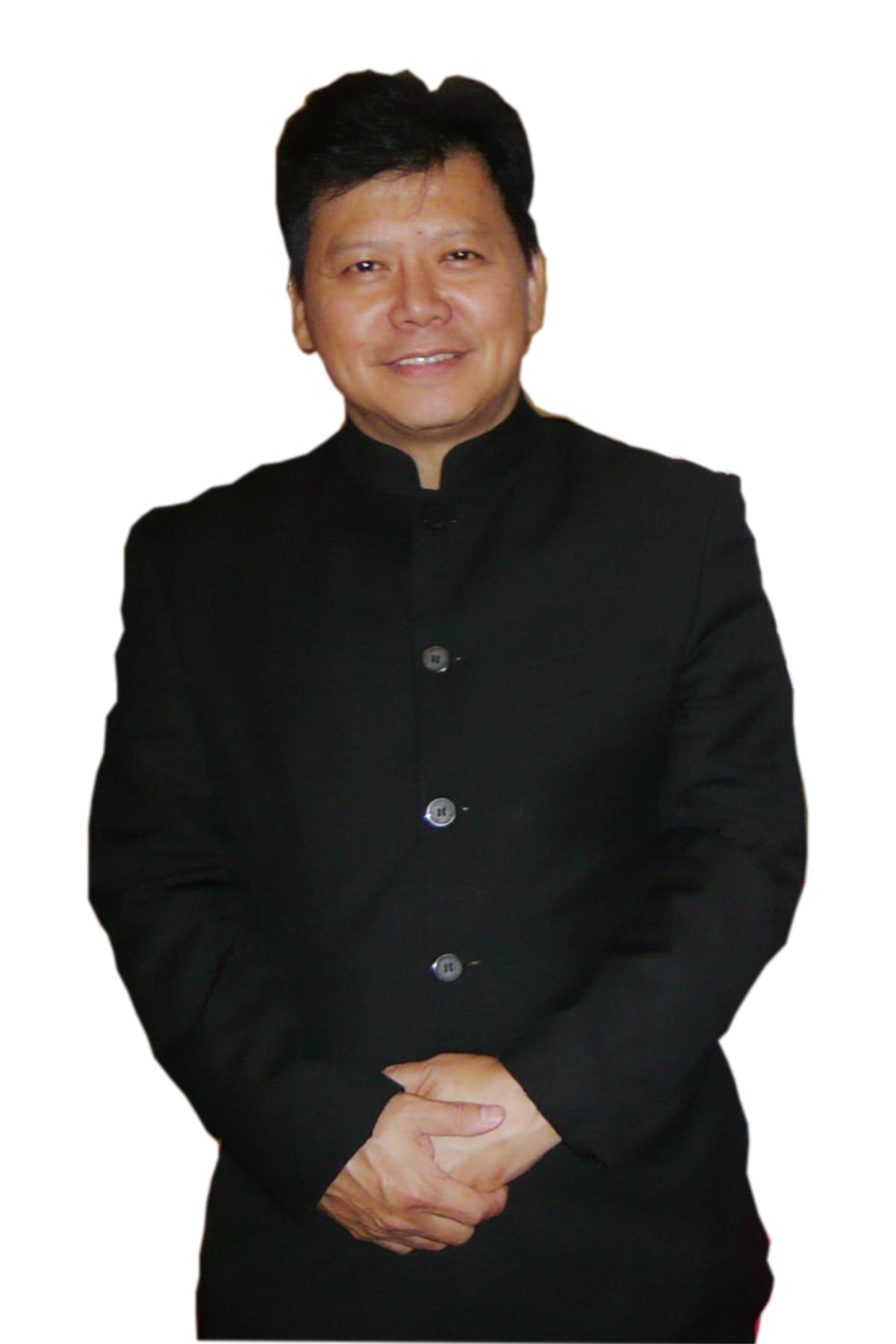
By Dr Victor SL Tan
As I write this in January 2026, I find myself reflecting deeply on goals—real goals, not wishful thinking. Goals that stretch us. Goals that demand something of us. Goals that quietly ask a hard question: Are you truly prepared to pay the price?
On 25th January 2026, the world watched Alex Honnold on Netflix live did something most people would instantly label impossible a ropeless ascent of Taipei 101, 508 metres of vertical steel and glass. Many called it madness. Some called it bravery.
But as I watched, I didn’t see recklessness.
I saw discipline.
I saw preparation.
I saw a man executing what he had already rehearsed thousands of times.
And it reminded me of a powerful truth I have learned repeatedly in my own life:
What looks impossible to others often feels inevitable to the one who has prepared long enough.
Skill Is Never an Accident
Alex Honnold did not wake up one morning and decide to climb skyscrapers. Long before Taipei 101, he had already achieved what many consider the greatest feat in modern climbing—the free solo ascent of El Capitan in Yosemite, nearly 900 metres high, completed in just under four hours. Some of his other outstanding climbs include the following:
- Regular Northwest Face of Half Dome (Yosemite, 2008): At the time, this was considered the most impressive ropeless ascent ever done. It was his first major breakthrough on a 2,000-foot granite wall.
- El Sendero Luminoso (El Potrero Chico, Mexico, 2014): A free solo of a 1,500-foot, 15-pitch vertical limestone route with difficulties up to 5.12d.
- Moonlight Buttress (Zion National Park, 2008): One of his earlier major, high-profile free solos on a 1,200-foot vertical sandstone crack.
- The Phoenix (Yosemite, 2011): The first 5.13a free solo in Yosemite Valley, demonstrating his ability to handle intense, technical finger-locking moves without a rope.
- Fitz Roy Traverse (Patagonia, 2014): A major alpine accomplishment with Tommy Caldwell, completing a five-day traverse of the entire Fitz Roy range, including icy, unpredictable conditions.
That statistic matters. Because speed at that height is not about rushing. It is about fluency. When skill is deeply embedded, the body moves without hesitation. Decisions are calm. Fear is managed, not denied.
In my own journey—as a consultant, trainer and author of 21 non-fiction books including 8 biographies —I have experienced the same principle. Whether it was standing in front of thousands of senior leaders in a seminar or writing a book of a corporate tycoon, I learned this truth the hard way:
They came from repetition, discipline, and a never give up attitude.
Confidence is built, not bestowed.
Courage Is Staying Calm When There Is No Room for Error
Alex has often shared that he does feel fear. His difference is not fearlessness, but regulation—slowing his breath, calming his mind, correcting his grip when anxiety appears.
That insight struck me deeply, because just months before watching his climb, I was fighting a very different kind of wall—one inside my own body.
On 24 July 2025, I was admitted to Gleneagles Hospital in excruciating pain caused by slip disc. The pain was relentless, shooting down my leg from my right pelvic to the calf with such intensity that even standing for less than a minute felt unbearable. I was prescribed medication and physiotherapy, and I followed every instruction diligently—but the pain did not ease.
Those months were humbling.
My Own Wall to Climb
I remember clearly how I went about my corporate training had to change. I was known for an active style—standing, walking around, engaging participants with energy and movement. Suddenly, I had to conduct my sessions sitting down, enduring sharp sciatica pain throughout.
I chose not to hide it.
I told my participants,
“My right leg may be painful, but my mind is not.”
That statement was not bravado. It was a declaration of intent. I refused to let pain dictate my purpose.
There were moments that tested me deeply. During one X-ray session, I could not even stand for a full minute. I had to ask the technician to let me sit down before continuing. That moment stayed with me—it was a stark contrast to who I had been, and a reminder of how fragile progress can feel when you are in the middle of struggle.
Recovery did not come from a single solution. It came from combination and consistency: exercise, physiotherapy, chiropractic care, acupuncture, disciplined dieting—and above all, patience. All without surgery or inject which I tried to avoid at all cost due to the risk at my age.
At first, progress was invisible.
A few steps.
Then tens.
Then hundreds and finally thousands.
Each walk felt like a negotiation with pain. But slowly—almost quietly—the pain began to retreat. What once screamed began to whisper. What once immobilized me loosened its grip.
This morning before I wrote this, I managed to walk 16,500 steps in two hours without stopping—a result that would have seemed impossible in July 2025, when I had to rely on a wheelchair and could barely stand upright.
Likewise pursuing a challenging goal is about expanding our comfort zone inch by inch. I expanded mine step by step—until pain no longer ruled my life.
Perseverance Is Expanding the Comfort Zone Repeatedly
Alex once described how he kept pushing his comfort zone wider and wider until climbs that once terrified him became manageable. That is exactly how real growth works.
Whether in physical recovery, leadership, or personal goals, progress rarely arrives in dramatic leaps. It comes quietly—through showing up when it is uncomfortable, boring, or painful.
What once felt impossible eventually becomes your new normal.
Practice the Hard Parts, Not the Easy Ones
Elite performers do not practice what they are already good at. Alex rehearses the most dangerous sections until there are no surprises left.
This mirrors what I have learned in my own work:
- If you want to write a book, practice the hardest chapter first
- If you want to grow a business, practice difficult conversations
- If you want health, practice consistency—not occasional hero efforts
Preparation removes drama.
Tens of Thousands of Invisible Repetitions
People celebrate the summit. They don’t see the boredom, the solitude, the unseen discipline.
Alex’s achievements are measurable because his preparation was measurable. The same applies to life.
Motivation is unreliable.
Discipline is loyal.
What “Impossible” Really Means in 2026
Watching Alex Honnold climb Taipei 101—and reflecting on my own recovery—has reinforced one truth for me:
The impossible is often just the unprepared.
As we step into 2026, I invite you to choose one meaningful goal that feels just beyond reach. Then break it down for the steps to take:
- skills to develop
- habits to execute
- metrics to track
- mentors to learn from
- deadlines to respect
And begin the invisible repetitions.
Because when preparation becomes deep enough, the impossible doesn’t announce itself.
It quietly becomes…
next.
Dr Victor SL Tan is the Chief Executive Officer of KL Strategic Change Consulting Group. He is an author 21 books including Changing Mindsets, Releasing Trapped Minds, Changing Your Corporate Culture and Lessons of Tan Sri Teh Hong Piow (the late founder of Public Bank Berhad). KL Strategic Change Consulting Group is the winner of The Brandlaureate Award for the company that makes the most positive and profitable impact on organisations through corporate training. For a complimentary copy of Setting Seemingly Impossible Goals brochure, email him at victorsltan@klscc.com or contact him at 0123903168.
Dr Victor SL Tan (victorsltan@klscc.com) is a content creator under the Newswav Creator programme, where you get to express yourself, be a citizen journalist, and at the same time monetize your content & reach millions of users on Newswav. Log in to creator.newswav.com and become a Newswav Creator now!
The User Content (as defined on Newswav Terms of Use) above including the views expressed and media (pictures, videos, citations etc) were submitted & posted by the author. Newswav is solely an aggregation platform that hosts the User Content. If you have any questions about the content, copyright or other issues of the work, please contact creator@newswav.com.