
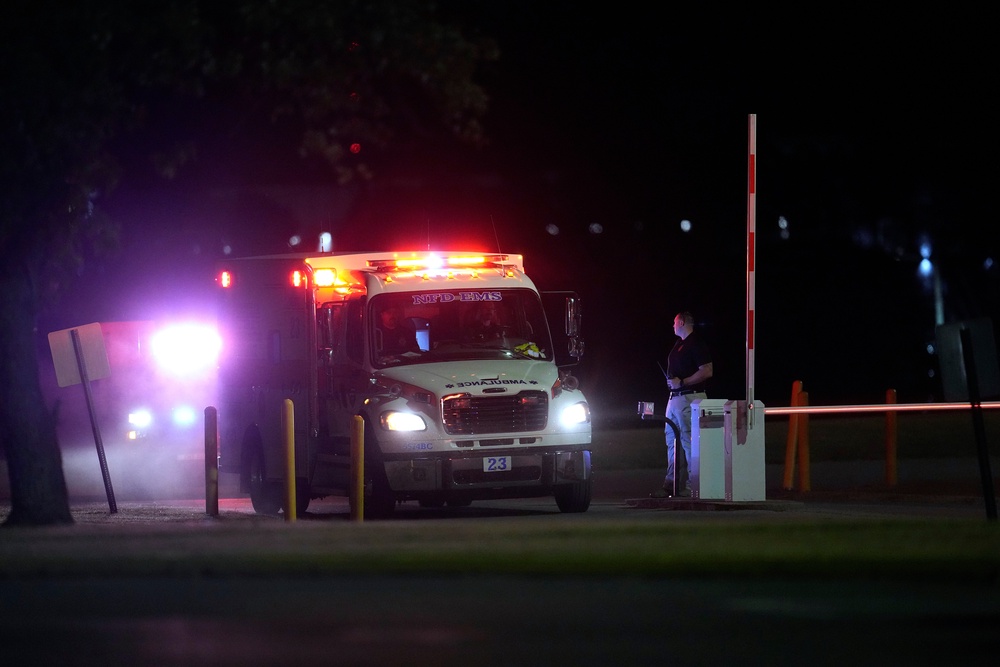
Convicted murderer Christa Pike was due to die by lethal injection at a maximum security prison in Nashville, Tennessee, on September 30, only to survive and be raced to hospital for “lifesaving care.”
Initially described as being in a critical condition, her lawyers revealed Tuesday that Pike, 50, is now awake and speaking, making her the first person to survive a completed execution attempt.
Seven other inmates condemned to die have survived lethal injections, but only because their executioners were unable to find a vein into which to administer the fatal toxins.
Pike had been on death row for 30 years after she was convicted over the January 1995 killing of 19-year-old Colleen Slemmer.
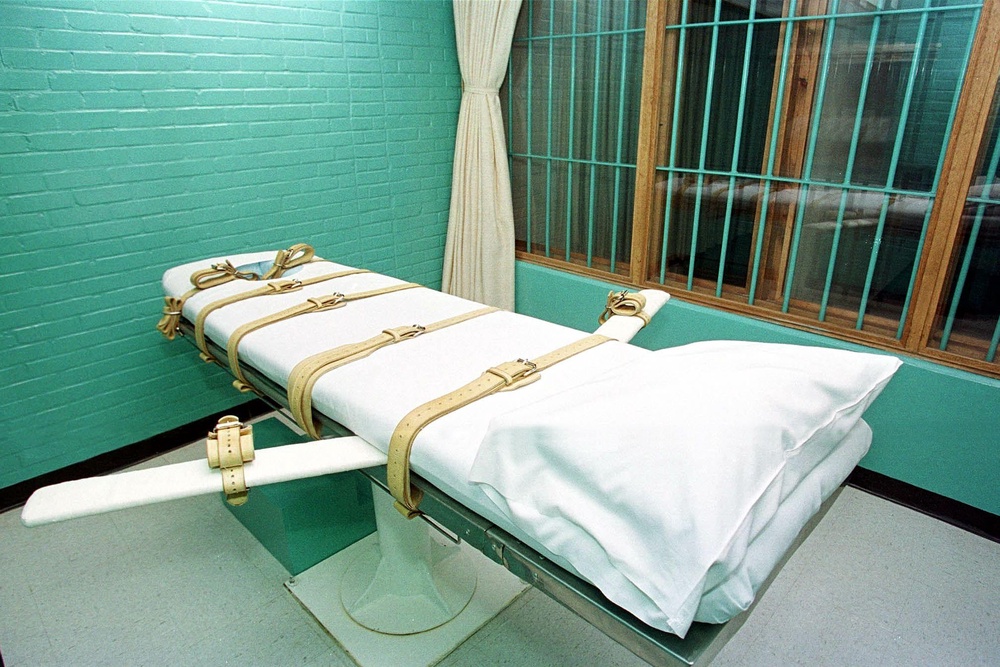
She was given two doses of pentobarbital last week but witnesses described hearing her snoring on the gurney she was strapped to in the chamber.
Pike’s attorneys said there are a number of possibilities regarding what went wrong.
The execution team worked for an hour to administer the lethal drugs, said lawyer Randy Spivey, who counted at least seven needles in her left arm.
During the struggle to locate a vein, Pike even suggested where they might find one, he said.
“Please try here, please try here,” Spivey recalled her saying. “She told them over and over, please try higher on my shoulder.”
At one point Pike asked prison officials if her arm was supposed to feel that way, though it’s unclear if it was after the first dose entered her body because officials do not share that information.

Her lawyers quickly filed an emergency motion to the Tennessee Supreme Court seeking to immediately halt and stay the execution, saying she was in “unnecessary agony” and that the situation violated her right to be executed free of cruel and unusual punishment.
The attempt was ultimately abandoned.
Expert Robin M Maher, executive director of the Death Penalty Information Center, said what Pike had experienced was “singular and unparalleled,” pointing out that while medical complications have arisen before, no one has ever survived the drugs they were given.
Had Pike’s sentence proceeded as scheduled, she would have been the first woman executed in Tennessee since 1820 and the 19th woman put to death in the U.S. since 1976.
There are now growing questions over what happens now, particularly as her case had attracted calls for clemency even before the botched execution took place.
Pike’s health remains uncertain
Pike is currently still in hospital following the failed execution attempt.
“Against all odds, Christa Pike is conscious, speaking, and continues to receive critical medical care,” her attorneys said in a statement.
“Despite the severe damage she endured to her arms, she is still handcuffed and shackled to the bed. Her recovery is medically unprecedented. Her prognosis remains unclear but, at a minimum, we expect a long recovery.”
Dr Joel Zivot, a professor at the Emory University School of Medicine in Atlanta, Georgia, who has been retained by Pike’s legal team, told the BBC last week that, longer term, she could be left suffering from brain damage.
Pike is unlikely to have received a sufficient quantity of pentobarbital in her blood to cause the apnoea and cardiovascular failure intended for her execution, Zivot said.
“It’s very possible that as a consequence of the delay of the beginning of resuscitation she will have a brain injury,” he added.
All parties are currently waiting for Pike’s condition to stabilize before determining how to proceed.
Following the failed attempt, Tennessee Gov. Bill Lee has suspended the state’s one remaining execution planned for this year, that of convicted killer Gary Wayne Sutton on December 3.
“Carrying out a lawfully imposed sentence is among the state’s most serious responsibilities, and the people of Tennessee expect it to be done in a manner that is not only legal and constitutional, but is effective,” Lee said.
“I have ordered a comprehensive, third-party review to determine exactly what occurred.”
Can she still be executed – and if so when?
While the Eighth Amendment to the Constitution bars cruel and unusual punishment, there is no automatic legal mechanism to shield a prisoner from a second attempt to carry out their sentence simply because the first failed, so long as investigators are satisfied that the proper procedure was followed and the subject’s rights were not impeded.
Inmates who survive the death penalty remain convicted felons sentenced to capital punishment and under state custody, their circumstances unchanged despite the advent of a technical fault.
As it stands, Christa Pike’s death warrant expired at midnight last Wednesday, meaning the state of Tennessee will have to return to the courts to obtain and set another execution date if it does choose to attempt to execute.
State authorities are yet to say whether they will try again but there is a historical precedent for making a second attempt in cases where the first has not succeeded.
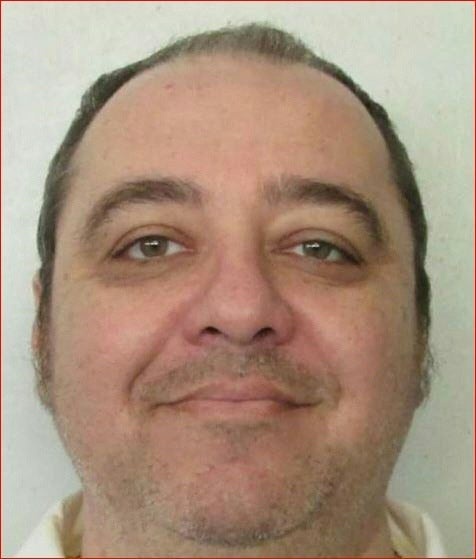
A recent example is Alabama prisoner Kenneth Eugene Smith, who could not be put to death as planned in November 2022 when his executioners could not locate a vein to insert the necessary IV.
He subsequently appealed his case but lost and was finally put to death by nitrogen hypoxia in January 2024.
Dozens of inmates have survived lethal injection
Statistically, lethal injection appears to be the least successful method of execution carried out in the U.S..
Figures from the Death Penalty Information Center say that 75 inmates who were due to die by lethal injection experienced botched executions between 1890 and 2010.
That represents a 7.2 percent failure rate in the 1,054 lethal injections planned during that 120-year period, higher than any other method including hanging, firing squad and electrocution.
The average failure rate across all methods is 3.15 percent, so injection is more than twice as likely to be unsuccessful.
Pike’s case is the second time lethal injection has failed in Tennessee this year alone, in a case that sheds light on what might happen next.
Tony Carruthers was convicted of kidnapping and murdering three people in 1994 and was set to be put to death in May.
However, it had to be postponed after staff were unable to find a vein to administer his lethal injection.
In that instance, Carruthers was given a one-year reprieve by Gov. Lee and returned to death row, a precedent that could be followed in the Pike case.
More legal challenges likely
The failed execution attempt opens up the possibility of further legal challenges from her team.
Pike’s execution had already been delayed by legal battles earlier in the day on which it took place, having originally been scheduled to take place at 10 a.m., only for the Sixth Circuit U.S. Court of Appeals to vote 2-1 to issue a stay.
That court said a delay was needed to consider whether Pike’s allegations of childhood sexual abuse were fully considered at her sentencing, an argument her defense attorneys have long made, insisting that those factors were never taken into account and merited her receiving a life sentence without parole in place of the death penalty.
The Attorney General’s Office appealed to the U.S. Supreme Court, saying that halting the execution at the last moment would only further traumatize the family of her victim and rewarded what it called “abusive delay tactics” by Pike’s attorneys.
Later in the day, the high court cleared the way for the execution to proceed. Its conservative majority did not explain their order, while the three liberal members signed a dissent that said Pike’s claims deserved a closer look.
As criticism grows over the botched handling of the execution, Tennessee’s Department of Correction has defended itself by saying it “followed every step of the state’s lawful, established execution protocol approved by the Attorney General’s Office.
“The lethal injection chemical in the protocol has consistently been effective, and the protocol does not allow for additional procedures beyond what was carried out this evening.”
The head of that department, Frank Strada, announced his resignation Saturday.