
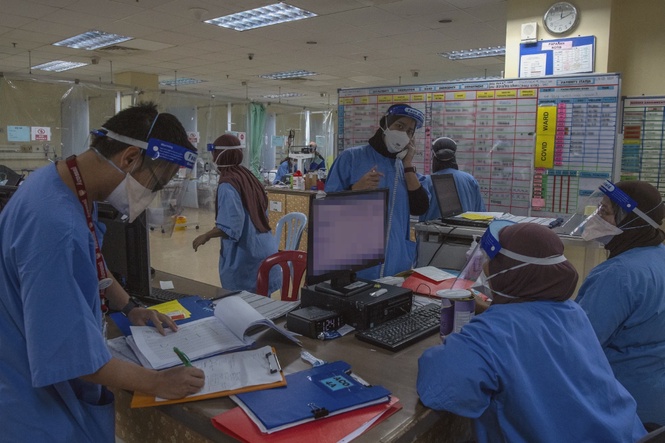
Malaysian junior doctors are rejecting chronic exhaustion as a professional norm, seeking better work-life balance and clear career pathways to ensure patient safety.
MANY of us grew up with a familiar image of a doctor: Always at the hospital, visibly tired but still carrying on with a smile, the doctor who misses family occasions, skips meals during shifts, sleeps for only a few hours and wears exhaustion like a badge of honour.
From this perspective, medicine is not simply a profession; it is a calling that demands sacrifice. Today’s junior doctors have grown up watching this model closely. They have seen the fatigue, the emotional strain and the quiet unravelling that can happen when overwork is treated as proof of commitment.
Many have reached a simple conclusion: A doctor who is permanently running on empty is not a better doctor. In many cases, that doctor is more vulnerable.
So, what do junior doctors actually want?
This is the question our research explores. In a survey of 120 junior doctors currently practising in UMMC, we examined which aspects of work and career matter most to them when considering a sustainable future in medicine.
They are not rejecting hard work, clinical responsibility or the demands of medical practice. Rather, they are questioning whether becoming a good doctor must also entail chronic exhaustion, blurred personal boundaries and silence in the face of distress.
They want working hours that do not routinely compromise sleep or force them to skip meals at work. They want mental health support that does not come with the fear of professional consequences.
They want structured mentorship, clearer career pathways and more time spent on actual clinical work rather than administrative tasks. These are not extravagant demands but basic conditions for a sustainable and fulfilling professional life.
The reasons for this pushback are clear. Research from Malaysia has already raised warning signs. A study conducted by UiTM in a Malaysian tertiary hospital found that approximately one in four medical officers met the criteria for burnout.
Additionally, a recent national study by researchers from the Health Ministry, Universiti Malaysia Sarawak and Taylor’s University found that junior doctors on contract appointments reported higher levels of depression, anxiety, stress and emotional exhaustion than their permanently appointed counterparts.
The study also found that contract doctors were more likely to consider leaving the medical profession altogether or emigrating than their permanently appointed peers, despite having similar professional aspirations.
These findings point to a working environment in which many young doctors are expected to cope not only with the demands of clinical practice but also with a system that often stretches them beyond reasonable limits.
This shift should not be dismissed as laziness or entitlement. Younger doctors are simply more willing to recognise work-life balance, psychological well-being and career clarity as legitimate professional priorities.
Like generations before them, many entered medicine with the same idealism – the desire to help, heal and make a difference. What has changed is not their commitment to patients but their willingness to accept preventable harm to themselves as the cost of remaining in the profession.
In our ongoing research with junior doctors, the same themes continue to emerge: work-life balance, well-being, meaningful work and clearer career direction. These are not peripheral concerns; they shape whether young doctors can envision a career they are able to sustain.
This matters because doctor well-being and patient safety are closely linked. A study by IMU University on patient safety culture in Malaysian tertiary hospitals identified staffing levels and work pace as among the weakest areas reported.
When healthcare workers are stretched beyond sustainable limits, patient care inevitably suffers. Humane working conditions are, therefore, not simply about staff well-being; they are fundamental to safe, high-quality healthcare.
Supportive training environments, effective supervision and clearer career pathways do more than improve junior doctors’ well-being. They increase the likelihood that doctors will remain in the profession, develop into experienced clinicians and ultimately train the next generation.
Supporting junior doctors is not merely a welfare issue. It is a workforce, training and ultimately a patient-care issue. For Malaysia, this is not simply a cultural debate but a policy imperative.
The country invests substantial public resources in training doctors and its public health system depends on a steady pipeline of junior doctors who choose to build their careers within it.
A system that relies on silent endurance, unclear career progression and avoidable exhaustion should not be surprised when many begin to question whether it is worth staying.
Meeting junior doctors where they are is not indulgence or a concession to a “softer” generation. It is about recognising that humane working conditions, clear career pathways and supportive professional cultures are essential foundations of a sustainable health system.
If Malaysia wants doctors who can care for others over the long-term, it must build a system that enables doctors to remain well enough to do so.
Vinnarasi Chandran is a Master of Philosophy candidate at the Institute for Advanced Studies, Universiti Malaya and Dr Muhammad Ashraf Khalid is a senior lecturer at the Faculty of Business and Economics. Comments: letters@thesundaily.com