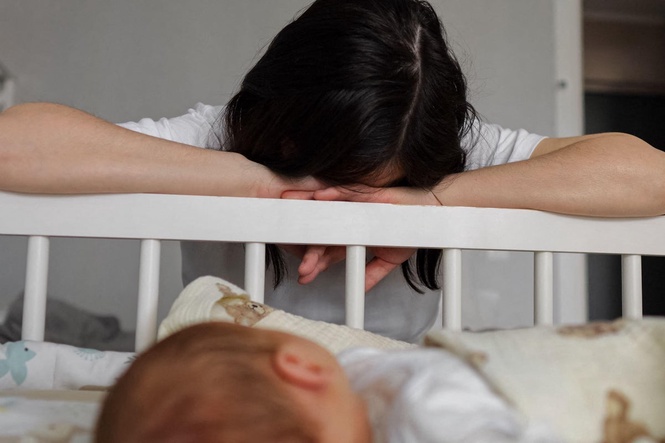
While the initial months of parenthood are often described as a "bliss" or "bubble", daily reality proves vastly different for most women.
A new survey has shown that four in five mothers have endured mental health symptoms comparable to those caused by battlefield shock.
Data from parenting platform ChatMum.co.uk reveals that half conceal how they really feel due to fear of being judged.
Their symptoms extend from exhaustion and depression to postnatal psychosis, with nearly one quarter characterising their experience as "extreme".
Additionally, 12 per cent of mothers confessed to experiencing intrusive thoughts – such as fears that they might deliberately harm their infant – while seven per cent acknowledged regretting having a child altogether.
No matter how much a pregnancy is planned, nothing can prepare for the shock of the newborn stage.
“You can read the books and do all the preparation in the world, but becoming a parent is a shock to the system because you don’t know how you’ll react until you’re there. But new parents don’t get the same level of support as the baby,” says specialist community public health nurse and health visitor, Tracey Stone.
According to the survey of more than 2,000 UK parents, 96 per cent say parenthood significantly changed who they are, with 58 per cent describing themselves as a ‘very’ or ‘completely different’ person to before giving birth.
However, the effects are not just limited to women. Seven in ten dads admit to suffering shock on becoming a parent, with one in six reporting ‘extreme’ symptoms.
ChatMum.co.uk founder and author Siobhan Freegard OBE, also the founder of NetMums – who herself suffered from postnatal depression – says: “Untreated perinatal mental health problems are estimated to cost the UK economy between £6.6 billion and £8.1 billion annually, yet we’re still scared to talk about how we feel for fear of judgement. The only way we can begin to make ‘baby shock’ better is by acknowledging just how hard life with a newborn can be.”
Any negative emotion as a new mum is often accompanied by guilt too, says Freegard – “It sounds like you’re ungrateful or tempting fate.”
Having children is “the best thing but also the hardest thing most people go through,” she adds.
What’s baby shock and what are the symptoms?
Stone describes “baby shock” as an emotional response. “It causes numbness, feeling detached, tearful, a sense of disbelief that you’re in a situation,” she says.
“Baby shock and battlefield PTSD both overwhelm the human nervous system, leaving sufferers in a state of psychological and physical exhaustion from prolonged, inescapable stress, hyper-vigilance, and severe sleep deprivation.”
Judith Rees, chief operating officer of trauma charity For Baby’s Sake, adds: “The experiences of giving birth are obviously different to battlefield combat, but they share the same human neurobiological responses to perceived threat.”
“As a midwife and health visitor I’ve seen post-traumatic stress disorder (PTSD) in new mothers from either the emotional or physical shock of birth trauma – especially when mums were not expecting it.”
Rees describes how the brain’s reactions to giving birth are similar to being on the battlefield: “Fear for their own life or the baby’s life, the pain, the emergency and the profound helplessness.
“Sometimes after the birth, the body is safe, but the nervous system hasn’t yet received that message. So a woman can remain on high alert but now has a new baby to care for. This causes hyper-vigilance, not being able to sleep or relax, and not feeling connected to the baby.”
Another severe effect of childbirth that mirrors the trauma of combat is experiencing flashbacks.
Dr Nikki Ramskill, women’s health GP, former obstetrician and founder of The Female Health Doctor Clinic, says, “When I do a six-week check-up, I ask women, ‘How was the birth?’ Some say, ‘It was fine.’ But for others, they’re triggered by sounds, smells, situations. Some can’t even set foot inside the hospital again.”
Stone is also keen to stress that new mums don’t have to have gone through a very traumatic birth to suffer from baby shock. “Baby shock can happen after any sort of birth. And baby shock has always been around, but people don’t talk about it. It’s just accepted as being normal.”
Symptoms of postnatal depression
NHS
- Low mood
- Finding it hard to enjoy anything
- Feeling hopeless or that you cannot cope
- Feeling guilty or worthless, or that you're a bad parent
- Feeling fearful, anxious, or worrying all the time
- Feeling restless or irritable
- Difficulty sleeping, even when you get time to rest
- Difficulty concentrating or making decisions
- Difficult feelings about, or difficulty bonding with your baby
- Thoughts of suicide, harming yourself or your baby
She says the problem stems from people not admitting the brutal truth about new parenthood. “Having a baby is ‘normal’, but it doesn’t mean to say how we’re left feeling after we have a baby needs to be treated as if it’s normal. This study has exposed the severity of that.”
Rees highlights other important triggers for these symptoms. “The body keeps score and giving birth can also trigger trauma from a mum’s own childhood experiences. And one in four women also experiences domestic abuse and we know pregnancy and having a baby makes this a very heightened time for them.”
Why don’t more people speak up?
The stigma of speaking out is one of the reasons why so many new mums suffer in silence.
Rees explains: “Mums won’t admit they’re feeling depressed or not loving their baby as they should because they fear social care involvement. Instead they internalise it, and then the sleep deprivation symptoms get worse, which is a form of torture. And if they don’t get support for those PTSD symptoms, it will eventually lead to depression.”
Women don’t share how they feel because they feel like they’re a bad mother, Stone says. But, “nobody’s 100 per cent fine after they’ve gone through one of the biggest transitions in their lives.”
The first 12 months are the most vulnerable time for new mothers.
“The highest chance of someone taking their own life is in that postnatal period, which is why we need to be vigilant for postnatal depression,” says Ramskill. “You can imagine the sort of impact that might have on somebody’s mental health, particularly when everyone around you is going, ‘Oh, it’s lovely. You’ve got a baby.’”
The signs that not all is well can be difficult to spot and are quite nuanced. “Maybe they’re particularly withdrawn or more tearful and for longer than you’d expect, if there’s a lack of enjoyment, or not really engaging with things,” says Ramskill. “At the other extreme, it could also be where she’s trying to be a perfect mother and doesn’t want anyone to get near.”
Stone adds: “We know people get postnatal depression and postpartum psychosis, but there should be a space for those without a diagnosable condition. They’re functioning, but they live in this world of shock, and it’s not OK to feel like that.”
Why can it be a shock even if the pregnancy was planned?
Parents who spent years trying for a much-wanted baby also suffer added guilt after experiencing baby shock. “There’s such a build-up of expectations and pressure on them to be perfect parents,” says Rees. “But those love hormones don’t always flood. There’s so much physical preparation for a baby, but not emotional. And it’s OK if things don’t go right, so they need to be prepared for that.”
Social media, Hollywood films and long-established culture often shape the expectations of new parents, which means they can be woefully underprepared. “I think there’s a big gap between a rose-tinted view of giving birth, and the reality, particularly for first-time mums. It’s not like Call the Midwife,” says Ramskill. “I’ve been involved in some absolutely awful labours… with the realities of the instruments we might use, and the potential risk for blood loss. They mentally prepare soldiers for going into battle – maybe they should do that for mums-to-be.”
The saying it takes “a village to bring up a child” may be true, but new mums seem to be more alone than ever. Rees says new mothers often feel isolated due to reduced contact with midwives and health visitors, as well as early discharge from postnatal wards.
Stone admits many maternity services have not recovered since the pandemic and says new mums are not being supported. “When I talk to a new mum and I ask, ‘How are you?’ they reply on behalf of their baby, ‘My baby’s fine.’ And I say, ‘No, how are you?’ They’re often shocked to be asked because there’s no emphasis on parenthood.”
The good news is that parents are now able to access the new free family services at Best Start Family Hubs, and Ramskill says better postnatal health support is also becoming available. She adds, “I would recommend new mums go to their GP, explain how they feel, and ask for a referral to a postnatal mental health team.”
Stone also believes we should normalise the fact that parenting is hard. “It’s not easy. Let’s be honest about it with others, then everyone can enjoy being new parents rather than trying to hide it and soldier on.”
If you are experiencing feelings of distress, or are struggling to cope, you can speak to the Samaritans, in confidence, on 116 123 (UK and ROI) or visit the Samaritans website to find details of your nearest branch.
If you are based in the USA, and you or someone you know needs mental health assistance right now, call or text 988, or visit 988lifeline.org to access online chat from the 988 Suicide and Crisis Lifeline. This is a free, confidential crisis hotline that is available to everyone 24 hours a day, seven days a week. If you are in another country, you can go to www.befrienders.org to find a helpline near you.
Read MoreI gave up drinking eight months ago. Why is it getting harder, not easier?
What is SAD? Four ways you can manage your symptoms this winter
The subtle symptoms of anxiety nearly one in five young adults experience
9 expert tips for staying warm at home without turning up the heating
Doctor warns of GLP-1 side effect that can derail Thanksgiving celebrations