

Imagine if Sarawak had its very own Khazanah Nasional - a professionally managed fund that invests wisely, saves prudently, and builds long-term wealth for the people. Not just for the next election cycle, but for the next generation.
Well, that future may already be taking shape.
On 22 November 2022, the Sarawak Legislative Assembly unanimously passed the Sovereign Wealth Future Fund Board Bill, marking a historic move to safeguard the state’s financial future. The state government committed an initial allocation of RM8 billion to kick-start the fund, aimed at benefiting both current and future generations of Sarawakians.
According to the bill, the fund will be managed professionally and transparently by a board of guardians. This board is made up of seasoned experts and professionals in finance and investment to ensure that the money is handled with care, strategy, and accountability.
In August 2023, Sarawak officially appointed a nine-member board of guardians to oversee the fund. This marks the state’s first-ever sovereign wealth fund, launched in response to increasing financial autonomy granted under national legislation passed in 2021. Sarawak’s fund was formally launched on 1 January 2024.
During a special address on 30 January 2024, Premier Tan Sri Abang Johari Openg announced that the state plans to inject between RM400 million to RM600 million into the fund every year. This yearly injection acts not only as an investment strategy but also as a way to grow long-term savings for the state.
“This is actually for savings. I believe in saving for the future. Revenue that Sarawak gets, we must keep,” he said. “Our reserves are not bad, so we place our reserves somewhere for future generations. We won’t touch that money for the next 20 years. Whoever takes over the government also cannot touch the fund by law, unless it is necessary.”
While detailed information about the fund is still limited, it’s clear that Sarawak is taking bold, future-oriented steps by establishing its own version of ‘Khazanah Nasional’. The structure, planning, and intent behind the Sarawak Sovereign Wealth Future Fund suggest that it is well-positioned to succeed.
Here are a few reasons why I think the Sarawak Sovereign Wealth Fund will succeed and help secure a bright future for all Sarawakians:
1. Strong Governance and Expert Oversight
A key reason the Sarawak Sovereign Wealth Future Fund is likely to succeed lies in its robust structure and leadership. The fund is overseen by a board of guardians chaired by former Federal Court judge Datuk Seri Sulong Matjeraie. The board comprises a diverse and distinguished group of professionals from both the public and private sectors, each with extensive experience in finance, law, and investment—both in Malaysia and abroad.
This balanced mix of stakeholders ensures that decision-making is guided by a wide range of expertise and perspectives. Importantly, the board is independent and operates under strict principles of transparency and accountability. With a clear separation from political interference and a mandate to act in the long-term interests of the state, the board’s professional makeup positions the fund for prudent and sustainable growth.
2. Commitment to International Best Practices
The fund’s commitment to the Santiago Principles, a globally recognised set of best practices for sovereign wealth funds, further enhances its credibility and prospects. These principles promote transparency, good governance, accountability, and prudent investment practices. Sarawak Premier Tan Sri Abang Johari Openg confirmed that the fund would adhere to these principles after studying global standards during visits to sovereign wealth fund institutions abroad.
His team studied some of the world’s most respected funds, including Norway’s Government Pension Fund Global, Singapore’s Temasek Holdings, and GIC. They also gained insights from the Sovereign Wealth Fund Forum in London. By aligning the Sarawak fund with these proven international models, the state is signalling its seriousness in building a disciplined and future-focused financial institution—one that can earn the trust of both the rakyat and global investors.
3. Long-Term Vision Modelled on Global Success Stories
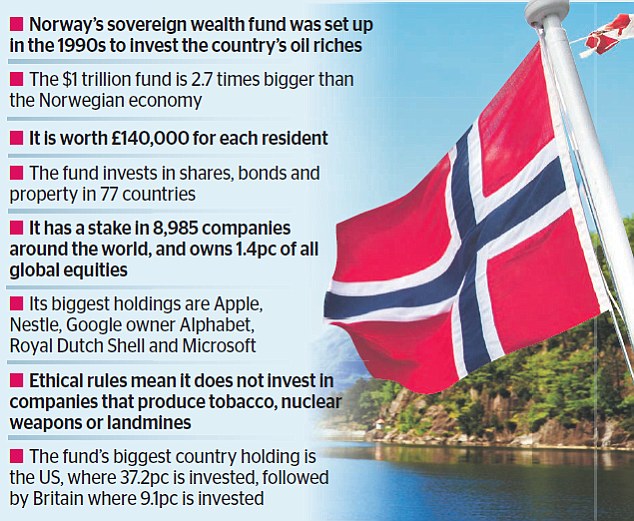
The third pillar of the fund’s strength is its long-term, generational vision. Inspired particularly by Norway’s Government Pension Fund Global, Sarawak aims to create a natural resource-centric fund that sequesters wealth for future generations. This is not a short-term investment vehicle but a mechanism for securing intergenerational equity ensuring that the state’s resource wealth today becomes a foundation for prosperity tomorrow.
Premier Abang Johari has personally led efforts to benchmark Sarawak’s fund against the best in the world. His hands-on involvement—from Singapore to London to Oslo—demonstrates a serious, research-based approach in crafting the fund’s direction. By embedding long-termism, professional management, and fiscal discipline into the fund’s DNA, Sarawak is laying the groundwork for a sustainable financial future that can weather political and economic changes for decades to come.
While the fund shows strong promise, some scepticism is inevitable. Financial analysts may draw parallels to past missteps—most notably, the ongoing 1MDB court case, which is linked to an earlier attempt to set up a sovereign wealth fund in Terengganu, another resource-rich Malaysian state. There’s also the potential for overlapping roles between the Sarawak Sovereign Wealth Future Fund and Khazanah Nasional Berhad, the federal government’s sovereign wealth fund. Without clear boundaries, this could lead to confusion or management challenges down the line.
However, I believe Sarawak has little to worry about so long as it takes a page from Norway’s playbook. Back in the 1960s, Norway was a quiet, modest country known mainly for fishing, farming, and shipping. Its economy was stable but far from wealthy, and there was no indication it would one day lead the world in wealth per person.
That all changed in 1969 when oil was discovered in the North Sea. Suddenly, Norway had access to vast natural wealth. It was a turning point that could have easily gone wrong. Many nations that strike oil fall into what’s known as the “resource curse.” They overspend, corruption spreads, and other industries collapse—sound familiar?
But Norway chose a different path. Instead of handing over its oil fields to private companies, the government took control. It created a national oil company, Statoil, to manage resources for the people. More importantly, it refused to splurge the profits all at once. The focus wasn’t short-term growth—it was long-term national strength.
In 1990, Norway launched the Government Pension Fund Global, better known as the Oil Fund. The idea was simple: invest oil profits in global assets such as stocks, bonds, and real estate while preserving the core savings. Only a small portion of the returns would be used each year. That discipline paid off handsomely.
Today, the fund is worth over USD 1.6 trillion, making it the largest sovereign wealth fund in the world. It holds shares in more than 9,000 companies, including Apple, Amazon, Nestlé, and Microsoft. Norway earns money every time these companies grow. The fund has become a financial engine for the entire nation.
And there’s a strict rule: the government can only spend around 3% of the fund’s returns annually. This prevents political misuse and reckless withdrawals. Transparency is also central - every Norwegian can go online and see exactly where the money is invested. This openness builds trust and reduces corruption.
Eventually, Norway’s oil will run dry. But the wealth won’t. Thanks to thoughtful planning, the country turned a temporary resource into a permanent source of prosperity. The result? World-class healthcare, excellent education, low poverty, and a nation prepared for the future.
Norway didn’t use oil to get rich fast. It used oil to stay rich for generations. With smart policies and disciplined governance, Sarawak has the opportunity to do the same and perhaps even become a guiding model for other Malaysian states.
At a time when many Malaysians are disillusioned by stories of mismanaged funds and short-sighted politics, Sarawak is daring to think differently. It’s betting on good governance, expert oversight, and long-term vision to ensure its natural resources benefit all Sarawakians - not just today, but for decades to come.
The plan is clear. The execution? Still unfolding. But if done right, the Sarawak Sovereign Wealth Future Fund could reshape how Malaysian states manage wealth and prove that #DemiMalaysia isn’t just a hashtag, but a mission worth believing in.
Aaron Colt (aaronafter@hotmail.com) is a content creator under the Newswav Creator programme, where you get to express yourself, be a citizen journalist, and at the same time monetize your content & reach millions of users on Newswav. Log in to creator.newswav.com and become a Newswav Creator now!
The User Content (as defined on Newswav Terms of Use) above including the views expressed and media (pictures, videos, citations etc) were submitted & posted by the author. Newswav is solely an aggregation platform that hosts the User Content. If you have any questions about the content, copyright or other issues of the work, please contact creator@newswav.com.