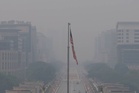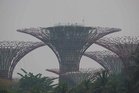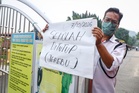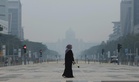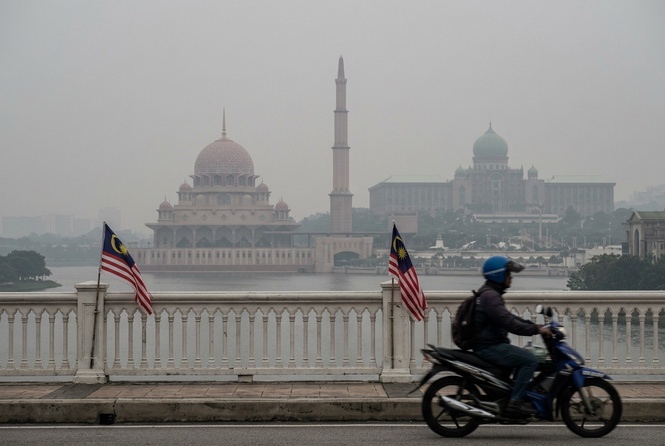
Haze continued to blanket much of Peninsular Malaysia this morning, with 38 of the country’s 68 air-quality monitoring stations recording unhealthy Air Pollutant Index (API) readings as of 9am. Segamat in Johor recorded the highest reading at 187. The figures point to a broad deterioration in air quality.
Residents in affected areas may notice a smoky or burning smell, reduced visibility and irritation of the eyes, nose and throat. The odour, however, is only one part of the problem. Haze also contains fine particles and gases that cannot be seen or detected by smell.
“Aldehydes such as formaldehyde and acrolein are among the compounds associated with the sharp, acrid smell of smoke. They can irritate the eyes, nose and respiratory tract”
People living in areas with elevated API readings should reduce outdoor exposure, avoid strenuous activity and monitor official updates throughout the day. Children, older adults, pregnant people, outdoor workers and those with asthma, heart disease or other chronic conditions should take particular care.
What causes the burning smell?
The smoky smell develops when vegetation, peat and other materials burn. Fires release a complex mixture of pollutants, including PM2.5 and PM10 particles, carbon monoxide, nitrogen oxides, sulphur dioxide and volatile organic compounds, known as VOCs.
VOCs are gases that evaporate easily. Some can be detected at very low concentrations. Aldehydes such as formaldehyde and acrolein are among the compounds associated with the sharp, acrid smell of smoke. They can irritate the eyes, nose and respiratory tract.
“Formaldehyde and acrolein contribute to the burning sensation in the eyes and throat. Other combustion products raise longer-term concerns. Benzene is associated with cancer risk. Some PAHs are carcinogenic. Dioxins and related compounds may form under certain burning conditions and can remain in the environment”
Peat fires can be particularly persistent. Peat contains layers of partly decomposed plant material. It may smoulder below the surface, producing smoke for days or weeks. Smoke from forest, peatland and land-clearing fires can travel over long distances, including across national borders. Local open burning, agricultural fires, rubbish burning and industrial emissions may worsen the haze affecting Malaysian communities now.
The smell is only a small part of the overall mixture. Several of the most concerning pollutants are invisible and odourless.
Why the API and smell may not match
Malaysia’s API summarises levels of selected pollutants measured by monitoring stations. These include particulate matter and certain gases. The chemicals responsible for the strongest odours are not necessarily the main pollutants used to calculate the index.
This explains why the burning smell may seem intense even when the API is lower. It also explains why the air may remain unhealthy after the odour fades.
Weather conditions can produce further differences. Wind may carry gases away from one area while leaving fine particles suspended elsewhere. Rain can temporarily reduce particle concentrations.
Temperature, humidity, traffic and the shape of surrounding buildings can affect pollution from one neighbourhood to another.
Residents should not judge air quality by smell or visibility alone. Official API and PM2.5 readings provide a more reliable guide to exposure.
The health concern behind Malaysian haze
PM2.5 refers to particles measuring 2.5 micrometres or less in diameter. These particles are small enough to travel deep into the lungs. Some may pass into the bloodstream. PM10 particles are larger but can still irritate the nose, throat and upper airways.
Fine particles can carry metals, polycyclic aromatic hydrocarbons, or PAHs, and other combustion-related chemicals. Research published by public-health institutions and environmental journals has linked short-term exposure to fine particles with coughing, asthma attacks, reduced lung function, hospital admissions and cardiovascular stress.
Repeated or prolonged exposure has been associated with chronic respiratory disease and higher cardiovascular risk. The level of risk depends on several factors, including the pollution concentration, length of exposure, distance from the fire and the individual’s health.
A clear-looking sky does not guarantee clean air. Fine particles can remain suspended even when visibility improves.
Gases can cause immediate irritation
Smoke also contains gases that may trigger symptoms soon after exposure.
Carbon monoxide is produced during incomplete combustion. At high concentrations, it reduces the blood’s ability to carry oxygen.
Sulphur dioxide and nitrogen oxides can irritate the eyes, throat and lungs. They may also react in the atmosphere to form additional particles. Ozone can develop when nitrogen oxides and VOCs react in sunlight. It can cause coughing, chest tightness and reduced breathing capacity.
Formaldehyde and acrolein contribute to the burning sensation in the eyes and throat. Other combustion products raise longer-term concerns. Benzene is associated with cancer risk. Some PAHs are carcinogenic. Dioxins and related compounds may form under certain burning conditions and can remain in the environment.
Not every haze episode contains the same pollutants at the same concentrations. The composition depends on what is burning and how the fire develops.
Symptoms to watch for
People exposed to haze may develop:
- Watery, red or burning eyes
- A runny or blocked nose
- Sneezing or a sore throat
- Coughing and increased phlegm
- Chest tightness
- Wheezing
- Shortness of breath
- Headache
- Fatigue
- Dizziness
- Reduced exercise tolerance
Symptoms may worsen during physical activity. Exercise increases the amount of air entering the lungs and often leads to deeper breathing.
People with asthma may experience more frequent attacks. Those with chronic obstructive pulmonary disease, bronchitis or other lung conditions may develop worsening breathlessness. Fine particles can also place stress on the cardiovascular system, increasing concern for people with heart disease.
Urgent medical care is needed for severe difficulty breathing, chest pain, fainting, confusion, blue lips or a sudden deterioration in someone with a known heart or lung condition.
Who should take extra care?
Haze can affect anyone, but some groups are more vulnerable:
- Children and teenagers
- Older adults
- Pregnant people
- People with asthma or chronic lung disease
- Those with heart disease or diabetes
- Outdoor workers
- People exercising outdoors
Children’s lungs are still developing. Older adults are more likely to have underlying health conditions. In our previous article, Dr Syed Ajmal Bin Syed Ali, Respiratory Physician & Int. Pulmonologist from the Sunway Medical Centre said vulnerable individuals need extra attention when air quality deteriorates.
“People often expect haze-related breathing problems to be obvious, but the earliest warning signs can be subtle, especially for vulnerable adults or older people,” says Dr Syed.
Outdoor workers may also face prolonged exposure, particularly during periods of high API readings. Schools, employers and families should follow official guidance when pollution rises. Outdoor sports, assemblies and strenuous work may need to be postponed in severely affected areas.
Why the smell may worsen at night
The burning smell often becomes stronger in the evening or overnight. After sunset, the ground cools. Winds near the surface may weaken, while vertical mixing decreases. Smoke and gases can then remain closer to ground level.
Daytime winds may disperse the odour, but this does not necessarily mean PM2.5 levels have fallen.
Smell, visibility and particle concentrations can change at different rates.
How to reduce exposure
Residents in affected areas should check the latest API and PM2.5 readings through official Malaysian sources. Conditions can change quickly, so a single reading may not reflect the situation later in the day. Here are the evidenced-based practical guidance.
When air quality is unhealthy:
- Reduce unnecessary outdoor activity.
- Avoid strenuous exercise outdoors.
- Keep windows and doors closed during heavy haze.
- Set air conditioners to recirculate indoor air where possible.
- Use a properly sized air purifier with a HEPA filter.
- Avoid smoking, incense, candles and other indoor sources of smoke.
- Improve ventilation when cooking produces fumes.
- Keep children, older adults and people with chronic conditions indoors during the worst periods.
People who must go outside may use a well-fitting N95 or KN95 respirator. These masks can reduce exposure to fine particles when worn correctly. Surgical and cloth masks offer much less protection against PM2.5. Respirators do not remove every gas, including carbon monoxide.
People with asthma should keep prescribed medication available and follow their treatment plan. They should seek medical advice if symptoms become more frequent or difficult to control.
The latest readings show that haze is affecting a substantial part of Peninsular Malaysia. With 38 of 68 monitoring stations reporting unhealthy API levels by 9am of the report, residents should treat the situation seriously, even if the smell later weakens.
The burning odour is not a complete measure of danger. It is a reminder that polluted air may be present. Check the API, limit exposure and protect vulnerable people until official readings show sustained improvement.
The post What is the Burning Smell in Haze, and Could It Harm Your Health? first appeared on PP Health Malaysia (PPHM) | 10POINTS Evidence-Based Health News.