
Across the globe, the fragile consensus supporting the displaced is fracturing under the weight of severe socio-economic anxiety. In European capitals, anti-migrant political factions are rapidly weaponizing local economic grievances, transforming humanitarian empathy into rigid borders. Similarly, in South Africa, sporadic outbreaks of xenophobic violence reveal how quickly local working-class frustrations can target foreign nationals when public resources are stretched thin.
Malaysia is not isolated from this deep global shift. For decades, the nation quietly offered an informal haven to those fleeing brutal ethnic violence abroad, balancing structural exclusion with a quiet, ground-level tolerance. However, that unwritten social contract is rapidly dissolving. When a local crisis hits close to home touching the sacred space of a national icon the delicate boundary separating quiet tolerance from aggressive public fury completely shatters, exposing deeply rooted anxieties regarding national sovereignty, public safety, and institutional failure.
The Sanctum Shattered: An Attack on National Identity
On May 19, 2026, the quiet, affluent suburb of Taman Tun Dr Ismail (TTDI) in Kuala Lumpur became the epicenter of a major national conversation. At approximately 12:20 PM, an armed intruder broke into a residence along Jalan Damansara. This was not an ordinary property crime; it was an armed raid on the home of Malaysian badminton legend Datuk Razif Sidek. For Malaysians, the Sidek brothers represent far more than athletic success; they are a living symbol of a golden era of national unity and pride.
An attack on Razif Sidek is widely felt as a direct assault on the collective national identity. According to official reports from Astro Awani, the intruder, armed with a knife, confronted the household and robbed the property belonging to the 64-year-old sports icon. The immediate arrest of the suspect a 27-year-old Rohingya laborer named Mohamad Fawyas Yasin instantly elevated a local criminal act into a highly volatile national debate regarding the presence of undocumented populations in Malaysia.
The Legal Arena: Expired Documents and the Denial of Bail
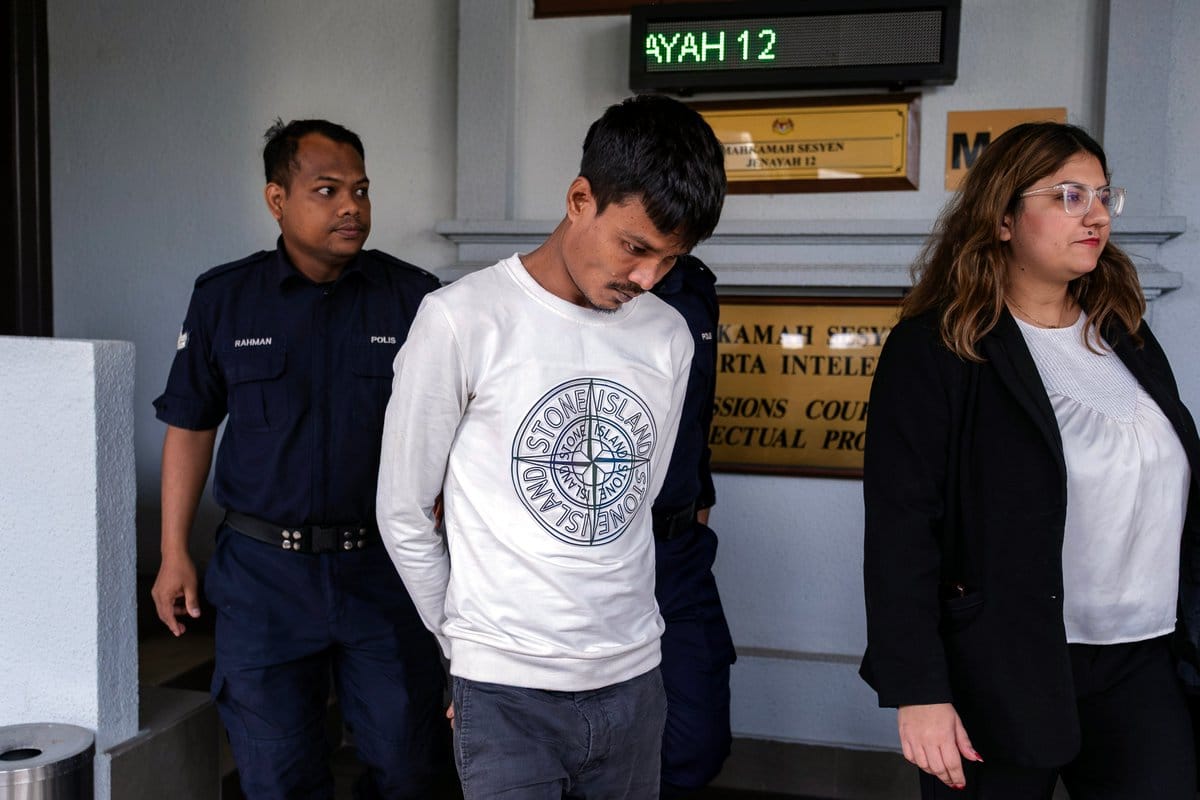
On June 12, 2026, the case officially entered the judicial system. As reported by The Vibes, Mohamad Fawyas was brought before the Kuala Lumpur Sessions Court, where he pleaded not guilty to the charge of armed robbery under Section 392 of the Penal Code, read together with Section 397. This specific charge carries severe legal consequences, including a maximum prison sentence of 14 years, alongside mandatory fines or whipping upon conviction.
The courtroom proceedings quickly highlighted the deep legal and institutional complexities defining the migrant experience in Malaysia. Deputy Public Prosecutor J. Banusha aggressively opposed bail, emphasizing that the accused possessed an expired United Nations High Commissioner for Refugees (UNHCR) card and lacked a fixed, traceable address. The prosecution argued that granting bail would create a significant flight risk and present a plausible threat of witness harassment, given that the accused knew the exact location of the victim's home.
In defense, attorney Mansheel Kaur argued for a low bail amount, revealing that Mohamad Fawyas had resided in Malaysia for 15 years. The defense noted that he earned a meager wage of RM50 per day as a manual laborer to support his unemployed wife and their 10-month-old infant. Furthermore, the defense stated that his UNHCR document was actively in the process of renewal.
However, Sessions Court Judge Siti Shakirah Mohtarudin denied bail, ruling that an expired UNHCR card cannot be accepted by the court as valid documentation for release. The accused was returned to custody, with the next case mention officially scheduled for July 14, 2026.
The Socio-Cultural Backlash: From Empathy to Hostility
To properly understand the massive wave of public outrage following this incident, the case must be analyzed within the broader context of Malaysia's changing social landscape. The initial empathy extended to marginalized groups has steadily eroded, replaced by growing public frustration over perceived lawlessness and the strain on local infrastructure.
As detailed by The Straits Times, a major controversy surrounding an unauthorized Hari Raya Korban ritual slaughter in Selayang Baru had already triggered widespread public anger over local sanitation and public order. This incident, combined with the high-profile robbery in TTDI, has accelerated a visible shift in public discourse.
On digital platforms and within local communities, arguments are increasingly framed around the belief that foreign populations are overstepping local boundaries and showing flagrant disregard for Malaysian law. This shifting sentiment indicates that the domestic tolerance for displaced populations is tied to an expectation of absolute compliance with social and legal norms; when that boundary is crossed, the public backlash is swift and severe.
Institutional Friction: The UNHCR Impasse and Policy Adjustments
The legal gridlock inside the Sessions Court exposes a critical, unresolved institutional crisis between the Malaysian government and international humanitarian frameworks. Because Malaysia is not a signatory to the 1951 Refugee Convention, it views asylum seekers merely as undocumented or illegal migrants under the Immigration Act. The UNHCR card serves as a flimsy shield it offers temporary protection against immediate deportation but grants no formal legal status, no right to lawful employment, and no access to public education.
This institutional gap forces tens of thousands of displaced individuals into a precarious shadow economy, surviving on informal labor while facing constant vulnerability to exploitation. Analysis suggests that the state's historical reliance on the UNHCR to manage this population has created a highly volatile parallel system.
When a refugee's documentation expires, they are stripped of any remaining protections, becoming entirely invisible to the state until they enter the criminal justice system. In response to these persistent tracking issues, The Straits Times notes that the government recently launched the Dokumen Pendaftaran Pelarian, an independent state tracking system designed to assert sovereign authority over refugee management and reduce reliance on international bodies.
The National Security Lens: Sovereign Demands for Public Order
The intense public reaction to the TTDI robbery also reflects a deeper systemic anxiety regarding domestic national security. For many citizens, the image of an iconic national figure facing an armed intruder inside his own home serves as a stark warning about the long-term consequences of unmanaged migration corridors.
In the wake of mounting public concern, high-ranking security officials have acknowledged that the issue requires immediate attention. As reported by The Star, Deputy Inspector-General of Police Datuk Seri Ayob Khan Mydin Pitchay publicly emphasized that managing undocumented settlements cannot remain the exclusive burden of law enforcement agencies alone.
"Efforts to address this issue should not be placed solely on the shoulders of the police, the Malaysian Maritime Enforcement Agency, or the Immigration Department."
Deputy IGP Datuk Seri Ayob Khan Mydin Pitchay
The state has visibly intensified its enforcement posture. Large-scale immigration crackdowns on undocumented enclaves such as the recent high-profile raid in Hulu Langat, which resulted in dozens of detentions demonstrate a clear political determination to reassure an anxious public.
From a state security perspective, these actions are presented as necessary measures to maintain public order. However, institutional analysis suggests that localized crackdowns offer only a temporary band-aid; without a comprehensive domestic policy framework that addresses legal employment and formal identification, these shadow communities will continue to exist on the margins of society, vulnerable to poverty and illicit economies.
What do you think? I’d love to hear your opinion in the comments section.
The armed robbery at Datuk Razif Sidek’s residence is a watershed moment for Malaysia, forcing the country to confront a complex crisis that text-only reporting often fails to fully capture. This event goes far beyond a standard police report; it represents a profound collision between a nation's instinct to protect its cultural heritage and the harsh realities of a marginalized, undocumented underbelly.
The intense public anger following the incident reveals a society grappling with real anxieties over safety, strained resources, and the rule of law. Yet, the systemic reality remains: minor security crackdowns and digital outcries do not solve the structural vulnerability of an underground population.
Malaysia stands at a defining historical crossroads. The choices made by policymakers and citizens over the coming months will determine whether the nation can construct a transparent, rules-based framework for migrant management, or if the social fabric will continue to fray under the weight of fear and mutual distrust.
AM World (tameer.work88@gmail.com) is a content creator under the Newswav Creator programme, where you get to express yourself, be a citizen journalist, and at the same time monetize your content & reach millions of users on Newswav. Log in to creator.newswav.com and become a Newswav Creator now!
The User Content (as defined on Newswav Terms of Use) above including the views expressed and media (pictures, videos, citations etc) were submitted & posted by the author. Newswav is solely an aggregation platform that hosts the User Content. If you have any questions about the content, copyright or other issues of the work, please contact creator@newswav.com.