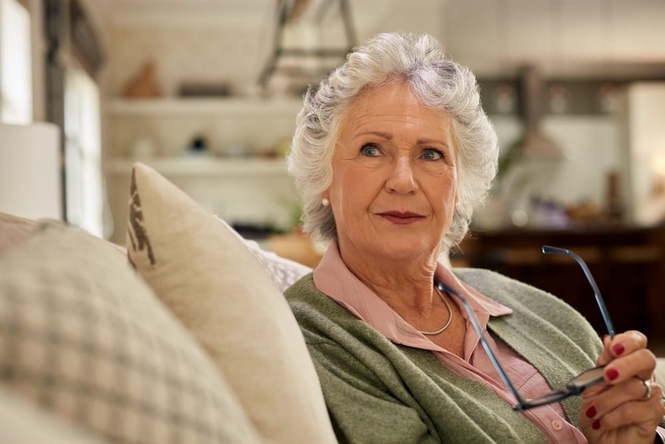
Retirement looks very different when there’s no spouse or partner sharing the mortgage, grocery bills, and unexpected expenses. For millions of American women, that isn’t a hypothetical concern but the financial reality they’re already navigating. Some are single by choice, while others have experienced divorce, widowhood, or a relationship that ended later in life. New research published in 2026 reveals significant differences in retirement savings, financial security, and poverty rates among older women. The numbers aren’t all discouraging, but they show why planning for retirement alone requires a different approach than preparing for retirement as a couple.
Nearly One-Third of Older Women Live Alone
Living alone in retirement is far from unusual, particularly among women. A December 2025 Pew Research Center analysis found that 31% of American women age 65 and older lived alone in 2023, compared with 19% of men in the same age group. Interestingly, the percentage of older women living alone has actually declined from 38% in 1990. That means solo living remains common without necessarily becoming more prevalent as a share of the older female population. These figures describe household living arrangements, not whether women are financially independent, unmarried, or planning to retire without a partner.
Women Have Less Saved for Retirement Than Men
One of the clearest financial differences appears in retirement account balances. A 2026 Transamerica Center for Retirement Studies report found that middle-class women who weren’t yet retired reported median household retirement savings of $49,000, compared with $82,000 for men. That’s a $33,000 difference, even before considering the potential effects of investment growth or additional contributions. The figures come from a survey of middle-class households rather than a study limited to single women, so they shouldn’t be interpreted as the typical savings balance of someone retiring alone. Nevertheless, they highlight a broader financial disadvantage that can become especially consequential when a woman has no partner’s savings to rely on.
The Poverty Gap Is Particularly Concerning
Older women who aren’t married face substantially greater financial vulnerability than their married counterparts. An April 2026 National Women’s Law Center fact sheet found that 21.4% of unmarried women age 65 and older lived in poverty under the Supplemental Poverty Measure in 2024. That compares with 10.9% of married women in the same age group, meaning the unmarried group’s poverty rate was nearly twice as high. The Supplemental Poverty Measure considers factors such as taxes, government assistance, and certain necessary expenses rather than relying solely on pretax income. These statistics don’t mean marriage automatically prevents financial hardship, but they demonstrate how economic circumstances can differ sharply between older women with and without spouses.
Living Alone Can Make Housing More Expensive
A mortgage payment doesn’t automatically shrink when only one person lives in a house. Property taxes, homeowners insurance, maintenance, and many utility expenses remain largely unchanged regardless of household size. Pew Research Center found that approximately one in five adults age 65 and older who lived alone were in poverty in 2023, compared with 6% of those who didn’t live alone. That difference reflects multiple financial and demographic factors, not simply the cost of maintaining a home. Still, paying fixed housing expenses from one retirement income can make budgeting more difficult, particularly when property taxes or insurance premiums increase.
Social Security Plays an Especially Important Role
For women retiring without substantial savings, Social Security may provide the most predictable source of monthly income. The National Women’s Law Center reported in April 2026 that the average monthly Social Security benefit received by retired women age 65 and older was $1,808 in December 2024, compared with $2,215 for retired men. That’s a difference of $407 per month, or $4,884 annually, based on those historical averages. Benefits vary considerably by earnings history and claiming age, so those figures aren’t a forecast of what any individual woman will receive in 2027. However, the difference illustrates why lower lifetime earnings can create financial consequences that continue long after someone leaves the workforce.
Divorce Doesn’t Always Eliminate Spousal Benefits
Some women approaching retirement assume that divorce means they can never receive Social Security benefits based on a former spouse’s earnings. However, the Social Security Administration’s October 2026 guidance explains that qualifying divorced individuals may receive benefits based on an ex-spouse’s record. Generally, the marriage must have lasted at least 10 years, and additional requirements involving age, marital status, and eligibility apply. If someone qualifies for both their own retirement benefit and a divorced-spouse benefit, Social Security generally pays the higher applicable amount rather than adding the two full benefits together. Understanding these rules can be particularly valuable for women who spent years outside the workforce raising children or providing unpaid family care.
Widows Face a Different Retirement Calculation
Losing a spouse can change household finances even when both partners previously received Social Security. A surviving spouse may qualify for survivor benefits based on the deceased worker’s record, depending on age and other eligibility requirements. The SSA’s 2026 survivor benefits guidance explains that qualifying survivor benefits can range from 71.5% to 100% of the deceased worker’s benefit, depending on when benefits begin and other circumstances. However, a surviving spouse generally doesn’t continue receiving two full retirement checks simply because the household previously had two beneficiaries. Reviewing the expected survivor benefit alongside housing and healthcare expenses can reveal whether the remaining income will support the household.
Healthcare and Long-Term Care Create Additional Uncertainty
Retiring alone doesn’t necessarily mean lacking family or friends who can help during an illness. However, women without a partner may need to plan more deliberately for transportation, recovery after surgery, household assistance, and potential long-term care expenses. Transamerica’s 2026 middle-class retirement research found that only 14% of surveyed retirees were very confident they could afford long-term care if needed. The study also found that men were more likely than women to expect to rely on a spouse for future care, at 43% versus 32%. Those findings make it important to consider who could provide assistance and how paid care would be financed if informal support became unavailable.
Financial Planning Could Make a Meaningful Difference
Retirement planning isn’t just about accumulating a large investment account. It also involves understanding Social Security benefits, managing debt, estimating healthcare expenses, and preparing for unexpected changes in living arrangements. Transamerica’s 2026 research found that only 21% of middle-class women had a written retirement strategy, compared with 29% of men. A written plan doesn’t guarantee financial security, but it can help identify savings gaps and clarify decisions about working longer or adjusting spending. For women expecting to retire alone, documenting income sources, recurring expenses, emergency savings, and future care needs is a practical starting point.
Solo Retirement Can Also Offer Greater Independence
The financial challenges are real, but retirement alone isn’t automatically an unhappy or unsuccessful experience. Some women value the freedom to decide where they live, how they spend their time, and which financial priorities deserve attention. The Society of Actuaries Research Institute’s 2025 survey of solo agers found that many respondents felt confident about aging in place and maintaining their independence, even while expressing concerns about companionship and future support. The survey focused on self-identified solo agers age 50 and older, so its findings shouldn’t be generalized to every single retired woman. Still, it highlights an important distinction between living independently and lacking the financial or social resources needed for a secure retirement.
The Numbers Make Planning More Important, Not Retirement Impossible
The latest research reveals a complicated picture of women retiring alone in America. Women remain more likely than men to live alone in later life, and unmarried older women face significantly higher poverty rates than married women. At the same time, Social Security benefits, retirement savings, community support, and careful financial planning can help women build greater security. The most useful response to these findings is understanding your own numbers rather than assuming national averages determine your future.
Are you planning to retire on your own, and what’s your biggest financial concern about making retirement work without a partner?
Partner Pick: Empower's free tools let you link accounts and see balances, test drive retirement, and stress-test your investments all in one dashboard. Review current features and terms on Empower's site. Try Empower free (affiliate link).
The post What the Latest Data Says About Women Retiring Alone appeared first on Budget and the Bees.