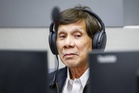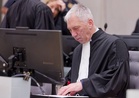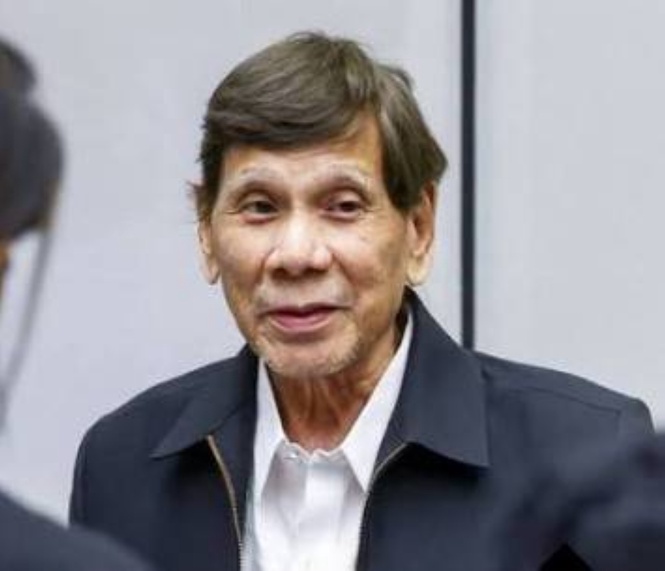
FORMER president Rodrigo Duterte’s trial at the International Criminal Court (ICC) will open on Nov. 30, with judges set to read the charges, ask him to enter a plea, and hear opening statements before the prosecution begins presenting its evidence.
The proceedings, scheduled to start at 10 a.m. in The Hague (5 p.m. Manila time) will examine allegations that Duterte committed crimes against humanity of murder and attempted murder in the Philippines between Nov. 1, 2011, and March 16, 2019.
The charges have been confirmed for trial. Prosecutors must prove the charges beyond reasonable doubt, and the defense will have the chance to challenge the evidence and present its own case.
Here is how the trial is expected to proceed.
Opening day
The three-judge Trial Chamber III will first verify that Duterte understands the nature of the charges against him. The judges will then ask whether he admits guilt or pleads not guilty.
The court will read the charges previously confirmed by the ICC’s Pre-Trial Chamber.
The prosecution will deliver its opening statement first, followed by the Common Legal Representatives of Victims (CLRVs).
The defense may also deliver an opening statement at the start of the trial or immediately before presenting its evidence.
The prosecution has six hours to present its opening statement, while the victims’ representatives have three hours. The judges have yet to determine how much time to give to the defense.
Duterte faces three counts of crimes against humanity involving alleged killings during his time as Davao City mayor and president.
The first count concerns alleged murders in Davao City during his mayoral period, from 2013 to June 2016.
The second concerns the killings of people described as “high-value targets” during his presidency, from around July 2016 to July 2017.
The third involves alleged murders and attempted murders during barangay clearing operations across the country from July 2016 to September 2018.
Prosecutors allege that the crimes were committed as part of a widespread and systematic attack against a civilian population.
The charges relate to crimes committed between November 2011 and March 2019. Duterte has not been convicted of these charges.
The prosecution's case
After the opening statements, the prosecution will call its first witness. It will also present testimony and documentary, digital or physical evidence against Duterte.
The judges have asked the prosecution for a detailed trial brief, which is intended to identify the principal facts the prosecution seeks to establish, the witnesses who will testify, relevant exhibits and the legal arguments.
The prosecution must establish the accused’s guilt to the standard required by the ICC.
The party calling a witness will generally question that witness first. The victims’ legal representatives may ask questions, followed by the prosecution.
The defense can challenge prosecution witnesses by questioning their credibility and the reliability of their testimony.
Not all testimony or evidence will necessarily be presented in the same way. Under the court’s rules, certain previously recorded testimony may be submitted through procedures that do not require the witness to physically testify.
The victims' representatives
Victims will participate through the Common Legal Representatives of Victims, who can present their views and concerns and make submissions on matters affecting their personal interests.
Their role is distinct from that of the prosecution, which carries the burden of proving the charges.
The chamber’s directions allow for a possible presentation of evidence by the representatives.
The ICC intends, insofar as possible, to hear witness testimony in public.
However, some portions of the proceedings may take place in private or closed session when necessary, including to protect sensitive information or witnesses.
The court’s directions require the parties to respect protective measures ordered for witnesses and to limit private or closed sessions to what is strictly necessary.
After the prosecution completes its presentation, the victims’ legal representatives may submit observations and, if authorized by the judges, present evidence.
The defense will then present its case and call witnesses. It may challenge the prosecution’s evidence and offer its own evidence in response to the charges.
The chamber has directed the defense to identify the principal factual or legal issues it disputes with the prosecution and outline the general nature of its defense.
The court has also clarified that this does not prevent the defense from raising additional issues later if they emerge during the trial or its investigations.
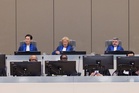
Trial Chamber III, composed of Presiding Judge Joanna Korner and Judges Keebong Paek and Nicolas Guillou, will examine the arguments and evidence presented during the trial before delivering a judgment. They may convict Duterte only if they are satisfied that the charges have been proved beyond reasonable doubt.
If the prosecution fails to meet that standard, the court cannot convict him.