
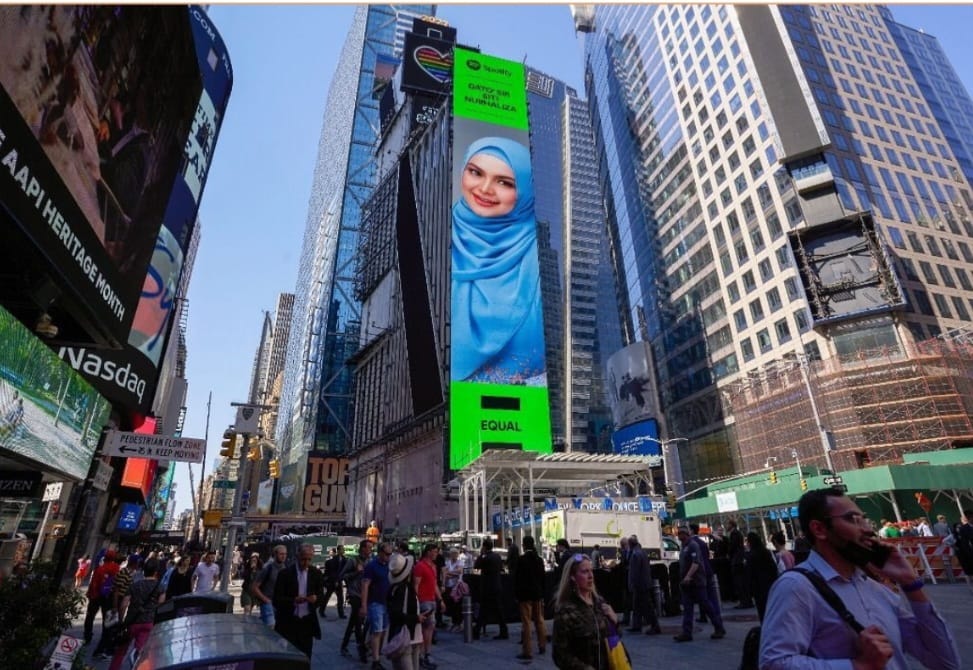
In Malaysia, fame gets the spotlight. In China, scientists are beginning to get one, too. Perhaps we should examine what we are teaching our children to admire.
By Mihar Dias October 2026
Imagine walking through a Malaysian city and seeing giant billboards featuring scientists who have discovered cures for diseases, engineers who have built remarkable things, or researchers whose work has improved millions of lives.
Now stop imagining. You might strain your neck looking for one.
Our billboards are more likely to feature entertainers promoting beauty products, politicians smiling as though they personally invented prosperity, and celebrities endorsing everything from instant noodles to slimming products. If a famous face can sell it, somebody will pay to put that face up in lights.
Apparently, being famous is a qualification for selling almost anything, even if the celebrity knows as much about the product as a goldfish knows about astrophysics.
But perhaps we should not laugh too quickly. These billboards tell us something about ourselves. More importantly, they tell our children what society considers worthy of admiration.
Children do not merely listen to what adults tell them. They watch whom adults celebrate.
We tell them to study hard, acquire knowledge, develop useful skills and contribute to the nation. Then we bombard them with images suggesting that the shortest route to success is to become famous, attract followers, collect endorsements and look good in photographs.
The lesson is hardly subtle. Education is important, we say, but celebrity is lucrative. Knowledge is power, we teach them, but visibility appears to be the real currency.
And we wonder why some youngsters dream of becoming influencers before they have decided what they want to influence.
When scientists become the stars
A report circulating online describes an interesting development in China. In August 2026, a shopping mall in Shandong Province reportedly replaced a commercial advertisement with a giant portrait of Qian Xuesen, the scientist associated with China's missile and space programmes. The idea was subsequently said to have inspired similar displays in cities including Zhengzhou, Hangzhou and Hefei. https://www.facebook.com/share/p/1YBVy6Hmrd/
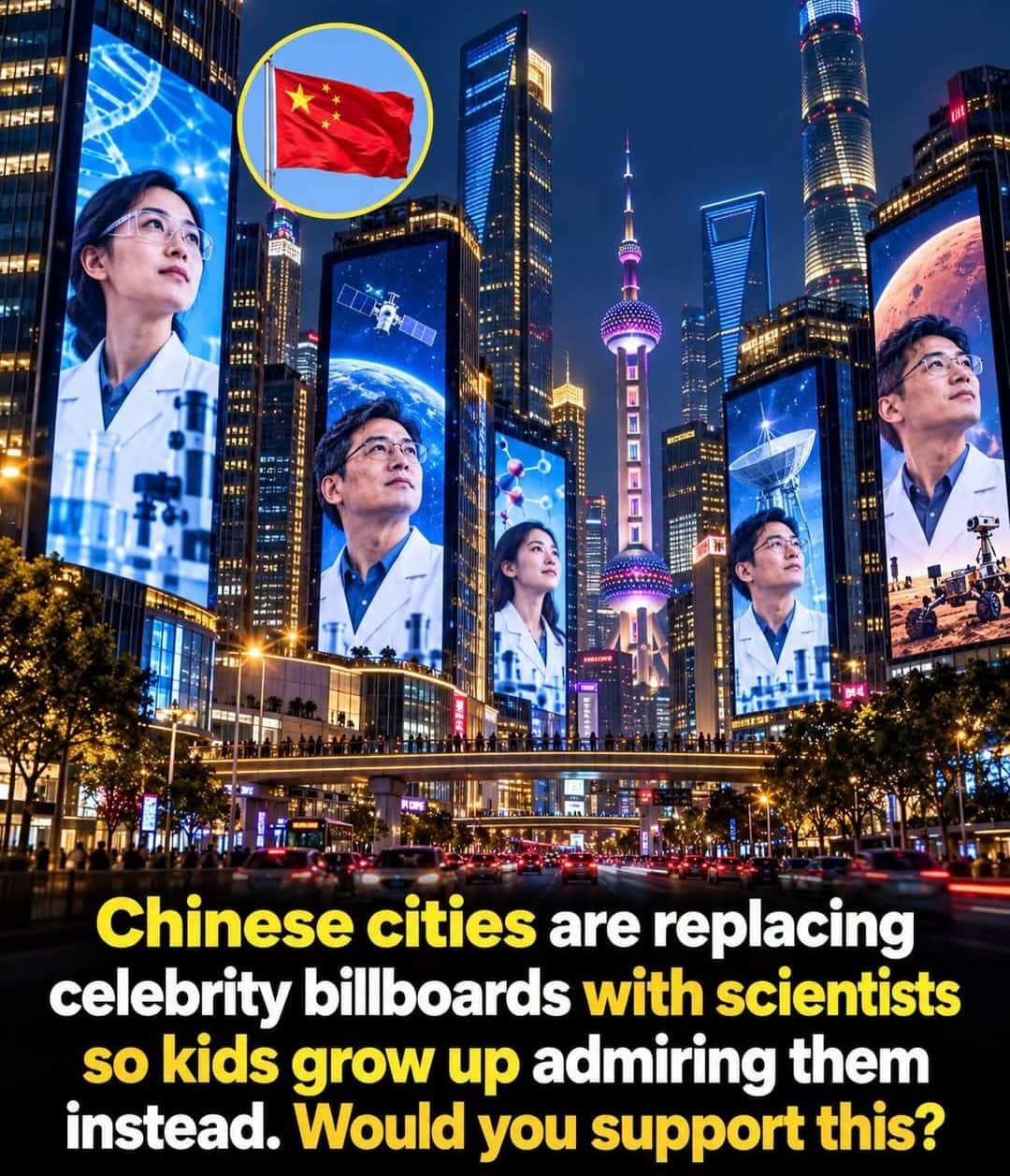
Metro commuters in Zhengzhou were reportedly greeted by portraits of scientists such as Qian Xuesen, Deng Jiaxian, Yuan Longping and Tu Youyou.https://www.facebook.com/share/p/1YBVy6Hmrd/
These were not pop stars advertising perfume or social media personalities demonstrating their latest purchases. They were people associated with achievements in aerospace engineering, nuclear science, agricultural research and medicine.
The reported initiative began as a public-service campaign by commercial venues, rather than a government mandate.
What a revolutionary idea! Instead of asking, “Who is trending today?”, somebody appears to have asked, “Who helped move civilisation forward?”
Imagine that question catching on here.
Of course, China is not a scientific paradise merely because scientists appear on billboards. A portrait cannot manufacture scientific breakthroughs, and a photograph of a researcher will not automatically persuade a teenager to put down a smartphone and open a textbook. Nor should we assume that one reported campaign represents the attitudes of an entire country.
Nevertheless, the idea deserves attention. Public recognition communicates values, and the people we choose to honour become part of the stories we tell about success.
Our children are watching
In Malaysia, we have no shortage of advice for young people. Parents want their children to become doctors, lawyers, engineers and other professionals. Teachers encourage them to excel academically. Politicians deliver speeches about innovation, productivity and the knowledge economy.
Yet our public spaces often tell a different story.
The entertainer gets the giant billboard. The politician gets the oversized portrait. The scientist, if lucky, gets a paragraph in a newspaper when receiving an award.
We seem to have mastered the art of celebrating people who attract attention while overlooking those who deserve attention for what they contribute.
Naturally, commercial advertisers will argue that billboards are meant to sell products, not deliver moral instruction. Fair enough. A company selling shampoo is unlikely to believe that a portrait of a nuclear physicist will improve quarterly sales.
But commercial logic need not be our only logic. Shopping malls, universities, local councils, media organisations and public institutions can also recognise achievement, particularly when doing so serves an educational purpose.
Nobody is suggesting that entertainers should be banished from public view. Entertainment has its place, and talented artists deserve recognition. Politicians, too, have legitimate roles in public life.
The problem begins when visibility becomes confused with value, and popularity is mistaken for achievement.
A million followers do not necessarily make someone wise. A famous face does not automatically make someone admirable. And occupying a billboard does not constitute proof of having contributed anything meaningful to society.
Who deserves the spotlight?
I have spent decades studying human behaviour, and one lesson is difficult to escape: people are influenced by the behaviour and values their environment rewards.
When children repeatedly see wealth, glamour and celebrity presented as the ultimate measures of success, these images can shape their aspirations. They may begin to believe that being noticed matters more than being useful, and that looking successful is more important than becoming competent.
Of course, children are influenced by parents, teachers, peers and personal experiences as well. A billboard alone will not determine their future. But it is one more signal in an environment that tells them what society admires.
We cannot preach humility, hard work and intellectual curiosity while reserving our grandest public displays for fame and status.
Perhaps Malaysian shopping malls could devote some of their digital screens to scientists, inventors, teachers, medical researchers and engineers. Schools could tell the stories behind their achievements. Media organisations could make intellectual accomplishment as accessible and interesting as celebrity gossip.
We might even discover that a scientist has a more compelling story than a celebrity's latest holiday photographs.
What a frightening possibility.
The real question is not whether Malaysia should copy China. Every country must decide what reflects its own aspirations. The question is whether we are satisfied with the signals we send to our young.
We cannot demand innovation from a generation we have taught to admire only visibility. We cannot complain about a shortage of scientific ambition if we rarely celebrate the people who embody it.
And we cannot blame our children for wanting to become what we repeatedly tell them, through our choices, is worth becoming.
So the next time we erect a giant billboard, perhaps we should ask ourselves one question.
Are we showing our children whom to admire, or merely whom to imitate?
Because a society's future is not built by the faces it displays. It is built by the minds it inspires.
And if our children grow up believing that the highest achievement in life is to become famous enough to occupy a billboard, we should not be surprised when they forget to ask what they have actually achieved.
After all, we cannot complain that our children have their heads in the clouds when we are the ones who put their heroes up there.
Mihar Dias (mihardias@gmail.com) is a content creator under the Newswav Creator programme, where you get to express yourself, be a citizen journalist, and at the same time monetize your content & reach millions of users on Newswav. Log in to creator.newswav.com and become a Newswav Creator now!
The User Content (as defined on Newswav Terms of Use) above including the views expressed and media (pictures, videos, citations etc) were submitted & posted by the author. Newswav is solely an aggregation platform that hosts the User Content. If you have any questions about the content, copyright or other issues of the work, please contact creator@newswav.com.