
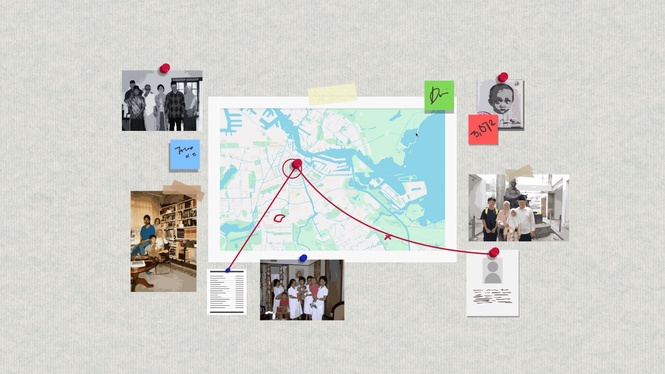
JAKARTA - Herry’s file named a woman as his mother.
An Indonesian birth document from 1978 described her as 27, from Subang, and living at the time in East Jakarta. It also said Herry was her third child. Then, in 2005, after he had grown up in the Netherlands, Herry took a DNA test with her.
The result did not match.
“If you’re not my mother, why are your name and address in my documents?” Herry recalled asking himself.
That is the kind of document Indonesian-born Dutch adoptees are now asking the Indonesian government to examine. In 2021, the Dutch government released a report that says about 3,072 Indonesian children were officially placed with Dutch families between 1973 and 1984.
Recently, Ana Maria van Valen, Indra Jaya Laksana, and Casmat van Bloppoel of Akarku Indonesia, a non-profit organization for victims of intercountry “adoption” like themselves, came to Jakarta for meetings with Indonesia’s Ministry of Law, the National Commission on Human Rights, and the Ministry of Social Affairs. They also appeared at the Ministry of Law’s Pasti Ada Solusi forum, a public appeal that put their citizenship demand before state officials.
In an interview with Migrant Times after the forum, they described the family searches and years of institutional silence behind that appeal. They want Indonesian citizenship restored.
Ana has lived in Indonesia for years, and her husband is Indonesian. Casmat is also married to an Indonesian. Other adoptees, who are now adults in their 40s and 50s, have found relatives here. Some may have family or diaspora routes available to them, but Ana says those routes box them in the wrong category.
“We don’t want to do it as a foreign national through the regular naturalization process or just a diaspora visa,” she said.
“For us, this is about justice, because we never chose to lose our citizenship.”
The Ministry Reached Out
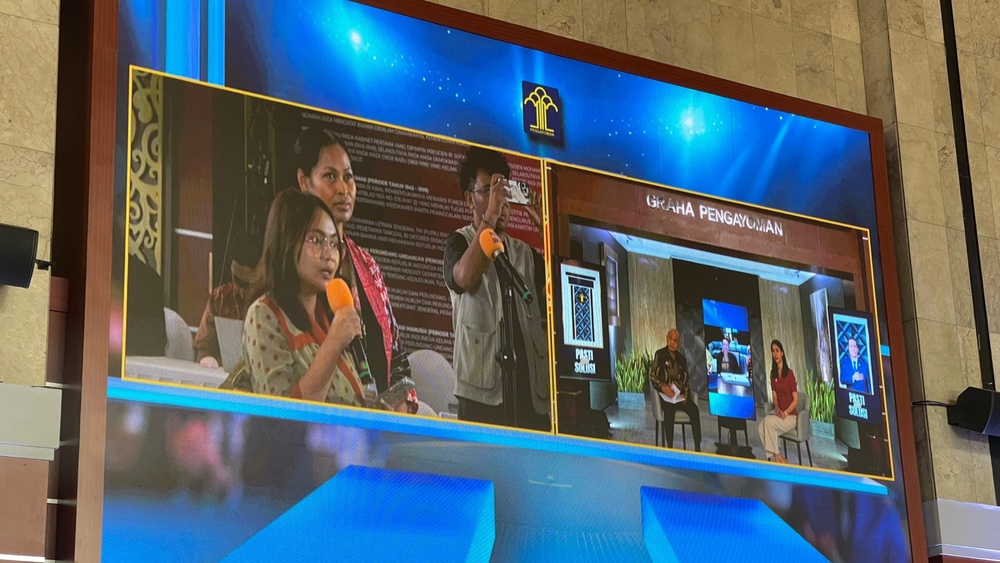
A Dutch-Indonesian translator (front) speaks at the Ministry of Law’s Pasti Ada Solusi forum, with Ana Maria van Valen standing behind her. Photo: Migrant Times.
This year, Casmat had already planned to travel to Jakarta for a meeting with the National Commission on Human Rights when officials from the Ministry of Law contacted him through Instagram. They asked how to reach him and where he lived.
Pati, a regency capital in Central Java, he told them. They said they would come.
Two days later, in Casmat’s words, six officials from the ministry’s legal administration directorate arrived in Pati. They reviewed his files and listened to his account of how Indonesian children were sent to the Netherlands for adoption through documents that he and other adoptees now challenge.
Indra said that changed the process. “Before, it was always us trying to contact them without any results,” he said. “Now, it is the government contacting us.”
After that visit to Pati, Ana, Casmat, and Indra went to Jakarta. They brought their documents and the people who work with them on family searches. Casmat said one meeting included around 30 people. “They got more background context about the search for our biological families and birth mothers,” he said.
Their case then entered a more public space. On June 12, Ana, Casmat, and Indra appeared at the Ministry of Law’s Pasti Ada Solusi forum at Graha Pengayoman in South Jakarta, where they asked to regain Indonesian citizenship. Supratman Andi Agtas, Indonesia’s Minister of Law, joined the forum online from Maluku.
Casmat, Indra, and Ana spoke in Dutch, with their remarks translated into Indonesian by Angela, a Dutch-Indonesian translator from the University of Indonesia. All three, Casmat reminded the forum, were born in Indonesia. He described them as “victims of illegal adoption.”
For Ana, returning to Indonesia carried a sense of homecoming. Indra’s longing had stretched even further back. “Since I was 10 years old,” he said, “I wanted to return to Indonesia.”
The adoptees also heard a possible timeline, around 17 August, or on Indonesia’s Independence Day. Ana repeated the date during the interview. “If Indonesia is merdeka (independent), it would be wonderful if we could also be merdeka,” she said.
The Files, the Cases, and the Money
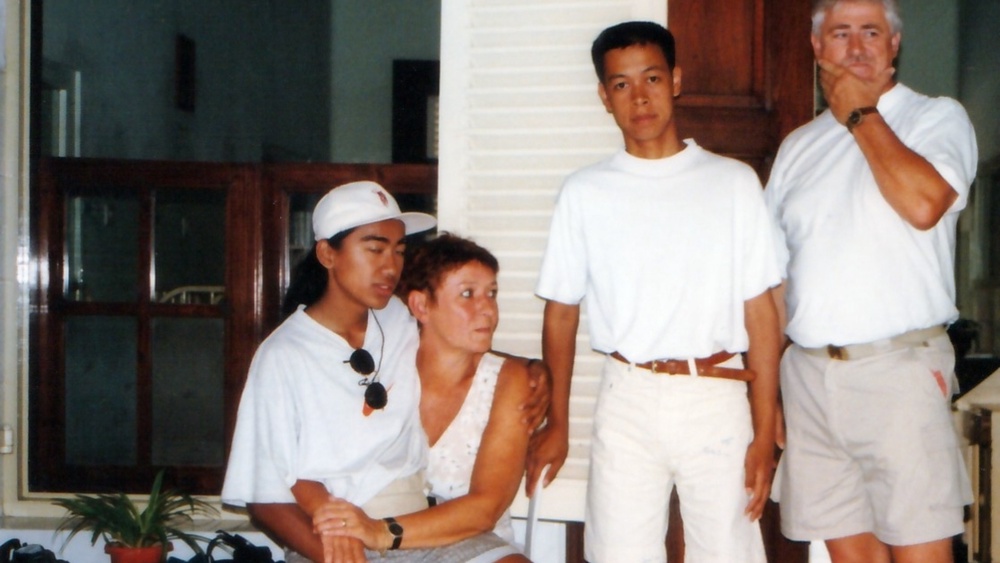
Sumaryono (left), Casmat’s brother, pictured sitting on an adoptive family member’s lap. Photo courtesy of Casmat van Bloppoel's personal archive.
Ana said she has spent about 10 years explaining Indonesian intercountry adoption to offices that could help, or at least direct her to someone who could.
She said many meetings began from zero. “Our searches have been featured on various talk shows and newspapers, yet when we visit these ministries, they act as if they are hearing it for the first time,” Ana said.
That week, however, felt different to Ana, because several institutions discussed the problem at the same time. “Usually, we go to one institution to talk, then to another, without finding a real solution,” she said. “Now, they are sitting down together to find a solution.”
Akarku has traced the histories of around 80 families, Ana said, and adoptees usually pay for the work themselves. Each case can involve visits to neighborhood offices, old orphanage addresses, police referrals, civil registries, village offices, DNA laboratories, and translators, as well as meetings with families who may or may not be related to them.
As the search stretches across institutions and incomplete records, the costs can pile up quickly. A one-way flight from Amsterdam Schiphol to Jakarta’s Soekarno-Hatta airport averages around €450, or about Rp9.25 million, depending on the airline and season.
DNA testing then adds another burden. Private or clinic-based paternity tests in Indonesia can range from around Rp5 million to Rp17 million, with some legal-standard tests reaching close to Rp20 million.
“There is no financial support at all,” Ana said. “The adoptees have to pay for everything themselves, from DNA tests, plane tickets to Indonesia, to visas.” Then, she explained why the cost feels wrong. “It feels a bit like exploitation because we were originally sold for money, and now we have to pay a lot of money just to come back and live here.”
The Ministry of Social Affairs may now help when searches face problems in the field, Ana said. Akarku wants that help to become clearer and more structured.
According to Ana, one person involved in the meetings said the ministry has handled domestic adoption more often than international adoption cases tied to alleged trafficking. Akarku wants to share what it has learned from adoption documents, visas, family tracing, DNA testing and reunification cases.
One of the cases they brought shows what that knowledge is up against.
Herry’s Contradictory Files
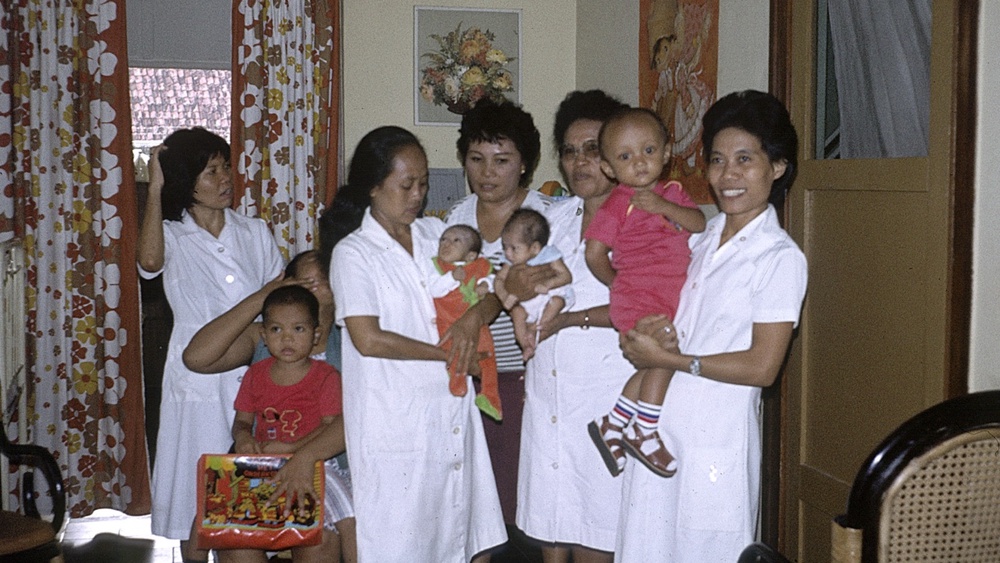
Herry pictured being carried by an adoption center’s nurse during his childhood. Photo from Hery van Wilpen’s personal archive.
Herry’s file shows why adoptees keep pushing the state to stop treating official documents as neutral evidence, especially when those same papers may have helped conceal the adoption’s irregularities.
According to his chronology, as shared with Migrant Times by Ana and Akarku Indonesia’s team, he was born on 15 December 1978. Ten days later, exactly on Christmas Day, his birth was registered at the Kayumanis urban village office in East Jakarta. The document named a woman from Subang as his mother. The tracing report says the registration had a purpose: to legalize the adoption.
When Herry’s search team checked the address in 2005 and 2006, local officials and residents did not know Herry or the woman named in the file. A former local official remembered another woman from Subang who had lived there briefly, but that clue did not settle the case.
“Everyone wanted to help, but not everyone could help,” Herry said. “There were so many stories that I didn’t know what I could believe.”
The adoption process itself happened quickly.
In early August 1980, Herry entered a children’s home in Jakarta that was connected to a Dutch adoption organization. The report says the house on Jalan Dr. Saharjo had been rented by Stichting Overzeese Contacten, or SOC. The children’s home closed in 1981.
Herry stayed there for six days, from 2 to 7 August 1980. During that time, a doctor examined him, he met his adoptive parents, notarial papers were prepared, and a court hearing took place. His travel documents followed later.
One notarial deed named the woman in his file as the person giving power to an intermediary to find an adoptive couple for her child. The report notes that she was described as illiterate and wanted to use a thumbprint, but no thumbprint was visible. According to the adoptive parents’ account in the report, the court hearing lasted only 10 minutes.
Herry arrived in Amsterdam on 20 August 1980.
When Herry later returned to the address of the former children’s home, standing there gave him something his documents had not. “Sometimes when I was young, I felt that I didn’t exist because I didn’t have a real family,” he said. Standing at the former children’s home changed that. “For the first time, I felt: I have a past. I have a real past. I have roots there.”
Years later, the people and offices named in the file could not give him a clear answer. Some had died, and some could not be found. At Kayumanis, there was no document or copy about Herry left at the urban village office. The notary who handled the papers was located, according to the tracing report, but declined to discuss the adoption.
“I only signed the documents,” he told the search team.
Even when the search produced a possible answer, Herry was afraid to trust it. When the Indonesian Red Cross first offered to show him a photograph of the woman named in his documents, he refused. “I wasn’t ready,” he said. “I wanted to know exactly whether she was my mother first.”
The search eventually reached the woman named as Herry’s mother. Her name and address matched the papers, but the DNA did not. A DNA test in Jakarta showed that she was not Herry’s biological mother.
The chronology records several possible explanations for how her name may have entered Herry’s adoption file. In one, a baby was left temporarily in her care in 1978. In another, a woman allegedly brought children to Jakarta to be sold or handed over for adoption, and paid her for the use of her name and address.
A third account was more disturbing. According to the report, people came to her in Subang and offered Rp30,000 to take two children for adoption. She said she was then taken to a warehouse in Kebayoran Lama, Jakarta, where there were around 20 children, and that her identity card was left behind there.
The search team later checked newspaper archives for reports from that period. The report says Poskota editions from July to September 1980 were missing.
That is the type of contradiction now behind the citizenship request in Jakarta.
For Herry, citizenship is only part of what the state owes adoptees. “The main thing for me is to find my family, but also to have the right to find my family,” he said. He wants the records connected to adoptees’ origins to be accessible rather than kept secret.
The Afterlife of Empire
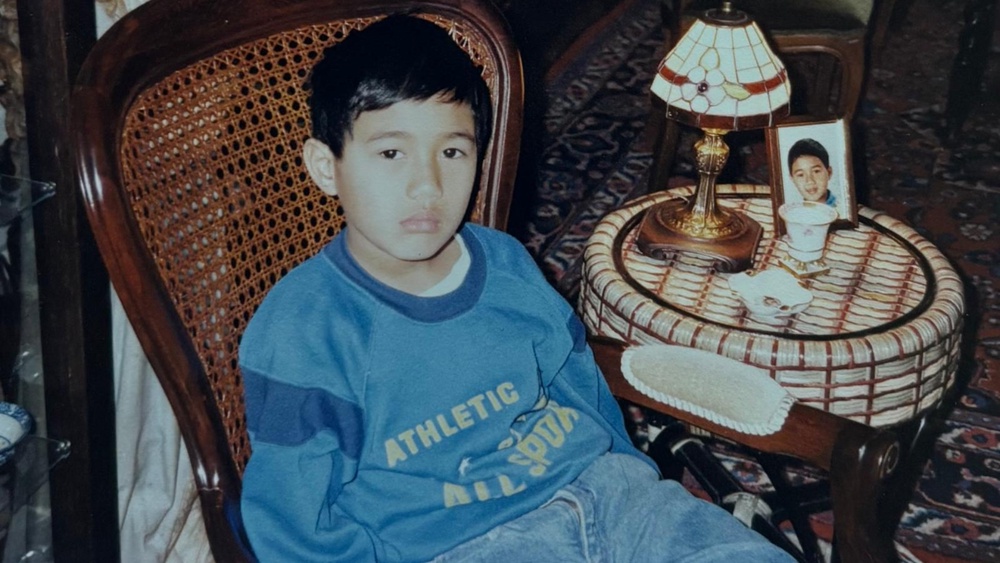
Indra during his childhood years. Throughout his childhood, he was given the Dutch name Scipio Jean Luc and was raised entirely under a false identity. Photo from Indra Jaya Laksana’s personal archive, Akarku Indonesia.
Indra would trace that contradiction further back. He began with the older, more poisonous relationship between Indonesia and the Netherlands.
“Yes, of course,” he said, when asked whether Indonesian children sent to the Netherlands were also victims of a colonial mindset. “Kolonialisme doesn’t simply end with formal decolonization; this system leaves a massive impact on power structures.”
To him, the word adoption already carries a history.
“It’s too much to explain right now, but what they call adoption is actually what we call the afterlife of empire,” he said. “Colonialism lives on through it.”
Indra placed the adoption story inside that older pattern. After independence, some of that architecture remained inside the law that governed the country. “It started during the Dutch colonial period, specifically through missionaries and Christian institutions, which were a core part of the colonization project,” he said.
Indra argued that colonial institutions created enduring systems of child separation.
“Part of that project was to separate children from their parents to control their future, whether to make them loyal, obedient, or whatever it was. They established orphanages, which then became centers for child separation. After the Dutch formally left, those centers essentially turned into child trafficking centers.”
The Joustra report traces part of Indonesia’s post-independence adoption framework to laws inherited from the Dutch colonial period. Those rules were largely designed for domestic adoption, not for children being transferred across national borders.
Even Indonesia’s 1979 child-welfare law provided no formal guidelines for intercountry adoption, although a Supreme Court circular required court approval.
For Indra, that legal inheritance was not neutral.
“The legal framework used back then was based on Dutch colonial law, which was designed not to protect Indonesians, but to exert full control over them,” he said. “Using that outdated legal framework is exactly what made our exploitation possible.”
That is where, in his telling, the child disappeared behind procedure. “Normally, the most important rights should rest with the child first, then the parents,” he said. “But this system wasn't built for us; it was built for people in the Netherlands and other Western nations.”
Ana places part of the responsibility on Indonesia too. If Dutch-linked routes and Western demand helped pull children out, Indonesia failed to protect the children taken through them.
“This is an opportunity for Indonesia to set history straight,” she said. “Since we didn’t receive protection when we were children, hopefully they can protect us now.”
A Process for Other Adoptees
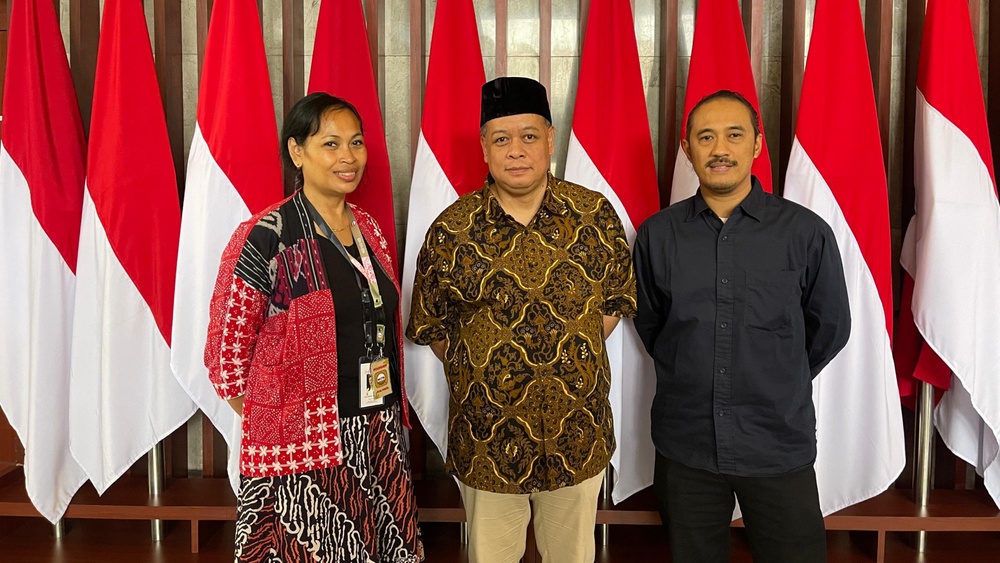
Left to right: Ana, Casmat, and Indra, after Pasti Ada Solusi’s event and Migrant Times interview. Photo: Migrant Times.
What would restoring their citizenship mean beyond Ana, Casmat, and Indra’s individual cases?
Ana said the first case could give other adoptees a process to follow. “If we get our WNI [status] back, we also open the door for other victims by establishing a formal procedure for this group,” she said.
That group includes people with incomplete files, false names, missing signatures, closed orphanages, and biological families who may still be waiting for news. It also includes people who cannot spend years doing what Herry did, who had to ask strangers about a name found in decades-old documents.
Herry described the identity produced by that history in simple terms. “I’m not Indonesian, not Dutch. I’m both,” he said. In Indonesia, people see him as Indonesian and speak to him in a language he did not grow up speaking, leaving him to explain his history repeatedly.
In a written response to minutes from the National Commission on Human Rights’ June 11 coordination meeting on international adoption, obtained by Migrant Times, Akarku Indonesia said these cases were unlikely to stand alone.
Based on its work assisting searches and tracing of families, Akarku said there may still be other victims who have not been identified, or who do not yet know how to ask the state for help. The group said it was ready to help the state “identify, reach out to, and assist other victims” suspected to have been affected by illegal international adoption, child abduction, or child trafficking in the past.
“Akarku Indonesia is ready to play a role as a civil society partner that can help,” the letter reads.
Ana also wants the cases to affect how Indonesia handles children today. She pointed to recent alleged baby trafficking cases in Bandung, Jakarta, and Pontianak, where a syndicate allegedly paid parents Rp9–15 million and sold at least 12 babies to Singapore for S$17,000–S$21,600 each. Demand for babies, according to her, still creates illegal markets.
“As long as there is a demand for babies, money will be involved,” she said.
Herry’s file still names a woman from Subang as his mother. The DNA test says otherwise. For Ana, Indra, Casmat and other adoptees, that gap should now be the state’s responsibility too. They are asking Indonesia to reopen the papers and decide what repair is still possible for children who were sent away.
“We were Indonesian children,” she said. “We were adopted and made Dutch citizens, but we are still Indonesians.”


