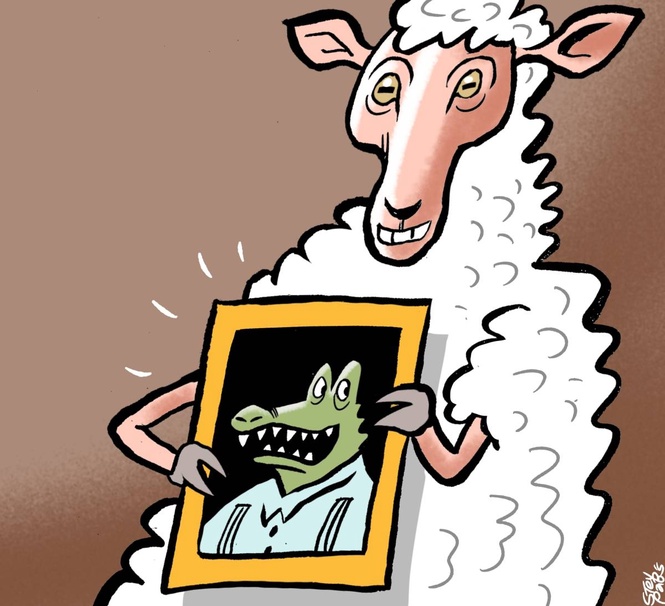
SURVEYS are revealing more and more of our flaws. Do these findings make us more self-aware and encourage us to do better, or simply normalize and reinforce the flaws they expose? A poll records what people think. It does not show whether beliefs are informed, consistent or defensible.
The danger is that we mistake what is widely believed or practiced for what is right. When a poll reports that many people approve of a politician, a policy or a particular interpretation of events, a number can acquire undeserved authority: popularity becomes a substitute for argument, and a widespread belief seems to have passed a test of truth or fairness. Surveys then become a justification for staying the same, instead of an invitation to reflect and change.
This is not an argument against measuring public opinion. Surveys tell us what people believe, fear, expect and value, revealing patterns that speeches and anecdotes conceal. Trouble begins when a percentage is treated as self-explanatory, without examining the knowledge, experience, attachment or reasoning behind it.
Survey firms therefore have a responsibility to think carefully about what their questions can establish. Should they be content with measuring and describing opinion, or can they also contribute to critical thinking by examining its assumptions and contradictions? Firms could also ask what respondents know, how they reason, and whether they apply their principles consistently.
Consider political literacy. A poll that finds substantial support for the Dutertes tells us something about political preference. It tells us something different if it also shows that a share of those supporters have not read the Constitution, cannot identify the powers of the branches of government or do not know the responsibilities of public officials. Neutral, carefully designed questions scored against verifiable facts would not settle whether preferences are right, but help show how they are formed.
The same approach could clarify opinions about impeachment proceedings. When respondents say the defense or the prosecution is doing better, what are they assessing? Have they watched the hearings? Do they know the evidence presented? Can they identify the principal arguments made by each side? If a respondent who says the defense is winning has not followed the proceedings or cannot recognize the evidence, the answer may still accurately express a feeling. But it should not be casually described as an informed evaluation of the case.
An opinion can be measured accurately while its meaning is misidentified. A question asking who is winning may invite an assessment of arguments from one respondent, a partisan declaration from another and a guess from someone who has not watched. Combining all three answers into one headline does not turn them into the same kind of judgment. The poll may count responses correctly yet invite unwarranted conclusions about public reasoning.
For some respondents, political loyalty may decide the answer before a proceeding begins. If a diehard supporter is certain that a favored leader’s side must prevail regardless of the evidence, asking who is winning offers an opportunity to affirm allegiance. The survey does not necessarily measure a considered view of the arguments. It may measure the strength of political attachment. That finding is meaningful, but it is not interchangeable with a verdict on the merits.
A parallel example makes this plain. Ask devoted fans whether their favorite singer deserved to win a competition, and their answers can tell us how large and committed the fan base is. They do not, without more, constitute an expert assessment of vocal performance. Some fans may have informed reasons; others vote from affection. A responsible account would not assume every response reflects the same judgment.
Survey firms could make such distinctions visible through carefully chosen questions and cross-tabulations. They could compare political support with factual knowledge of government institutions, constitutional rights and official responsibilities. They could ask whether respondents have followed a proceeding, what evidence they recall, and which arguments they understand. They could test consistency by asking respondents to judge comparable conduct by a preferred leader and a political opponent. Apply these measures across political camps, not to embarrass one faction or confirm another’s suspicions.
A hypothetical cross-tab could show that x percent of Duterte supporters have not read the Constitution, or that, among those saying one side prevailed, y percent did not watch the trial or identify its evidence. Neither finding would prove every supporter uninformed nor every judgment partisan. Unfamiliarity should not disqualify anyone from expressing an opinion. It would show that support and assessment may rest on different grounds. It could help distinguish knowledge gaps from inconsistent standards and political attachment.
There are practical limits. A poll cannot fully capture political understanding in a few questions. Knowledge tests can be incomplete, and self-reported viewing may be unreliable. Respondents may also give answers they think are socially acceptable. These are reasons to improve research design, disclose methods and interpret findings carefully. Firms can explain what was measured, what was not, and how much confidence the findings warrant.
Public opinion research should not become a lecture to respondents or an attempt to dictate what they should believe. Its contribution can be modest but valuable: make the opinion’s basis visible. People may see where judgments rely on evidence or identity, and where standards shift with allegiance. Citizens can reflect on those gaps. Journalists can report them. Political actors can no longer invoke a poll as though a bare majority settles every question of truth or responsibility.
Surveys can be mirrors, but mirrors do not make us change. The choice is ours: Treat every result as validation, or use it to examine the habits and contradictions it reveals. Asking whether people support a leader is not too much to ask. Asking what they know, what they have seen, and whether they use the same standards for allies and opponents is not too much either. If surveys count only loyalties and call them judgments, they risk dressing up a head count as a verdict. If they also illuminate how opinions are formed, they can help us understand ourselves as active citizens in a democracy and perhaps do better.
The author is a professor at the University of the Philippines Los Baños and vice chairman of the board of PTVNI.