
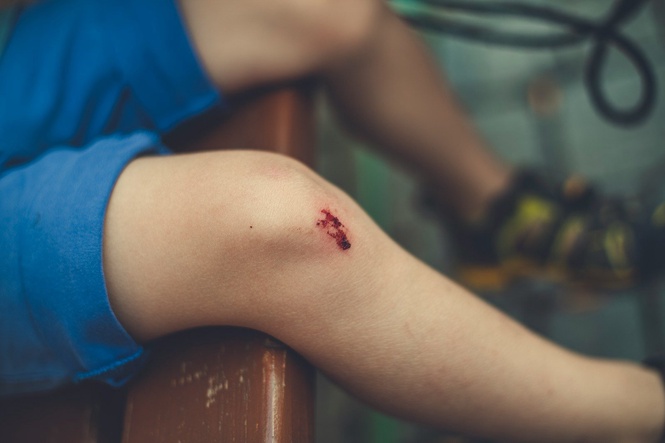
Knee pain is common among active teenagers. Sports, falls and overuse can all cause discomfort, and many minor injuries improve with rest and time.
But pain that persists, worsens or follows an unusual pattern should not automatically be dismissed as a sports injury or “growing pains”.
In rare cases, it may be linked to a more serious condition, including osteosarcoma, a type of bone cancer.
Most knee pain in teenagers is not cancer. Osteosarcoma is rare.
Still, recognising symptoms that do not follow the usual course of an injury can help a child receive appropriate medical care.
When Should Parents Be Concerned
Teenagers are active, so aches and minor injuries are common. The important question is whether the pain is gradually improving.
“With a typical sports injury, pain should generally improve with rest and appropriate treatment,” says Dr Tie Teck Liang, Consultant Orthopaedic Oncology Surgeon at Sunway Medical Centre, Sunway City. “If the pain remains severe, gets worse or is not improving as expected, the child should be assessed by a doctor.”
There is no universal one- or two-week deadline that applies to every injury. Some uncomplicated injuries take longer to heal.
However, parents should arrange a medical review if pain persists, repeatedly returns or interferes with everyday activities.
Symptoms that deserve particular attention include:
- Pain that repeatedly wakes a child at night
- Pain without a clear injury
- Increasing swelling or a lump near the knee or another bone
- Limping or difficulty bearing weight
- Pain that becomes more intense instead of settling
- Symptoms that do not improve as expected with rest
- Unexplained fever, tiredness or weight loss alongside bone pain
These signs do not mean that a child has osteosarcoma. They can occur with several other conditions, including infection, inflammation and ordinary injuries. They do mean that medical advice is warranted.
Severe pain, rapidly increasing swelling, a suspected fracture or an inability to walk should be assessed promptly.
What Is Osteosarcoma
Osteosarcoma is the most common primary malignant bone tumour in children and adolescents.
It is an aggressive cancer that most often affects children, teenagers and young adults. About 75% of cases occur before the age of 25, although reported figures can vary between studies and populations. The average incidence is about 4.4 cases per million people per year.
Osteosarcoma commonly develops in the long bones around the knee, including the lower thighbone and upper shinbone. This can make early symptoms look like a sports injury, particularly when a teenager has recently fallen, trained intensely or taken part in a contact sport.
Early pain may be mild. Swelling may not be obvious at first. A teenager may continue playing because the discomfort seems manageable.
“Pain after a fall can sometimes create false reassurance,” Dr Tie says. “The key is to observe whether the symptoms are improving. If they are not, further assessment is important.”
Osteosarcoma is rare, and most young people with knee pain do not have it. The aim of a medical review is not to assume cancer, but to find out what is causing the persistent or unexplained symptoms.
The Importance of Early Imaging and Diagnosis
Early imaging should always come before any surgical procedure or biopsy done elsewhere. “X-ray is the most common first step in assessing persistent bone pain. It can reveal abnormal bone changes and guide clinicians on the next steps,” Dr Tie shares.
If findings are suspicious, an MRI is usually needed to determine the tumour size and its relationship to nearby nerves and vessels, which directly affects surgical options. Depending on the case, CT scans, bone scans or PET scans may be used to assess spread.
If imaging suggests a bone tumour, diagnosis must be confirmed with a biopsy, but this step needs careful planning. “The biopsy should always be performed by the surgeon who will carry out the definitive surgery,” Dr Tie explains. This is because the biopsy tract is treated as contaminated and must be removed during tumour surgery.
A poorly planned biopsy can contaminate surrounding tissues, complicate reconstruction, and increase the risk of recurrence, as well as a higher risk of amputation. This is why early referral to a specialist orthopaedic oncology centre is critical.
Treatment Today
Treatment depends on several factors, including the tumour’s size and location, whether it has spread, the child’s overall health and how the tumour responds to chemotherapy.
For many patients, treatment includes chemotherapy and surgery. Surgery usually involves removing the tumour with a margin of surrounding tissue. The missing section of bone may then be reconstructed using an endoprosthesis, a metal implant designed to replace the removed segment.
Radiotherapy is used only in particular situations and is not the main treatment for most osteosarcomas. The treatment plan is decided by a specialist team according to the individual case.
Decades ago, amputation was more often required. Advances in chemotherapy, imaging, surgical techniques and reconstruction now mean that limb-salvage surgery is possible for selected patients.
In selected cases, Dr Tie performs biological reconstruction using cryotherapy. In this procedure, the patient’s tumour-bearing bone is treated with liquid nitrogen at approximately minus 196°C to destroy cancer cells before the bone is reimplanted.
“The advantage is that we use the patient’s own bone,” he says. “This approach may reduce problems such as size mismatch and may support bone healing in some cases.”
Using a patient’s own bone is not suitable for everyone. The decision depends on the tumour, the patient’s age and growth, the condition of the bone and the expertise available at the treatment centre.
For growing children, surgeons also consider future limb growth and function. Preserving natural bone may help reduce limb-length differences and support long-term function in selected cases. However, early diagnosis does not guarantee limb preservation, a cure or a particular recovery.
Rehabilitation and Emotional Support
Recovery does not end with surgery. Physiotherapy often begins within days, focusing on strengthening and the gradual return of movement.
The recovery journey typically spans about a year, including chemotherapy and surgery, followed by years of monitoring for recurrence or spread.
Many families initially struggle with fear and uncertainty, but understanding the treatment journey helps them regain a sense of control.
Equally important is emotional support. Dr Tie notes that children often cope better than their parents once they understand what to expect. Clear communication, reassurance and realistic goal setting help families navigate the long treatment course.
A Message for Parents and Coaches
Most knee pain in teenagers is not cancer. But when pain persists, worsens, or behaves unusually, it should never be ignored.
“Early diagnosis is important and may improve treatment outcome, including the possibility of limb preservation and functional recovery, allowing children to return to a normal, active future,” Dr Tie emphasises.
The medical information of this article is contributed by Dr Tie Teck Liang, Consultant Orthopaedic Oncology Surgeon at Sunway Medical Centre, Sunway City.
The post When Teenage Knee Pain Could Signal Bone Cancer first appeared on PP Health Malaysia.
