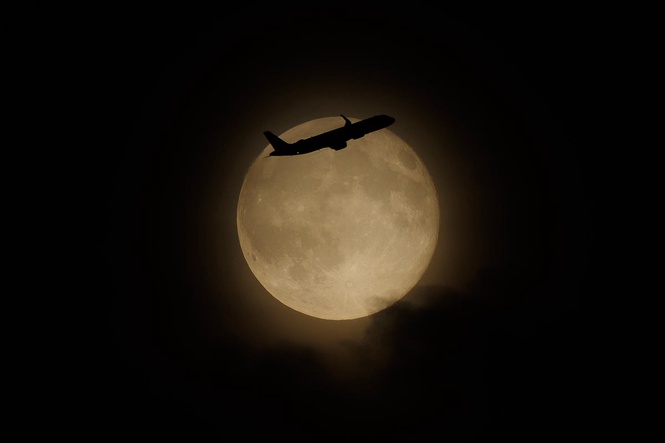
This month’s full Moon is about to rise – and it’s a little different from usual.
It is known as the “Harvest Moon”, because it is the one to rise closest to the autumn equinox. It got its name because of its proximity to its place in the farming year, and was useful as it provided extra light to farmers bringing in their crops.
It is unusual in that its name has long been used in the UK and elsewhere – unlike some of the more recently common names for each month’s moons. The Harvest Moon can also fall in October, depending on how the lunar calendar lines up with the year.
This month’s Moon will reach its fullest point at 17.49 UK time, on the evening of 26 September. That means that it will be under the horizon for much of the UK at its most intense point, but it will remain big and full throughout the following evening.
Its close proximity to the horizon will also mean that it could appear larger than usual. That is the result of the “Moon illusion”, which makes it look bigger when it is nearer the horizon because there are close by things to compare it to.
It may also look a little redder than usual. That will not be especially dramatic, like in a lunar eclipse, nor is it a feature of the Harvest Moon in itself – it is simply a result of it being low in the sky and thereby meaning that more of the light hitting it has travelled through Earth’s atmosphere and been turned a deeper and less blue colour.
This month’s Harvest Moon will also arrive alongside the chance to spot Saturn in the sky. It will reach its “opposition” – when it is closest to Earth – on 4 October.
It will be followed by the Hunter’s Moon, in October, then the Beaver Moon and Cold Moon towards the end of the year. Those names come from the Farmers’ Almanac, and are less commonly used than the Hunters Moon, but have caught particular attention in recent years.
Read MoreNew theory may solve mystery of why Venus doesn’t have a moon