
2012 Audi A6 Hybrid and or the 2013 Mercedes E Class bluetech Hybrid in Malaysia in 2026
Once upon a time, high earning executives in Malaysia were smitten by the Audi A6 Hybrid from its launch in 2012 and soon after it was the Mercedes-Benz BlueTEC Hybrid. Why? Well, both German sedans were fully imported with very high cabin specification, build quality and technology.
However, just a few short years of ownership …… while the factory warranty was still running …… both cars had issues ….. from small to medium to painstakingly irritating.
Yes, factory warranty was in ‘play’ but it was getting tiresome and so first owners started dumping these cars in the used car market ….. soon used car dealers knew these were problematic cars and prices fell ….. fell hard and today, many units are just sitting and collecting bird droppings outside workshops as owners cant pay the hefty bills and some others have just given up.
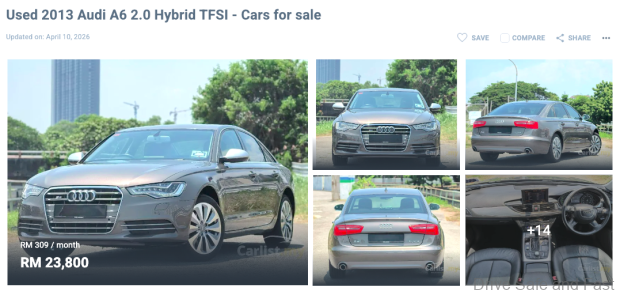
Buying a decade-plus-old German hybrid sedan in Malaysia might look like an incredible bargain on paper for the second or third Malaysian owner where In today’s used car market, a 2012 Audi A6 Hybrid (C7) or a 2013 Mercedes-Benz E 300 BlueTEC Hybrid (W212) can be had for the price lower than a brand-new Perodua basic hatchback.
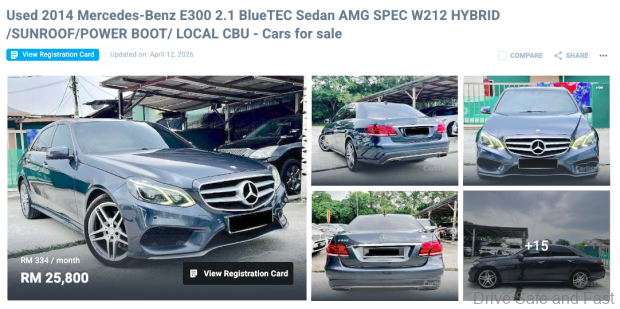
However, behind the prestige, plush leather interiors and fuel-economy promises lies a financial minefield for secondhand buyers. Both models represent early-generation European hybrid technology tested under Malaysia’s harsh tropical heat and stop-and-go Klang Valley traffic.
Here is an exhaustive breakdown of the common problems, technical headaches and ownership reality of these two hybrid luxury sedans in Malaysia today.
2012 Audi A6 Hybrid (C7 Generation)
When launched, the C7 Audi A6 Hybrid combined a 2.0-litre TFSI turbocharged four-cylinder engine with an electric motor integrated directly into an 8-speed Tiptronic automatic transmission. While it offered swift acceleration and luxury, time has exposed several systemic mechanical and electrical vulnerabilities.
High-Voltage (HV) Hybrid Battery & Cooling System. The A6 Hybrid relies on an air-cooled or refrigerant-assisted 1.3 kWh lithium-ion battery array located under the boot floor. Malaysia’s extreme ambient heat significantly accelerates cell degradation. Loss of electric-only EV mode, frequent engine restarts, reduced regenerative braking efficiency and central dashboard warnings (“Hybrid System Fault”).
An original replacement high-voltage battery module from Audi dealers can easily exceed RM25,000 to RM35,000, which often approaches or exceeds the entire market value of the car. Independent specialists now recondition individual module cells, but costs still hover around RM8,000 to RM15,000.
Integrated Starter-Generator (ISG) & Inverter Failures. The hybrid power control unit (inverter) converts DC battery power to AC for the electric motor. In hot climate conditions, inverter components suffer thermal fatigue. If the inverter or hybrid control module fails, the car enters a hard “no-start” state. Unlike modern mild-hybrids, you cannot simply jump-start or drive on petrol power alone if the high-voltage system locks out.
The VW Group 2.0 TFSI Engine Weaknesses (EA888 Gen 2 Core). The EA888 engine from this era is notorious for oil consumption issues due to defective piston ring designs and PCV (Positive Crankcase Ventilation) valve failures. Owners often find themselves topping up a litre of engine oil every 1,000 km to 2,000 km.
Timing Chain Tensioner Wear. Early Gen 2 engines feature plastic chain guides and tensioners that fail prematurely. If the timing chain slips, piston-to-valve contact occurs, resulting in total engine destruction. Direct-injection TFSI engines suffer heavy carbon accumulation on the intake valves over time, causing rough idling, engine misfires, and power drop-offs.
2013 Mercedes-Benz E 300 BlueTEC Hybrid (W212 Facelift)
The W212 E 300 BlueTEC Hybrid pairs a 2.1-litre OM651 twin-turbocharged four-cylinder diesel engine with a 20 kW electric motor tucked inside the 7G-Tronic Plus automatic transmission. While the non-hybrid diesel W212s are absolute highway cruisers, the hybrid layer introduces severe complications.
Electric Motor & Gearbox-Integrated Hybrid Module. The electric motor sits between the diesel engine and transmission. Hybrid sensors and control solenoids located inside the gearbox bellhousing are prone to heat degradation.
Transmission Replacement Nightmare. Diagnosing hybrid sensor errors often requires dropping the entire transmission. Independent Mercedes workshops frequently struggle with diagnosing complex 7G-Tronic hybrid ECU communications, leading to trial-and-error part swapping.
OM651 Diesel Engine & Emissions Hardware. Piezo Injector & Fuel Pump Failures: High-pressure diesel fuel pumps and injectors on the OM651 engine are sensitive to local fuel quality. Contaminated or poor-quality fuel leads to hard starts, knocking, and injector failure.
DPF (Diesel Particulate Filter) Clogging. Diesel engines are designed for long highway runs. In local city traffic, the DPF cannot execute proper high-temperature passive regeneration, resulting in clogged exhaust filters, limp mode, and expensive cleaning or bypass routines.
EGR & Turbocharger Wear. Twin-turbo setups on the OM651 suffer from sticky actuator valves, oil line weeping, and EGR cooler leaks.
Auxiliary Battery & Complex Electrical Architecture. The W212 Hybrid utilises a traditional starter battery alongside an auxiliary hybrid battery. A weak auxiliary battery causes erratic electronic failures, disabling features like ECO start-stop, blind-spot assist, and air conditioning.
Airmatic Rear Suspension Leaks. Higher-trim E 300 Hybrids fitted with rear Airmatic suspension experience rubber air spring dry-rot and compressor pump burnouts. When air bags leak, the car sags overnight, costing RM 3,500 to RM 6,000 per corner to rectify with OEM components.
The Verdict! Should You Buy One?
Unless you are a seasoned mechanic or have access to a specialised European hybrid workshop, buying either a 2012 Audi A6 Hybrid or a 2013 Mercedes E 300 BlueTEC Hybrid carries substantial risk.
If you prefer the Audi A6 (C7): Consider a non-hybrid 2.0 TFSI or 3.0 TFSI Quattro variant instead. You get the same luxury and design without the threat of high-voltage battery or inverter replacement.
If you prefer the Mercedes-Benz E-Class (W212): Look for the face-lifted E 200 or E 250 CGI petrol powered models. These pure internal-combustion engines are far more reliable, cheaper to maintain and easily maintained by independent workshops across Malaysia.
The post Which USED Luxury Hybrid Sedan To Buy Tomorrow first appeared on DSF.my.