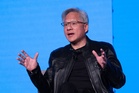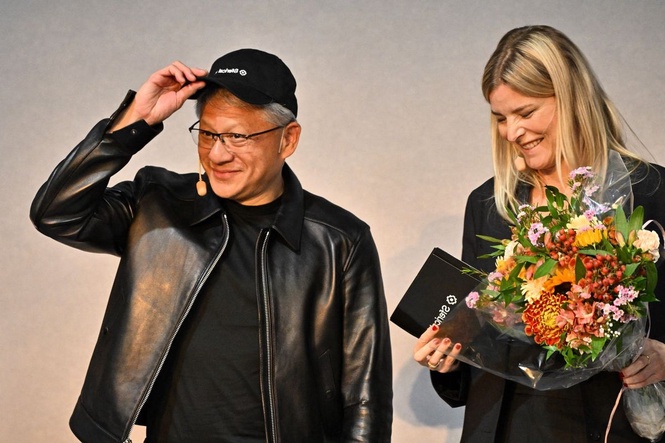
He’s known as the rock star chief executive, renowned for his trademark leather jackets and unconventional approach to business. For a while, Jensen Huang’s persona was confined to tech conferences and Nvidia board meetings. But with the rise of AI – and his pivotal role at its forefront – Huang is now a frequent fixture on the global stage, appearing alongside world leaders and before crowds chanting his name, demanding selfies and autographs on their chests.
Today, Huang is on TV screens and front pages around the world after admitting to an affair with a suspected Chinese spy. It is an unexpected twist in an unusual story, which has taken him from an immigrant schoolboy in rural Kentucky, to a Silicon Valley superstar marred in scandal.
Huang’s early years
After emigrating from Taiwan at the age of five, Jen-Hsun Huang and his family spent four years in Thailand before a political crisis in the country forced his parents to send him and his older brother to live with their uncle in the United States.
Shortly after arriving, his uncle mistakenly enrolled the Huang brothers in a rural Kentucky institution that he believed was a prestigious American boarding school. It turned out to be a strict disciplinary and reform environment for troubled children, where young Jen-Hsun, who now went by Jensen, was assigned to clean bathrooms and scrub toilets.
He spent two years there, before his parents arrived and removed him. But he credits that time to instilling in him a strong work ethic.
“I was the only kid cleaning bathrooms, that was a lot of bathrooms,” he recalled in a 2022 interview on Stratechery. “I think that we learned hard work, but it never occurred to us that it was hard work, we just thought that’s what kids do.”
The family settled in Portland, Oregon, where Huang graduated high school at just 16. With a keen interest in computers, he enrolled at Oregon State University and graduated in 1984 with a degree in electrical engineering. While studying there, he met his future wife, Lori Mills, with whom he now has two children.
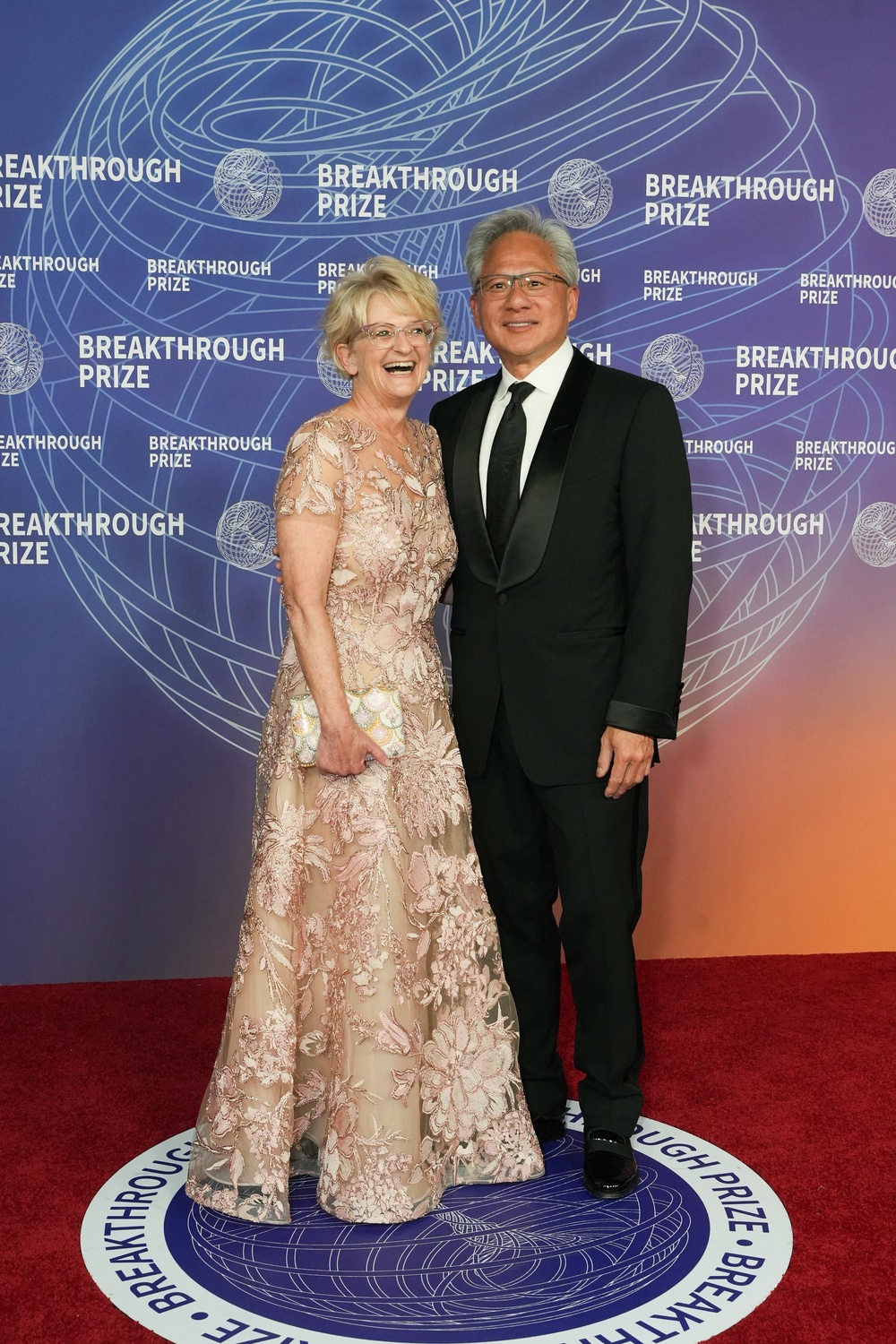
His first job out of college was at Advanced Micro Devices (AMD), where he worked as a microprocessor designer for the semiconductor manufacturer. After a few years in the industry, he enrolled at Stanford University in California, where he earned a master’s degree in electrical engineering at the age of 29. Now in the heart of Silicon Valley, Huang and two fellow engineers had an idea that they believed could capitalise on the growing video games market. In a Denny’s restaurant in April 1993, Nvidia was born.
The rise of Nvidia
Along with Nvidia’s two other co-founders, Chris Malachowsky and Curtis Priem, Huang set about building specialised chips that could dramatically improve computer graphics. The company’s first major product was the NV1, a graphics card that launched in September 1995. Although technologically ambitious, it was ultimately unsuccessful due to its design approach being incompatible with the direction of the wider PC market.
The first commercial success came in 1997 with the RIVA 128, but it was not until 1999 that Nvidia made a big breakthrough with the GeForce 256, which it marketed as the world’s first GPU (graphics processing unit). The technology became a fundamental component of modern computers and helped usher in a new generation of video games.
It was in the early 2000s that Huang decided to pivot away from just a computer graphics company and decided to develop GPUs for general-purpose computing. The processor could be used for a huge variety of workloads, from weather modelling to medical research, but it was artificial intelligence that would turn Nvidia into a trillion-dollar company.
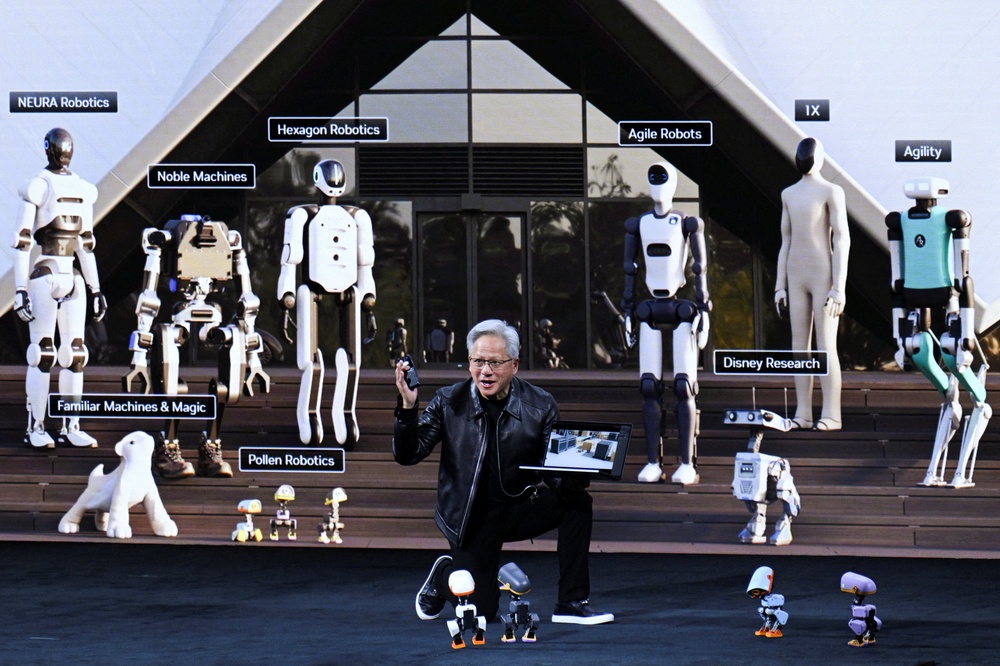
A decade before the arrival of ChatGPT, which kicked off the recent AI frenzy, Nvidia’s chips were being used by researchers to train neural networks and make breakthroughs in artificial intelligence. The increasingly powerful chips were at the forefront of pioneering developments in robotics, self-driving cars and data centres, making Nvidia perfectly placed for the next stage of the AI revolution.
Huang had not necessarily predicted the emergence of large language models (LLMs) like ChatGPT, but the technology Nvidia had built made their development economically and technically possible.
Nvidia and the AI boom
Less than a year after the launch of ChatGPT, Nvidia’s market value crossed the $1 trillion mark. By 2025, it became the first publicly traded company to reach a market capitalisation of $4 trillion.
Its rise has seen Huang’s personal fortune rise above $150 billion, ranking him in the top 10 of the world’s wealthiest people, while also placing him at the centre of geopolitics.
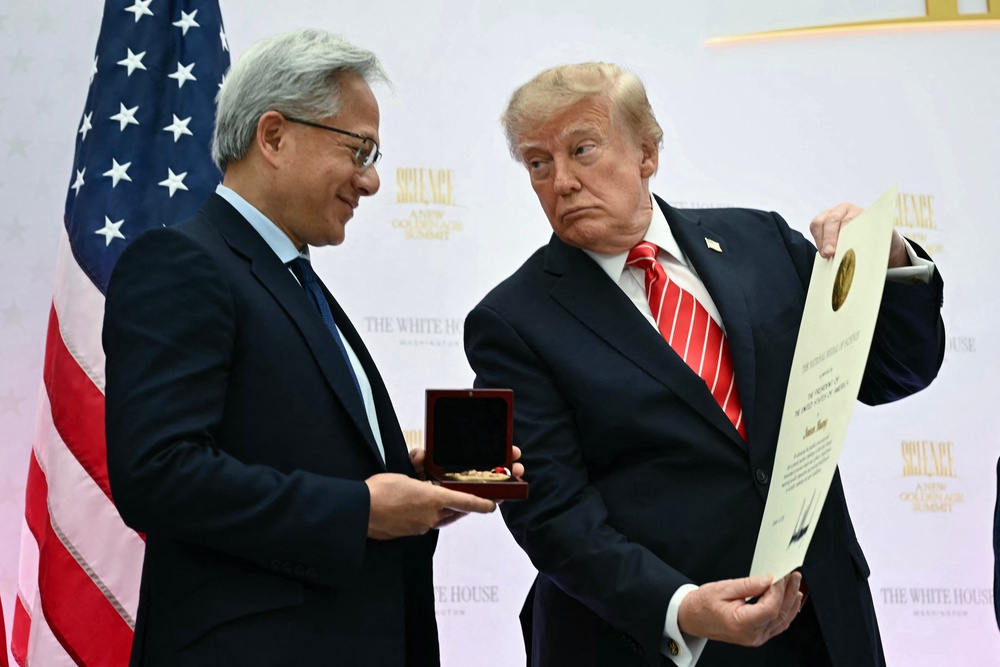
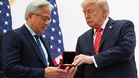
As the head of a company whose chips have become one of the most sought-after resources in the global AI race, Huang holds regular meetings with world leaders and policy makers. He has attended state dinners at the White House for Chinese President Xi Jinping and speaks frequently with US President Donald Trump.
Huang has lobbied for the US to lift restrictions on the sale of Nvidia chips overseas, which were put in place to prevent China from gaining an advantage in the AI space. His efforts have not been successful, as embargos remain, but the cheating scandal has raised sensitive questions.
From Silicon Valley superstar to spy scandal
The woman at the centre of the affair, Alice Huang, was an executive at Singapore-based data centre company MegaSpeed, an Nvidia customer that has faced allegations about diverting banned AI chips to China.
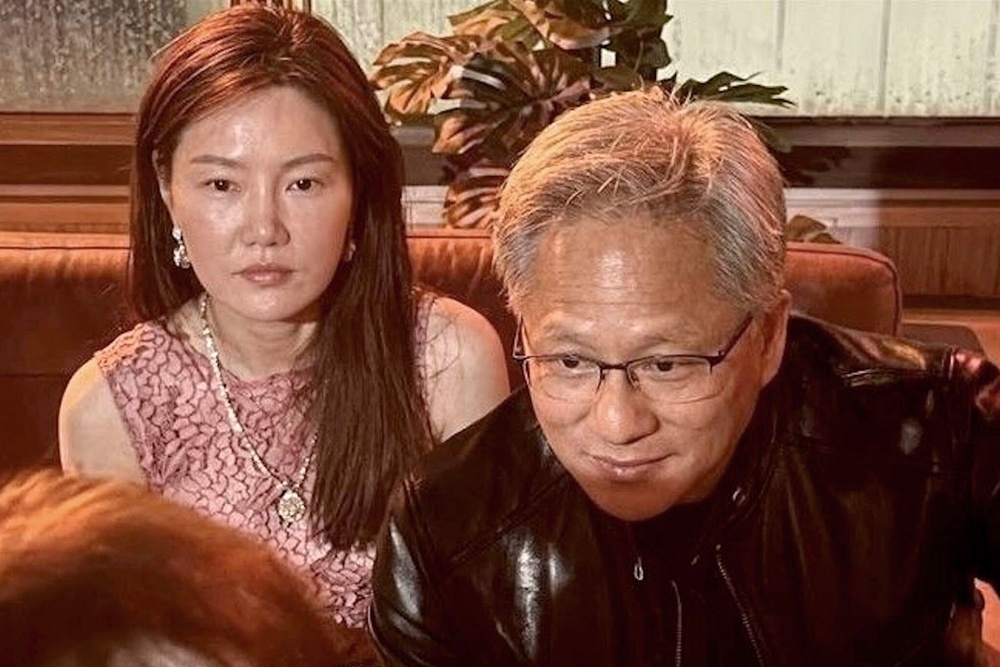
When asked about Huang’s affair, Trump described him as an “honorable guy” who “probably has an excuse for it”. Despite the president’s backing, the Nvidia boss is facing scrutiny from Congress over his relationship with a suspected intelligence operative.
He is also now the subject of an investigation from the company he founded and has led for more than 30 years. In a letter to employees on Sunday, Huang said that Nvidia’s board of directors had initiated an independent probe into potential national security concerns.
The outcome of these investigations could determine not just Huang’s future, but the direction of the entire global AI race.
Read MoreNvidia boss summoned by Congress over ‘interactions’ with suspected Chinese spy
Fridge hacks exposed a chilling weakness. Now experts fear far worse is still to come
Why the world is panicking about the future of artificial intelligence
Nasa is looking for astronauts to live on the Moon. Here's what you need to qualify
Apple says 100,000 apps are now ready for iPhone Duo – if you can get one
Apple could be about to make Siri something completely different