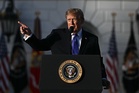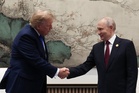
Taiwan's planned sovereign wealth fund could become a weak spot in trade talks with US President Donald Trump, stripping away the reason Taipei has used to hold off US investment demands, former Vice Premier Shih Jun-ji warned on November 20.
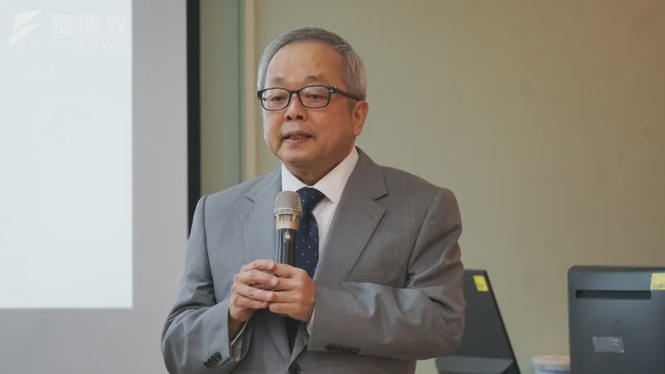
Shih, now an adjunct research fellow at Academia Sinica's Research Center for Humanities and Social Sciences, hosted a seminar analyzing the plan. He argued that the fund would carry real costs whether it is financed from foreign exchange reserves or government bonds, and could drain the central bank's liquidity at a time when foreign investors hold Taiwanese stocks worth more than three times the country's reserves.
Lai's Fund Plan Took Shape During The Tariff Fight
Taiwan has debated a sovereign wealth fund for more than 30 years, mostly over whether to tap its foreign exchange reserves. Over the past two years, surging exports of GPUs and AI servers have lifted the stock market and left the central government with budget surpluses two years running, reviving calls to share the "AI dividend" with the public. But Shih said the timing of President Lai Ching-te's proposal was telling.
Lai announced the fund in his May 20, 2025 speech marking his first year in office, weeks after Trump's reciprocal tariffs sent global markets reeling. Trump later paused the tariffs, floated a sovereign fund of his own, and urged investors around the world to put money into the United States, Shih noted. Shortly before Lai's speech, SoftBank founder Masayoshi Son met Vice Premier Cheng Li-chiun to pitch his initiative for Japan and other countries to jointly create a US$200 billion fund to invest in the US.
National Development Council Minister Yeh Chun-hsien recently told lawmakers that a dedicated law for the fund is being drafted, with a draft expected by the end of the year at the earliest, followed by talks with the Ministry of Finance, the central bank, and the Financial Supervisory Commission. The fund would start small at NT$30 billion (about US$950 million) and be adjusted later. A dedicated body would make "overseas strategic investments" in critical raw materials, sales channels, and advanced core technologies abroad to help Taiwanese companies expand, without overlapping the domestic role of the existing National Development Fund.
Foreign Reserves Are Not Idle Money, Shih Says
Many people see foreign exchange reserves as "idle wealth," Shih said, but the central bank's foreign assets are matched by liabilities. In the balance of payments, a current account surplus always equals a deficit in the financial and capital accounts. As Taiwan's surplus from AI chip exports grows, money flows out of Taiwan to the US, he said, citing life insurers' overseas holdings of about US$700 billion.
Shih cited research by Rachel J. Huang, a finance professor at National Central University, which stresses that reserves are "not a cost-free source of funding." The central bank earned an average return of 3.42% on its reserves from 2001 to 2023. In 2020, reserves stood at US$597.15 billion, enough to cover 14.8 months of imports. Taking 20% of them to set up a US$120 billion fund would cut import cover to 11.84 months and shrink the buffer the central bank needs to handle capital flows and financial crises.
Foreign investors now hold Taiwanese shares worth US$1.8885 trillion, or 316% of the reserves, Shih said. If a financial crisis triggered an exodus of foreign capital, the central bank would face enormous demand for US dollars.
An AI bubble could burst at any moment, just as TSMC shares fell below NT$2,000 that day, Shih said. He pointed to Anthropic, the US AI company whose shares began trading on November 19 at a market value of about US$1.5 trillion, roughly equal to foreign holdings in Taiwanese stocks. The Financial Times likened Anthropic's value to six HSBCs, he noted.
"Don't think we have a lot of foreign reserves. Taiwan is not a member of the International Monetary Fund (IMF), and it has no currency swap agreements with other countries," Shih said. "If a foreign position the size of HSBC's market value pulled out of Taiwan today, would our reserves be enough?"
Funding Costs Would Reach 5.21%, Shih Warns
Low interest rates on government bonds do not mean the government has free money to invest, Shih said. Every dollar in a sovereign fund is a national asset whose costs and returns should face public scrutiny.
Citing Huang's research, he put the yearly opportunity cost of every NT$100 billion as follows:
- Drawing on reserves: NT$3.57 billion, based on the reserves' 3.42% return plus 0.15% for liquidity and management costs.
- Issuing government bonds: NT$1.79 billion, based on the 1.64% 10-year government bond yield plus 0.15% in management costs. Funding through the annual budget or surplus revenue would cost the same.
- Repurposing National Development Fund assets: NT$3.09 billion, based on the fund's average annual return of 2.94% from 2012 to 2025 plus management costs.
If a bond-funded sovereign fund invested everything overseas, it would also draw on the central bank's foreign exchange liquidity and its value as crisis insurance, Shih said. That would put its cost of capital at 5.21% (3.42% plus 1.64% plus 0.15%), above the current 10-year US Treasury yield of 5.02%. "With a 5.21% cost of capital, what returns can Taiwan's sovereign fund earn? How much room is there to profit overseas?" he asked.
Equity investments carry risk premiums, so a sovereign fund's returns should beat US Treasuries, or the government might as well buy Treasuries directly, Shih said. But equities cannot guarantee that margin, and it is hard to rule out the moral hazard of investments that favor particular parties. In its early years the fund would also lack international asset allocation skills and have to hire outside managers, whose pay would far exceed current levels at the National Development Fund and could draw criticism of "fat cats."
Japan And South Korea Show The Risk In US Talks
Many countries see sovereign funds as a showcase of national wealth and modern economic governance, Shih said, but a fund is no cure-all. It is a "double-edged sword" that comes with high opportunity costs, conflicts of interest, agency risks, and deep geopolitical and diplomatic vulnerability.
Taiwan floated its fund just as it was negotiating reciprocal tariffs with Washington and Trump was pushing his "invest in America" drive, Shih noted. The US had already proposed US$5 billion in "nuclear financing" for a nuclear power plant in Texas. Before a fund exists, Taiwan can say any overseas investment budget must first be reviewed by the Legislative Yuan, its parliament. Once a fund is set up, its overseas investments would not need legislative approval, and Taiwan would have no excuse for saying it lacks the money, he said.
What Taiwan needs is better economic governance, not large-scale state financial leverage in an account without institutional firewalls, Shih said. Without a clear consensus on the fund's purpose, and with gaps in legislation and public accountability, setting one up in haste or under political pressure would be a high-risk move with no economic, fiscal, or national security justification, he argued.
"You can see the impact of a sovereign fund mechanism in Japan's and South Korea's tariff negotiations with the United States. Japan has no sovereign fund, and South Korea does," Shih said. "Japan's US$550 billion investment pledge has no set timetable, but with South Korea's US$350 billion pledge, the United States can even demand how much it hands over each month. Why should we leave a weak spot like that for a greedy (US) president?"