

On 23rd of February 2024, it was announced that ten food items have been gazetted as heritage food in the Declaration of Heritage Object 2024. The food items are Burasak, Kolo Mee, Nasi Ambeng, Dodol Kukus Tahi Minyak, Kueh Lapis, Kuih Karas, Uthappam, Jeruk Tuhau, Air Katira and last but not least, Bak Kut Teh. Of all the food items that have been gazette, which one drew the most controversy? If your answer is Bak Kut Teh, you are right. Some netizens have taken to social media to condemn the act of gazetting Bak Kut Teh as a heritage food.
One netizen airs out his grievances on Facebook and he writes, “Why the hell is Bak Kut Teh recognized as a heritage food of the nation? Is this a Muslim country or a kafir (non-Muslim) one?” Many netizens share the sentiment as him. One blames DAP by saying, “The more time passes, the more outrageous are the acts of DAPig (referring to DAP)” and another joins in by blaming DAP as well by saying, “This is what happens when DAP is the majority in the PH [administration]”. Another blame and insulted the Chinese by saying, “The slanted-eyed tribe (sepet means slanted in English; commonly refer to Chinese) are really stupid morons”.

The outrage in regards to gazetting Bak Kut Teh as a heritage food has also been picked up by the media from Malay Mail to The Straits Times. Personally, I think it is unjust to condemn the decision to gazette Bak Kut Teh as a heritage food. Here are some reasons why:
1. Bak Kut Teh just means Meat Bone Tea
Does Bak Kut Teh means Pork Bone Tea? Well, in Hokkien Dialect, Bak Kut Teh (肉骨茶) just means Meat Bone Tea. Heck, even in Mandarin Chinese, it means Meat Bone Tea. In case you didn't know 肉 (pronounced as rou in Mandarin, bak in Hokkien) is meat, 骨 (pronounced as gu in Mandarin, kut in Hokkien) is bone and 茶(pronounced as cha in Mandarin, teh in Hokkien) is tea. A lot of people including the former culture, arts, and heritage minister, Tan Sri Rais Yatim misunderstood the word Bak in Bak Kut Teh (肉骨茶); he along with many others have claimed that Bak (肉) in Bak Kut Teh (肉骨茶 ) means pork which is completely untrue. There are even halal variations of Bak Kut Teh which brings me to my next point.
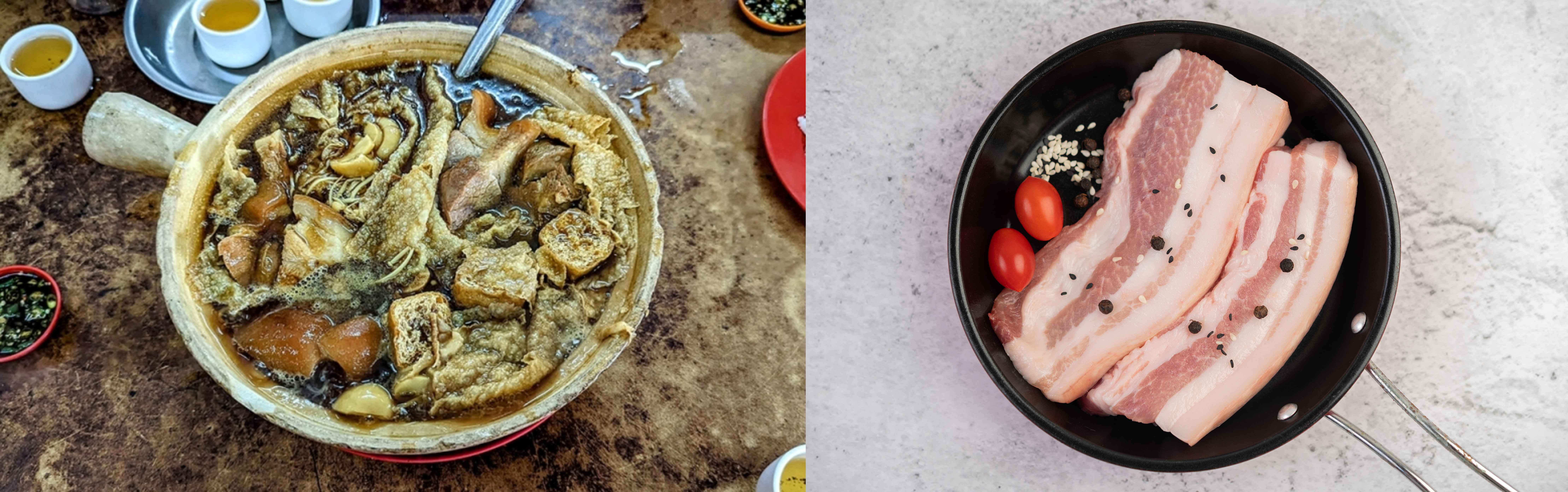
2. There are halal versions of Bak Kut Teh
Remember when I said that Bak (肉) in Bak Kut Teh (肉骨茶) just means meat? Other meat such as beef and chicken have been used in making our beloved Bak Kut Teh. There is a stall in Kuching that serves a halal version of Bak Kut Teh using beef. In our neighboring country, Singapore, there is a stall selling halal Bak Kut Teh which is run by a Malay father-son duo, Kamal and Shah. Their stall, Anak Bapak Halal Muslim Restaurant has been operating for over 20 years and his signature dish is his noodles and of course, his Bak Kut Teh which uses beef. Also noticed how he and his son still refer to Bak Kut Teh as Bak Kut Teh; you can watch a video of them here. It is also worth mentioning that another dish, kolo mee is also gazetted as a heritage food in the Declaration of Heritage Object 2024. Kolo Mee like Bak Kut Teh is typically served with pork and shallot mixture. However, like Bak Kut Teh, there are halal versions of it as well which are served with either beef or chicken.

3. Bak Kut Teh is culturally significant to Malaysia
Klang is said to be the birthplace of Bak Kut Teh where the Hokkiens were said to have made it. In the late 19th century (pre-British colonial period), many of the Hokkiens worked as manual laborers at the port and thus, were highly vulnerable to rheumatism and arthritis as they often carried heavy loads while barefooted. To recharge their bodies and prevent the ailments mentioned, they would make a nourishing bone broth which we now know as Bak Kut Teh. Seeing how it is deeply rooted in Malaysian culinary heritage (particularly with the Hokkien community in Malaysia) and its historical ties to places in Malaysia like Klang, wouldn't you agree that Bak Kut Teh is a significant part of Malaysia's food culture?
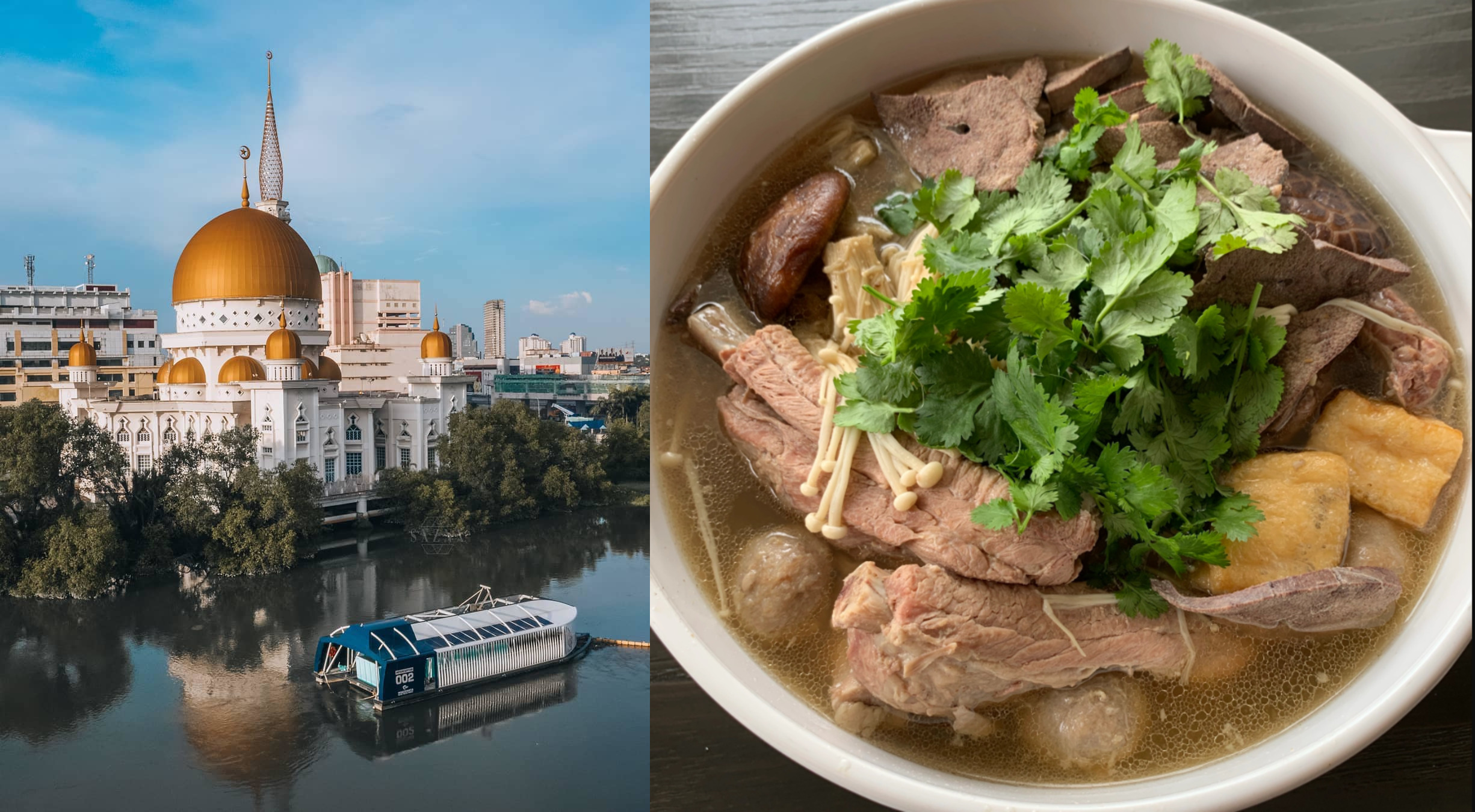
4. Heritage foods (incl. Bak Kut Teh) boost tourism
Based on a report from the Department of Statistics Malaysia in 2016, food and beverage contributed 16%(RM29.2 billion) of RM 182.4 billion to the tourism sector. Malaysia has a list of heritage foods that have the potential to attract tourists from other countries and as a result, boost tourism. This also includes the beloved Bak Kut Teh, be it the halal variant or the non-halal one. Recognizing Bak Kut Teh as a Malaysian heritage food can enhance tourism opportunities by promoting this traditional dish internationally. It can serve as a cultural ambassador, attracting food enthusiasts and tourists interested in experiencing authentic Malaysian cuisine.
There is no doubt that Bak Kut Teh plays a part in our culinary history and subsequently, the rich cultural history of Malaysia. Malaysia's culture is a mix of everything - a little bit of this and a little bit of that which is like Bak Kut Teh in a sense; there are a few cuts of herbs, a few pieces of meat (chicken or otherwise), and a few sprinkles of dark soy sauce. Let us all preserve our diverse culinary and cultural history by not condemning but applauding the decision to gazette such an important cuisine that is 100% made in Malaysia.
Aaron Colt is a content creator under the Newswav Creator programme, where you get to express yourself, be a citizen journalist, and at the same time monetize your content & reach millions of users on Newswav. Log in to creator.newswav.com and become a Newswav Creator now!
The User Content (as defined on Newswav Terms of Use) above including the views expressed and media (pictures, videos, citations etc) were submitted & posted by the author. Newswav is solely an aggregation platform that hosts the User Content. If you have any questions about the content, copyright or other issues of the work, please contact Newswav.

