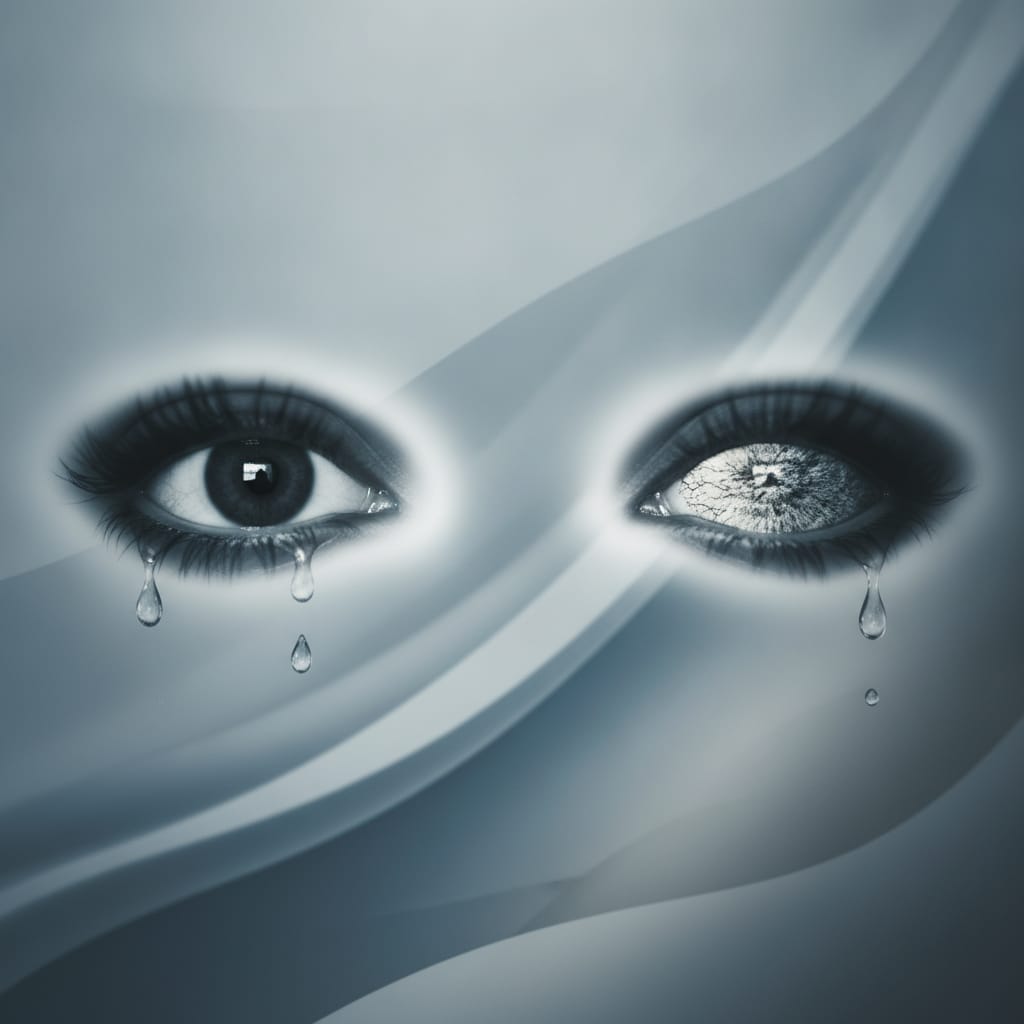
Here is one of those strange things about getting older.
Your eyes feel dry.
Gritty.
A little scratchy.
Perhaps they sting when you sit in front of the television or computer.
And then, just when you think your eyes couldn’t possibly be any drier, they start watering.
It sounds contradictory.
If your eyes are dry, why are they producing tears?
I have had this conversation quite a few times in pharmacy.
People will say, “My eyes keep watering, but they feel terribly dry.”
And surprisingly, that can make perfect sense.
Your tears are more complicated than you think
We tend to think of tears as simply salty water that appears when we cry.
But the surface of the eye is actually covered by a very thin tear film.
This helps keep the eye moist and comfortable and protects the surface of the eye. Moorfields Eye Hospital — Dry Eye
When this tear film doesn’t work properly, the eyes can become dry and irritated.
You may notice:
- a gritty or sandy feeling
- burning or stinging
- redness
- blurred vision that comes and goes
- sensitivity to light
- itching
- or, rather confusingly, excessive watering. NHS — Dry eyes
So why do dry eyes water?
This is the bit that surprises most people.
If the surface of the eye becomes irritated, your body can respond by producing a sudden burst of watery tears.
Unfortunately, these emergency tears don’t necessarily behave like the normal tear film that keeps the eye comfortable.
So you can end up with the rather ridiculous situation of having dry eyes that are constantly watering.
The NHS lists excessive watering as one of the possible symptoms of dry eyes. NHS — Dry eyes
Age can play a part
As we get older, dry eyes become more common.
We may produce fewer tears, and the tear film can also become less effective at protecting the surface of the eye. Moorfields Eye Hospital — Dry Eye
But don’t automatically blame everything on age.
There are plenty of other possible contributors.
Your screen might not be helping
Think about what happens when you stare at your phone, tablet or computer.
You become absorbed.
You concentrate.
And you may blink less often.
Blinking is important because it spreads the tear film across the surface of the eye.
Long periods looking at screens without taking breaks can therefore make dry-eye symptoms worse. NHS — Dry eyes
This is why I often tell people:
Look away from the screen and blink.
It sounds almost too simple.
But sometimes the simple things are the things we forget.
Air conditioning can be another culprit
If you spend hours in air conditioning or central heating, your eyes may notice it before the rest of you does.
Dry, heated or air-conditioned environments can encourage tears to evaporate more quickly. Wind, dust and smoke can also aggravate dry eyes. NHS — Dry eyes
This can be particularly noticeable when travelling, sitting under an air-conditioning vent or spending time in a dry environment.
And then there are medicines
This is where my pharmacist brain automatically switches on.
Some medicines can contribute to dry eyes.
The NHS specifically lists certain antidepressants and blood pressure medicines among medicines that can sometimes contribute to dry eyes. NHS — Dry eyes
That doesn’t mean you should stop a medicine because your eyes feel dry.
Quite the opposite.
If you suspect a medicine is contributing, speak to your pharmacist or doctor.
There may be a simple explanation, or another treatment option may be available.
What can you actually do?
The first step isn’t necessarily to buy an eye drop.
Look at the environment around you.
If you’re working on a computer, take regular breaks.
Try to avoid having air conditioning blowing directly towards your face.
Protect your eyes from windy, dusty or smoky environments.
And remember to blink regularly when concentrating on a screen. NHS — Dry eyes
If you wear contact lenses, giving your eyes a break by wearing glasses can also help when they are irritated. NHS — Dry eyes
What about artificial tears?
This is where your pharmacist can be useful.
There are several types of lubricating eye drops, gels and ointments available.
The choice isn’t simply about picking the most expensive bottle on the shelf.
Some products are better suited to occasional symptoms, while others may be more appropriate when symptoms are frequent.
If you need lubricating drops very frequently, preservative-free preparations may be more suitable for some people because preservatives can themselves irritate the surface of the eye. Moorfields Eye Hospital — Dry Eye
This is exactly the sort of situation where a quick conversation with the pharmacist can save you from buying three different bottles and wondering which one actually works.
Don’t forget your eyelids
Sometimes the problem isn’t simply a lack of tears.
The edges of the eyelids can become inflamed — a condition called blepharitis.
It can cause itchy or sore eyelids, a gritty sensation, crusting around the eyelashes and eyelids that stick together in the morning. NHS — Blepharitis
Regular gentle eyelid cleaning can help control the symptoms.
The NHS recommends cleaning the eyelids regularly, and a pharmacist can advise on suitable eyelid wipes and eye drops. NHS — Blepharitis
When is a dry eye not just a dry eye?
This is important.
Most dry-eye symptoms aren’t serious.
But painful eyes, a very red eye or changes in your vision are not symptoms to simply treat yourself indefinitely.
The NHS advises urgent assessment for eye pain accompanied by vision changes, and for very red eyes or loss of vision. NHS — Blepharitis
And if you wear contact lenses and develop a painful red eye or changes in vision, don’t ignore it.
Eye problems can occasionally require prompt treatment.
The pharmacist’s takeaway
Dry eyes are one of those conditions that people often put up with for far too long.
They assume the gritty feeling is just part of getting older.
Or they buy an eye drop from the supermarket without asking whether it is actually suitable.
Sometimes a few simple changes can make a surprisingly big difference.
Blink more when you’re concentrating on a screen.
Take regular breaks.
Avoid dry, smoky or dusty environments.
Look after your eyelids.
And if you need eye drops regularly, ask your pharmacist which type is appropriate.
Most importantly, don’t ignore pain or changes in vision.
Your eyes may be small, but they are not something to take chances with.
And if your eyes are dry while simultaneously producing enough tears to soak your glasses, remember — you’re not imagining it.
Sometimes dry eyes really do cry for help.
Until next time, look after your eyes — you only get one pair.
Health Matters (zaynp100@yahoo.com) is a content creator under the Newswav Creator programme, where you get to express yourself, be a citizen journalist, and at the same time monetize your content & reach millions of users on Newswav. Log in to creator.newswav.com and become a Newswav Creator now!
The User Content (as defined on Newswav Terms of Use) above including the views expressed and media (pictures, videos, citations etc) were submitted & posted by the author. Newswav is solely an aggregation platform that hosts the User Content. If you have any questions about the content, copyright or other issues of the work, please contact creator@newswav.com.