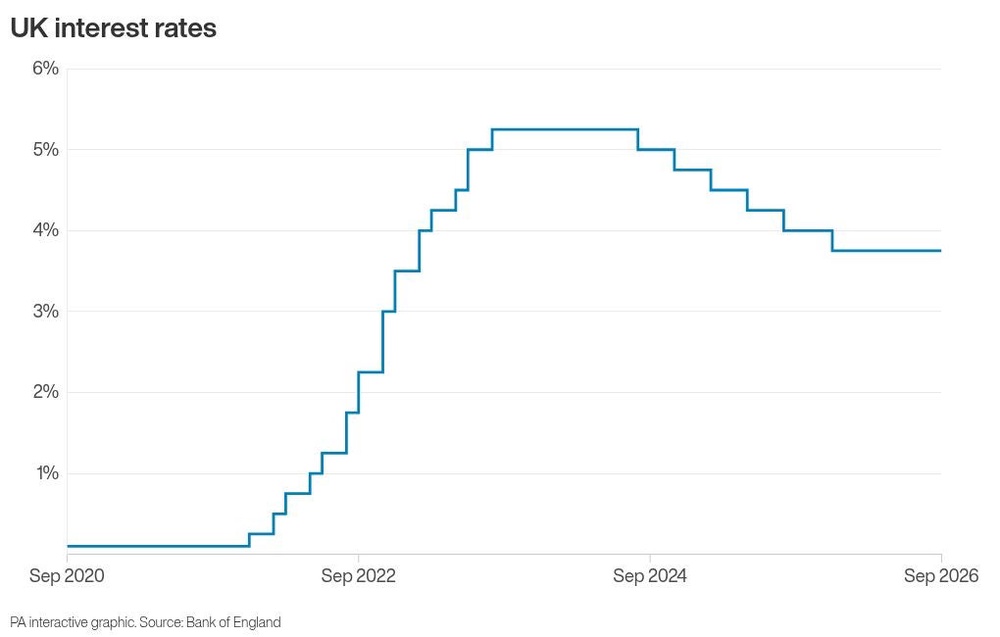
The Bank of England has kept interest rates unchanged at 3.75% in its latest decision on monetary policy.
It marks the sixth time in a row the central bank’s rate-setting committee has opted to keep the rate on hold, having not changed since December.
But the policymakers acknowledged inflation has been rising in the UK, linked to the war in the Middle East, which means they may need to raise interest rates in the future.
Here, the Press Association looks at what the Bank’s decision means and what could come next.
– What happened to interest rates on Thursday?
The Bank decided to keep rates unchanged at 3.75%.
Six members of the bank’s monetary policy committee (MPC) voted to keep the rate the same, meaning they outvoted the three members – Huw Pill, Megan Greene and Catherine Mann – who called for rates to increase to 4%.
– What does it actually mean?
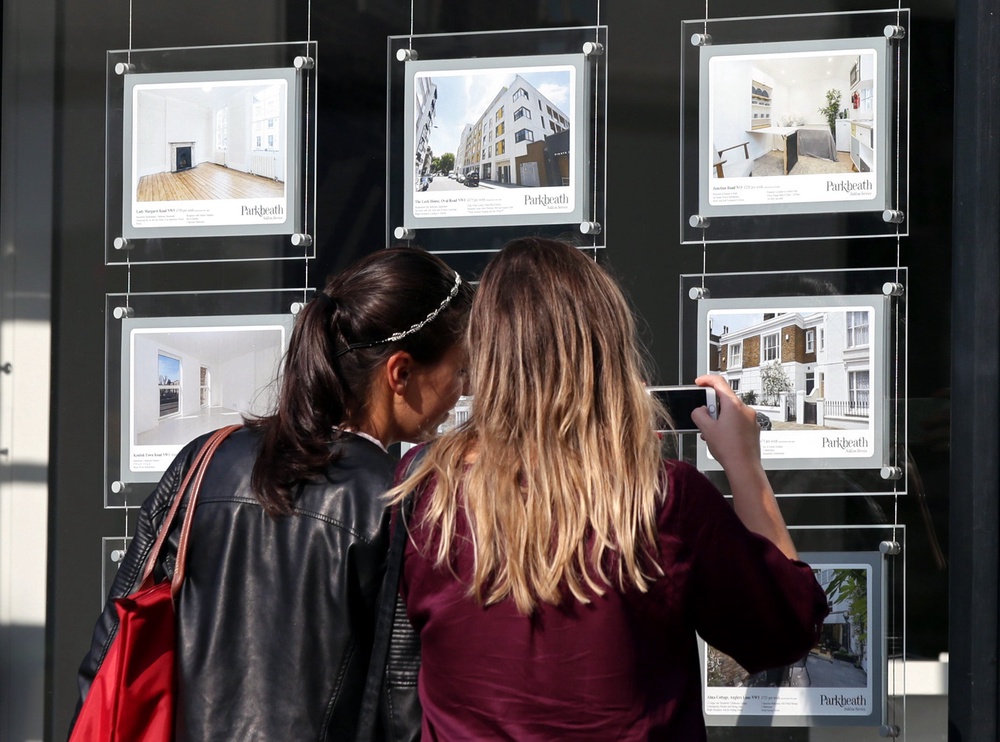
The base rate helps dictate how expensive it is to take out a mortgage or a loan.
Many lenders had been chopping rates early this year in expectation of the Bank of England lowering its base rate, but they started increasing rates sharply following the outbreak of the Middle East conflict.
Lenders have been raising some fixed mortgage rates in recent weeks as they are influenced by what financial markets expect to happen next, even when the Bank of England’s base rate does not change.
Savings rates are also linked to the interest rate so may become more competitive.
– What is happening with inflation in the UK and why does this influence rates?
Raising interest rates is the central bank’s main way of reducing inflation – the measure of how fast prices increase over time.
The Bank’s aim is for monetary policy to help keep inflation at 2% – the target rate set for it by the Government.
Inflation is currently running above that level, however.
The latest official figures showed Consumer Prices Index (CPI) inflation rose to 3.1% in August, compared with 2.9% in July.
– What is most likely to happen to inflation in the future?
The Bank of England said it expects inflation to increase in the coming months, and by more than it was anticipating in the summer.
It predicted CPI will rise to about 3.75% by the end of 2026 and peak at about 4% by the start of 2027.
This compares to its previous forecast of CPI at about 3.2% by the end of the year.
Part of this pressure on overall prices in the UK is set to come from household energy bills, which will rise next month when Ofgem’s new price cap comes into effect.
Energy bills are influenced by wholesale oil and gas prices, which have surged because supplies have been disrupted since the war in Iran.
The Bank took into account other sources of cost-of-living pressure in the global economy like food prices, which are being impacted by hot and dry weather, and an AI-driven memory chip shortage.
– Will interest rates have to rise?
The Bank of England sent one of its clearest signals on Thursday that interest rates will have to rise if energy prices keep increasing and the Iran war is not resolved.
Governor Andrew Bailey said: “So far higher global energy costs have had a limited effect on price and wage setting in the UK.”
This refers to so-called second-round inflation effects – things like higher wage demands from employees and businesses increasing their prices.
He went on: “But the longer this volatility persists, the bigger the impact it will have on inflation, and the more likely it is we will need to raise Bank rate to ensure that inflation falls back to our 2% target.”
Other policymakers on the MPC said the case for raising interest rates was building the longer the war goes on.
Economists have said the likelihood of interest rates rising this year has increased as tensions escalate in the Middle East, and traders in the financial markets are pricing in the possibility of several rate rises over the coming year.
Read MoreInterest rates held at 3.75% but Bank warns Iran war could mean future hike
Bank of England announces latest interest rates decision
Eleanor Donaldson to appeal against trial of the facts verdict
Remains found after wildfire identified as mum-of-three missing for seven years
Strike to bring production ‘to a standstill’ at Diageo distillery, says union
Cinema chain Vue explores London listing after bumper summer