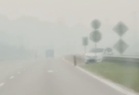
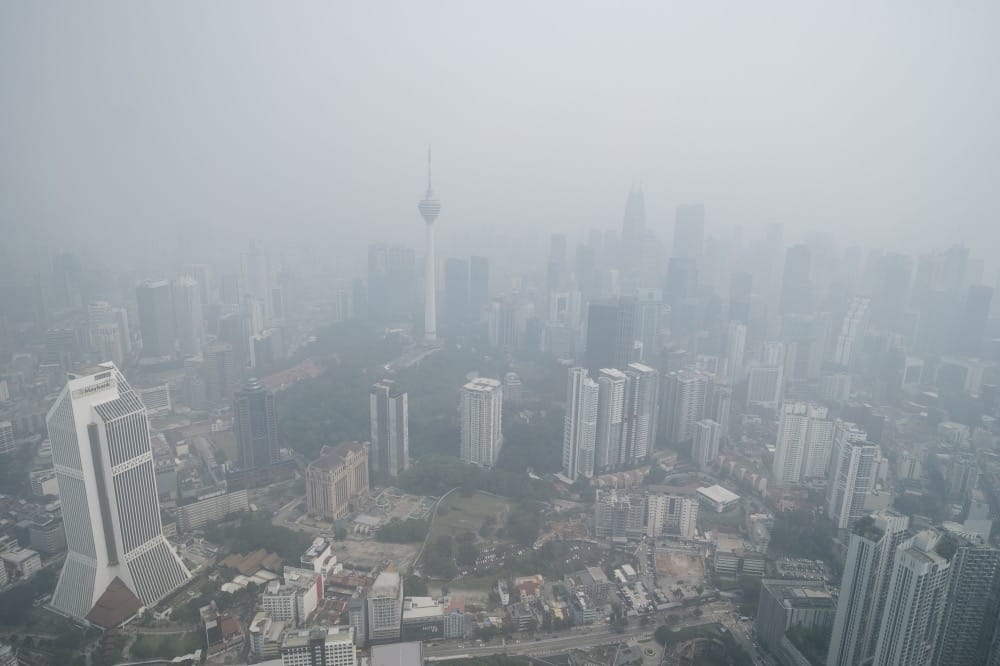
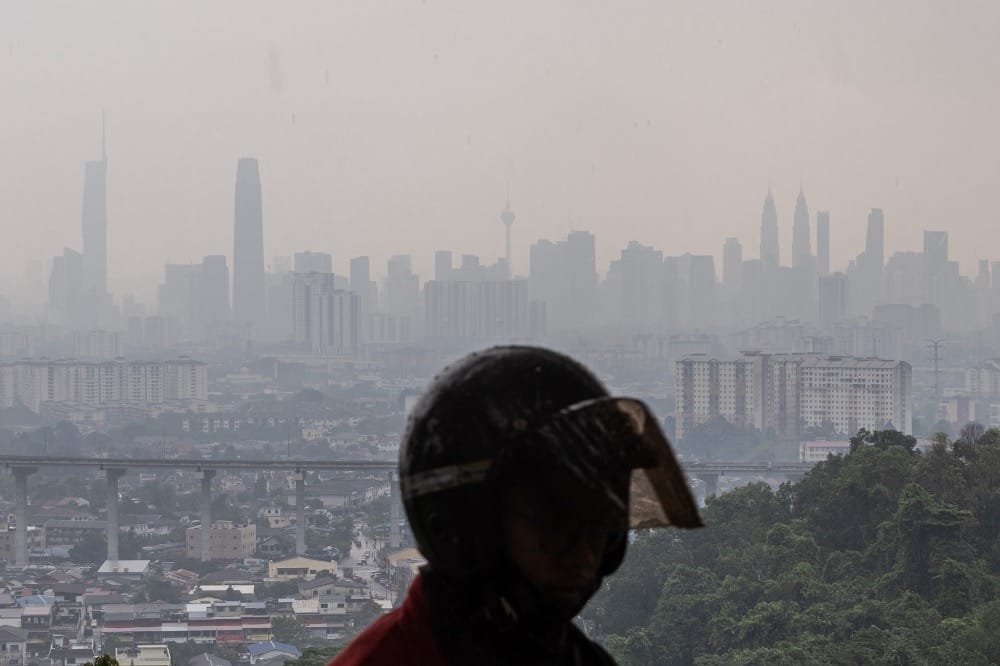
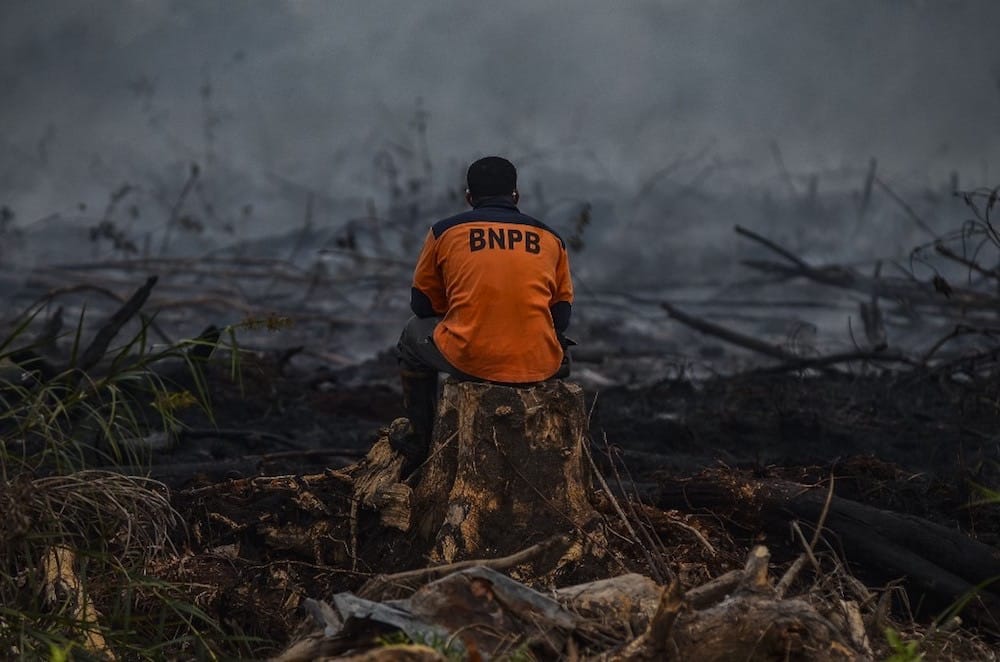
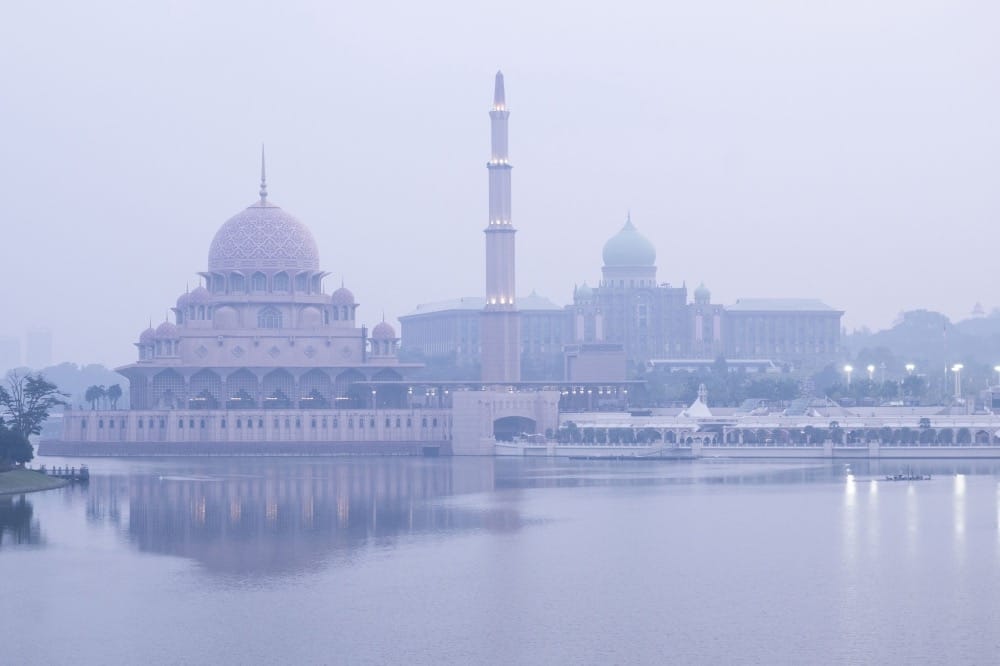
As the transboundary haze crisis continues to impact both Peninsular Malaysia and East Malaysia, Air Pollutant Index (API) readings across dozens of Department of Environment (DOE) monitoring stations have recorded unhealthy levels. Driven by extensive land-clearing and peatland fires in Indonesia’s Sumatra and Kalimantan, dense smoke plumes drift across maritime borders, severely affecting Malaysia’s air quality.
Border divisions in East Malaysia, including Kuching, Serian, and Sri Aman in Sarawak, alongside major peninsular urban centres across Johor, Melaka, Negeri Sembilan, Pahang, Selangor, and Kuala Lumpur, continue to register API readings surpassing unhealthy thresholds. The impact on public health has triggered emergency measures. Under Ministry of Education directives, physical classes in affected districts are suspended whenever local API readings breach 180 or remain at hazardous levels for consecutive days.
The worsening of this seemingly annual event has once again reignited calls among Malaysians urging the Federal Government to enact a Transboundary Haze Act similar to the one introduced by Singapore in 2014 and take legal action against the overseas culprits. However, after some eight years of studying its feasibility, the Government decided in November 2023 against pursuing the law, as announced by then-Natural Resources, Environment and Climate Change Minister Nik Nazmi Nik Ahmad.
So, why did Malaysia decide against introducing a Transboundary Haze Act? Aren’t there any existing laws that allow Malaysia to hold foreign entities accountable for haze affecting the country?

Here’s everything you need to know.
Malaysia currently has no environmental statutes that grant domestic authorities extraterritorial jurisdiction
Under the primary framework, the Environmental Quality Act 1974, the statutory authority of the Malaysian Department of Environment (DOE) is strictly territorial. The law grants no legal power to investigate, subpoena, or prosecute individuals, corporations, or farm operators in foreign jurisdictions.
While extraterritorial jurisdiction exists under Malaysian law, it is strictly restricted to these criminal, financial, and national security statutes:
- The Penal Code: Section 4 of the Penal Code extends jurisdiction to offences committed outside Malaysia by citizens or permanent residents, or offences committed against state security.
- Malaysian Anti-Corruption Commission (MACC) Act 2009: Section 66 of the MACC Act, as referenced in legal guides by CMS Law on Malaysian anti-corruption laws, allows prosecution of Malaysian citizens and permanent residents who commit corruption offences abroad.
- Extra-Territorial Offences Act 1976: Applies to offences committed on the high seas, on Malaysian-registered aircraft or ships, or offences certified by the Attorney General to affect national security under statutes such as the Official Secrets Act 1972.
- Capital Markets and Services Act 2007: Covers financial fraud or market manipulation committed overseas if there is a direct impact on Malaysian capital markets.
The current environmental regulatory frameworks do not feature equivalent extraterritorial clauses, leaving domestic courts without statutory authority over cross-border pollution.
Why Malaysia chose not to introduce the Transboundary Haze Act
The government's decision in 2023 was guided by several legal, forensic, and diplomatic constraints outlined in official statements and policy discussions:
Forensic and evidential requirements
Prosecuting cross-border environmental offences requires a clear, legally verifiable evidentiary chain:
- Satellite data vs. ground verification: While data from the ASEAN Specialised Meteorological Centre (ASMC) identifies thermal hotspots and wind trajectories, satellite imagery alone does not meet the standard of proof required in court to prove criminal intent or civil negligence.
- Access to physical evidence and concession maps: Verification requires physical inspection of burn sites, soil analysis, and access to official land concession maps. Malaysian officials have no legal authority to conduct investigations or collect evidence on foreign soil.
- Data transparency: Land ownership records and concession boundaries in neighbouring countries are often treated as private or state-restricted data, making it difficult to establish legal ownership of affected land in a judicial setting.
Operational friction in Singapore’s version of the Act
Evaluations of Singapore’s Transboundary Haze Pollution Act 2014 showed that extraterritorial laws encounter practical enforcement issues. Serving court notices, securing foreign witness cooperation, and enforcing financial penalties on non-resident corporate entities remain difficult without reciprocal enforcement treaties.
Diplomatic frameworks and regional norms
Diplomatic engagement within Southeast Asia relies on ASEAN principles of non-interference, consensus, and respect for national sovereignty. Unilateral extraterritorial legislation risks creating diplomatic friction with regional neighbours whose cooperation is necessary for firefighting and preventative measures.
Current strategy: Diplomacy, technical coordination, and local mitigation
Instead of enacting standalone cross-border legislation, Putrajaya focuses on diplomatic protocols, data sharing, and domestic enforcement:
- ASEAN Cooperation: Utilising the ASEAN Agreement on Transboundary Haze Pollution (AATHP) to maintain bilateral lines of communication, issue diplomatic notices during haze spikes, and coordinate through the ASEAN Coordinating Centre for Transboundary Haze Pollution Control.
- Corporate accountability and transparency: Working with Bursa Malaysia to encourage publicly listed Malaysian plantation companies operating overseas to report fire prevention and sustainability practices.
- Domestic enforcement: Applying the Environmental Quality Act 1974 to prevent open burning within Malaysia, deploying cloud-seeding operations when atmospheric conditions allow, and coordinating public safety measures through the National Disaster Management Agency (NADMA) and state disaster management committees like the Sarawak Disaster Management Committee (SDMC).
While the decision against enacting a Transboundary Haze Act may frustrate those seeking direct statutory remedies, it underscores the pragmatic limits of national legislation in addressing a multi-jurisdictional environmental challenge. For Malaysia, resolving the annual crisis ultimately hinges less on domestic legal measures and far more on sustained regional diplomacy, joint enforcement protocols, and cross-border cooperation within ASEAN.
For more legal insights such as this, do follow us on Instagram, TikTok, Facebook, or visit our official website. You can also read our articles on the popular Malaysian news aggregator app Newswav.
About us
Ahmad Danial Iswatt & Luqman is an esteemed law firm that delivers best-in-class legal solutions to individuals, businesses and legal entities in Malaysia and beyond. We offer ease of mind to our wide range of clients by dismantling complex legal challenges with novel solutions through exceptional legal advisory and representation.
Our distinguished partners of diverse backgrounds and expertise have achieved significantly favourable results in all levels of courts in Malaysia, from high-profile civil and criminal litigation proceedings to complex cases in which the outcomes have become binding precedents for the laws of the country. Backed by a growing team of exceptional lawyers and capable support staff, we aspire to be at the forefront of the legal sphere to satisfy our clients’ dynamic demands and ever-increasing complexity.
ADIL Legal (office@adillegal.com) is a content creator under the Newswav Creator programme, where you get to express yourself, be a citizen journalist, and at the same time monetize your content & reach millions of users on Newswav. Log in to creator.newswav.com and become a Newswav Creator now!
The User Content (as defined on Newswav Terms of Use) above including the views expressed and media (pictures, videos, citations etc) were submitted & posted by the author. Newswav is solely an aggregation platform that hosts the User Content. If you have any questions about the content, copyright or other issues of the work, please contact creator@newswav.com.