
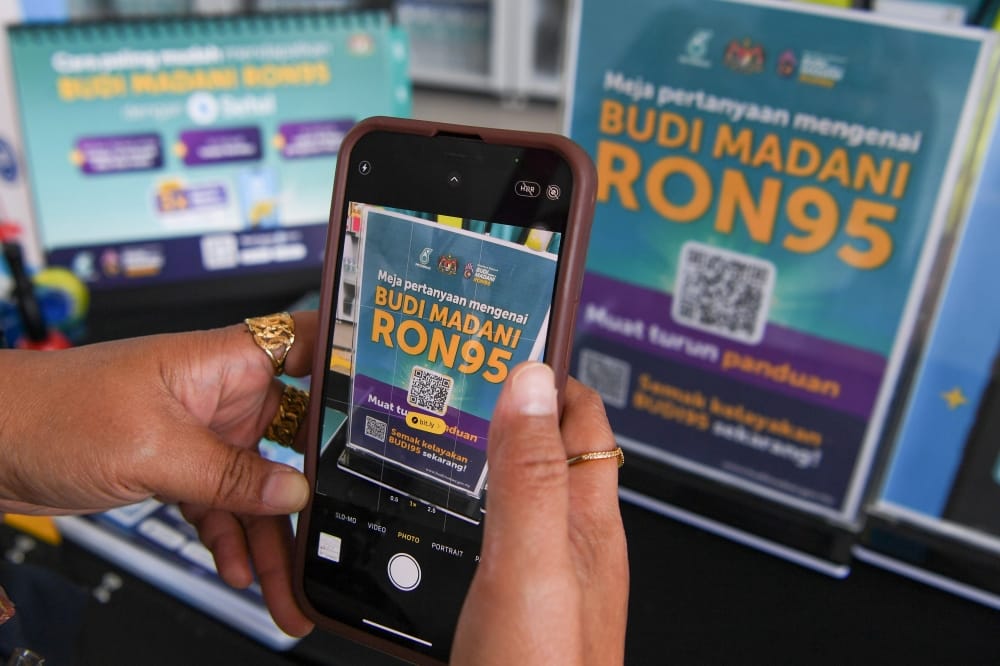
On a scorching Tuesday afternoon in downtown Kuala Lumpur, a single mother of two stood transfixed in front of a petrol pump, her thumb pressing desperately against the MyKad biometric scanner. Around her, the cacophony of idling Myvi engines and urban exhaust hummed a familiar Malaysian rhythm, but for her, the world had shrunk to a small, glowing terminal screen. The prompt flashed a cold, unyielding rejection: Kelayakan BUDI95: Tidak Layak (BUDI95 Eligibility: Not Eligible). Her combined household monthly income, supplemented by a relentless cycle of freelance graphic design work and overnight baking, had technically drifted just a hundred ringgit past an arbitrary administrative line. In that singular, frustrating moment, she was no longer a struggling mother trying to outrun inflation; she was a data point on an economic spreadsheet an accidental casualty of Malaysia's clinical obsession with alpha-numeric sorting.
This scenario is not an isolated incident. Across the nation, from the dense high-rises of the Klang Valley to the quiet coastal enclaves of Sabah and Sarawak, millions of Malaysians find their daily dignity, financial survival, and societal worth dictated by three blunt shorthand labels: B40, M40, and T20. These terms, originally designed as bloodless statistical tools for macroeconomists, have mutated into deeply entrenched socio-cultural identities. They are thrown around in corporate boardrooms, weaponized on social media timelines, and codifying the national consciousness into an economic caste system. Yet, beneath the casual rhetoric lies a profound and troubling truth. These rigid brackets fail to capture the chaotic, fluid reality of Malaysian lives, creating a distinct form of psychological fragility and institutional exclusion that threatens to tear at our collective social fabric.
The Birth of the Spreadsheet Caste
To understand how the nation became so deeply fractured by alphabet soup, one must trace the history of these metrics back to the quiet halls of the Department of Statistics Malaysia (DOSM). Historically, socioeconomic policies were anchored to ethnic or regional categorizations, heavily influenced by the legacies of the New Economic Policy. However, as the domestic market modernized and urbanized, economic planners required a more precise, color-blind instrument to track wealth distribution. Thus, the population was sliced cleanly into the Bottom 40%, Middle 40%, and Top 20% of income earners.
What began as an internal analytical grid rapidly became the absolute centerpiece of the state's paternalistic relationship with its citizens. According to the 2024 Household Income Survey released by the Department of Statistics Malaysia, the parameters governing these classifications were adjusted to reflect shifting economic dynamics. The modern thresholds delineate a B40 household as one earning less than RM5,860 per month, an M40 household between RM5,860 and RM12,679, and a T20 household commanding anything above RM12,680.
Sociological analysis indicates that the trouble started when the government began tying critical welfare mechanisms, housing schemes, and education quotas exclusively to these rigid categories. Overnight, these data points ceased to be mere descriptors; they became digital gatekeepers. To be classified as B40 was to unlock a suite of protective financial cushions, from direct cash handouts under the Sumbangan Tunai Rahmah framework to essential medical coverage via the MySalam scheme. Conversely, to find oneself stranded in the M40 or T20 brackets meant watching those protective cushions evaporate, regardless of the hidden financial fires burning behind closed doors.
The institutionalization of these terms has fundamentally altered how citizens perceive themselves and one another. In digital public spaces like Malaysian Twitter and Facebook, users frequently adopt these labels as shorthand expressions of generational trauma, financial resentment, or class solidarity. The terms have inadvertently fostered an insidious collective psychology: a deep-seated structural anxiety where citizens are constantly looking over their shoulders, terrified of slipping down a bracket, or bitterly pointing fingers at those positioned above them.
The Mirage of Urban Middle-Class Prosperity
Perhaps the most glaring structural flaw of this alpha-numeric classification system is its profound geographical blindness. A flat income threshold assumes that a ringgit stretched across a rural paddy field in Padang Terap possesses the exact same purchasing power as a ringgit spent beneath the gleaming shadow of the Petronas Twin Towers. As documented comprehensively by the Penang Institute's structural assessment of Malaysia's middle class, this methodology creates a dangerous illusion of prosperity, particularly for those occupying the M40 middle tier.
Consider an urban household in Petaling Jaya consisting of two working professionals pulling in a combined monthly income of RM9,000. On paper, according to federal standards, this family sits comfortably within the M40 bracket, theoretically enjoying a lifestyle of stable domestic consumption. However, analytical scrutiny of urban expenditures reveals a vastly different story. Once the non-negotiable costs of modern city survival are deducted exorbitant high-density housing mortgages, crippling hire-purchase loans for vehicles necessitated by disconnected transit systems, commercial childcare fees, and escalating insurance premiums their actual disposable income mimics that of a household living on the absolute poverty line.
This phenomenon is increasingly recognized by domestic economists as "middle-class fragility." Unlike the B40, who are shielded by targeted safety nets, the M40 are caught in a brutal socioeconomic blind spot. They are simultaneously deemed too wealthy to receive government assistance, yet too poor to comfortably absorb the compounding shocks of global inflation, rising electricity tariffs, and depreciating currency values. According to consumption data highlighted by the Penang Institute, urban middle-income households are increasingly forced to compromise on long-term wellness and nutritional quality simply to maintain the baseline aspirational appearances dictated by their corporate environments. They are, by all definitions, the working poor in designer ties.
The Fuel Subsidy Crucible and the Myth of the Unified T20
The profound limitations of these blunt categories have been thrust into sharp relief by the government's highly contested transition toward targeted fuel rationalization. For decades, cheap petrol functioned as the ultimate psychological equalizer in Malaysia; rich or poor, every citizen pumped from the same subsidized pool. However, facing immense fiscal constraints, the state introduced the BUDI95 targeted subsidy programme, which utilizes national databases to restrict discounted fuel prices exclusively to those deemed financially deserving, as outlined by Maybank’s public guidelines on the BUDI95 mechanism.
This policy shift has triggered a wave of public anxiety and fierce debate among economic analysts. As noted by Prime Minister Anwar Ibrahim during a pivotal parliamentary briefing, while the initial impulse of the subsidy reform was to claw back billions leaking to wealthy elites and foreign entities, the implementation required delicate navigation to prevent widespread domestic disruption. Initial proposals had flirted with a hard, uncompromising cut-off for households earning above RM13,000, effectively cordoning off the entirety of the T20 spectrum from public aid.
However, looking at the data with a more critical eye, treating the T20 as a monolithic bloc of ultra-wealthy individuals is a profound analytical mistake. The top quintile of Malaysian society is characterized by massive, internal wealth disparity. It spans from a mid-level government administrative director earning RM14,000 a month with five school-aged children, to a multi-millionaire developer residing in an elite gated community in Damansara. To cluster these two entirely separate economic realities under the identical "T20" banner and strip them of baseline subsidies simultaneously is a recipe for severe middle-class resentment.
Economic analysts have continuously warned that aggressive, unrefined income cut-offs threaten to induce a dangerous "cliff effect" across urban centers. As highlighted by Samirul Ariff Othman, a prominent consultant at Global Asia Consulting in a report by Scoop, a blunt subsidy system that relies strictly on monthly gross income can severely suppress consumer spending. If an urban household hovering just above the threshold is suddenly forced to absorb the full market float of daily transport costs, their discretionary spending collapses. This creates a painful ripple effect that directly damages local retail sectors, food services, and suburban micro-businesses. The real metric of wealth, Othman argues, is not a static gross number on a salary slip, but a household's dynamic "transport burden" when weighed against localized living costs and family dependencies.
Moving Beyond the Tyranny of the Average
Recognizing that the traditional B40/M40/T20 taxonomy is an archaic tool for a modern, complex society, there is a growing consensus among institutional planners that Malaysia must dismantle this spreadsheet caste system. The human experience cannot be compressed into three neat buckets without losing the vital context that makes survival possible. The state requires a more sophisticated, compassionate lens one that looks past raw gross metrics and focuses deeply on net disposable income and multidimensional vulnerability.
Encouragingly, policy architects have begun dropping hints of a structural paradigm shift. According to long-term economic strategies outlined by HousingWatch's structural analysis of Malaysian demographics, the federal government is gradually moving to phase out these binary alpha-numeric groupings. The future of targeted welfare distribution is slated to transition toward a model that dynamically evaluates household disposable income, asset ownership, and specific localized vulnerabilities through integrated frameworks like the Central Sustainability Database (PADU).
Yet, changing the software is only half the battle; the more daunting task lies in changing the national culture. We must actively deconstruct the linguistic boundaries we have erected around ourselves. When we casually use the terms B40, M40, or T20 in daily conversation, we are not just describing economic statistics we are subtly reinforcing an institutional hierarchy that reduces our fellow citizens to mere corporate income brackets. A society that views itself through the sterile lens of a spreadsheet will inevitably lose its capacity for collective empathy.
What do you think? I’d love to hear your opinion in the comments section.
Ultimately, the exhaustion felt by the corporate executive working eighty hours a week to retain their "T20" status is fundamentally connected to the terror felt by the "B40" laborer wondering if their next grocery run will slip past their budget. Both are trapped in a system that values human worth based on economic productivity rather than intrinsic dignity. As the nation stands at a critical crossroads of subsidy rationalization and structural fiscal reform, we must remind ourselves that economics must always serve humanity, not the other way around.
The true health of Malaysia cannot be measured by how neatly we can sort our population into analytical grid boxes. It is measured by how safely we can catch them when they fall, regardless of which bracket they happen to occupy on a given Tuesday. We must move toward a future where no mother is rejected by a petrol pump biometric scanner simply because her desperate hustle for survival caused her to earn a fraction too much on a data ledger. Until we see past the letters and numbers, we are merely counting the cost of our own division.
AM World (tameer.work88@gmail.com) is a content creator under the Newswav Creator programme, where you get to express yourself, be a citizen journalist, and at the same time monetize your content & reach millions of users on Newswav. Log in to creator.newswav.com and become a Newswav Creator now!
The User Content (as defined on Newswav Terms of Use) above including the views expressed and media (pictures, videos, citations etc) were submitted & posted by the author. Newswav is solely an aggregation platform that hosts the User Content. If you have any questions about the content, copyright or other issues of the work, please contact creator@newswav.com.