
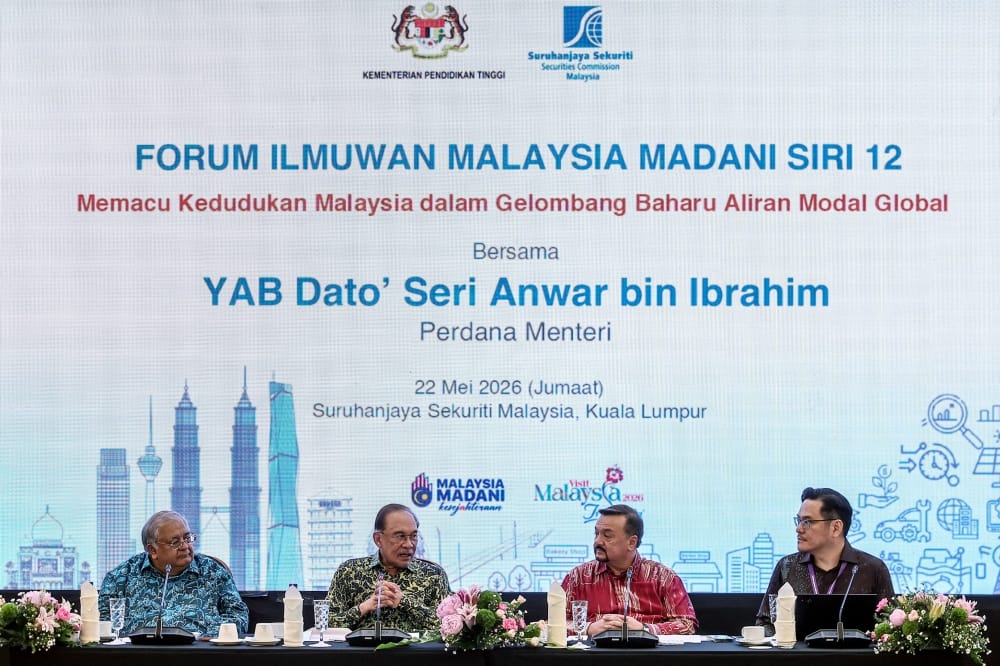
The collective sigh of the Malaysian consumer at a local pasar tani or hypermarket is a sound that transcends politics. In early 2026, as global supply chain pressures continue to drive up operating costs for small traders, Prime Minister Datuk Seri Anwar Ibrahim made headlines by urging micro-financing bodies to go to the ground and place capital directly into the hands of hawkers. It is a compassionate narrative, wrapped tightly in the ethos of Malaysia Madani a framework emphasizing equity, restructuring, and social safety nets.
Yet, beneath this contemporary veneer of grassroots populism lies a fierce, subterranean debate regarding the structural lineage of the Malaysian state. A provocative faction within the country’s political landscape has begun championing a blunt, revisionist critique: “YANG memajukan Malaysia bukan Anwar tetapi UMNO!” (The one who advanced Malaysia was not Anwar, but UMNO!).
This sentiment exposes a deep fracture in the national psyche. It pits a modern administration, focused on fighting decades of corruption and managing strategic losses in high-tech ventures, against the architectural legacy of the United Malays National Organization (UMNO), which steered the nation from an agrarian British colony into an industrial powerhouse. To evaluate this claim is not merely to indulge in historical nostalgia; it requires a deep, institutional dissection of how Malaysia became a "Tiger Economy" long before the current administration inherited the keys to Putrajaya.
The Genesis of the Tiger: Industrializing a Post-Colonial Nation
To understand the argument that Malaysia's advancement belongs to the legacy of UMNO rather than the reforms of the present day, one must revisit the economic landscape of the late 20th century. Following independence in 1957, the Alliance Party, and subsequently the UMNO-led Barisan Nasional coalition, faced the monumental task of nation-building. According to historical analysis of the country's political transformation, the secession of Singapore in 1965 and the subsequent racial riots of May 13, 1969, forced institutional architects to completely rethink social and economic engineering.
What followed was the New Economic Policy (NEP) launched in 1971. While modern critics frequently scrutinize the NEP for its ethnic quotas and market distortions, economic data highlights its role as a stabilizing force. Academic reviews on Malaysia’s past successes and economic evolution show that between 1961 and 2012, Malaysia achieved an average annual economic growth rate of approximately 7 percent.
This sustained expansion transformed the country from a vulnerable, agrarian-based economy heavily reliant on rubber and tin into a diversified manufacturing powerhouse. By the 1980s and 1990s, under successive five-year development plans designed by UMNO administrations, mega-infrastructure projects took root:
- The construction of the North-South Expressway, linking the Thai border to Johor.
- The birth of the national car project, Proton, symbolizing heavy industrialization.
- The establishment of Free Trade Zones in Penang and Selangor, which attracted global tech titans like Intel and AMD.
This rapid transformation earned Malaysia recognition from the World Bank as one of the hallmark "East Asian Miracle" economies. The structural foundations the physical roads, the electricity grids, the ports of Klang and Tanjung Pelepas, and the civil service framework were systematically laid down decades before the current administration assumed power. From an analytical perspective, the assertion that Malaysia was already a highly developed, modern nation before the 2022 political shift is a matter of documented historical record.
The Dual Identity of Anwar Ibrahim
The historical narrative becomes complicated when analyzing the political career of Anwar Ibrahim himself. The current debate often frames the Prime Minister as an external reformer challenging an entrenched establishment. However, historical records remind us that Anwar was an integral component of the UMNO machinery for over a decade.
Anwar Ibrahim's Institutional Trajectory within the UMNO Era:
[1982: Joined UMNO] ➔ [1986: Minister of Education] ➔ [1991: Minister of Finance] ➔ [1993: Deputy Prime Minister]
Recruited into the party in 1982 by Tun Dr. Mahathir Mohamad, Anwar rose rapidly through the ranks, serving as Minister of Education and eventually as Minister of Finance and Deputy Prime Minister in the 1990s. Consequently, a significant portion of the economic advancement achieved during the peak of Malaysia's "Tiger Economy" era occurred while Anwar was running the national treasury under an UMNO banner.
The institutional memory of Malaysia is not clean-cut. When defenders of the old guard claim that UMNO built the nation, they are referencing an era when Anwar was a central architect of that very same establishment. The subsequent political schism of 1998, which birthed the Reformasi movement, created a ideological divide. It repositioned Anwar as the challenger to the system he helped manage, setting the stage for the contemporary debate over who truly deserves credit for Malaysia's macroeconomic maturity.
Structural Ruptures: The Middle-Income Trap and Institutional Decay
While the architectural achievements of the past are clear, a deeper socio-economic analysis reveals why a shift in governance became inevitable. The very policies that propelled Malaysia out of low-income status eventually contributed to what economists call the "middle-income trap." The heavy state intervention, bumiputra equity targets, and patronage networks that stabilized the country in the 1970s gradually transformed into systemic inefficiencies.
By the 2010s, domestic productivity growth began to stagnate. The economy became heavily dependent on low-cost foreign labor, a structural weakness that the government recently noted cannot be sustained indefinitely if the nation wishes to climb the global value chain. Decades of uncompetitive government-linked companies (GLCs), political patronage, and massive financial scandals eroded public trust and weakened institutional integrity.
The current administration argues that while the physical infrastructure was built by the previous long-ruling coalition, the institutional core was left compromised. This forms the basis of the Madani economy's counter-narrative: building roads and skyscrapers is meaningless if systemic corruption and weak governance deprive marginalized communities of actual economic mobility.
High-Tech Ambitions vs. Legacy Foundations
This historical tension is highly visible in how the state handles strategic economic choices. At a recent federal forum, Anwar stated that the government is open to GLCs taking calculated losses in cutting-edge fields like artificial intelligence (AI) and the digital economy, provided there is absolute transparency and good governance.
| Economic Era | Primary Growth Drivers | Governance Philosophy |
|---|---|---|
| The UMNO Legacy Era | Manufacturing, Infrastructure, Commodities, Export-led Industrialization | State-directed capitalism, strong executive control, affirmative action |
| The Current Madani Era | AI, Advanced Semiconductors, Digital Venture Capital, Renewable Energy | Fiscal consolidation, anti-corruption reforms, targeted social subsidies |
This shift in strategy highlights the core of the debate. Critics of the current administration look at rising living costs and targeted subsidy rationalizations, arguing that the old UMNO model offered superior macroeconomic stability and tangible welfare. Conversely, modern policymakers argue that the old methods are obsolete in a global economy driven by microchips and machine learning. They maintain that the country cannot rely entirely on past achievements while its regional neighbors rapidly upgrade their digital ecosystems.
What do you think? I’d love to hear your opinion in the comments section.
To ask whether UMNO or Anwar advanced Malaysia is to misinterpret how nations evolve over time. The historical record shows that the physical, industrial, and macroeconomic foundations of Malaysia were built during the long tenure of the Barisan Nasional coalition. The schools, highways, and industrial zones that form the backbone of daily life are products of that era.
However, nations cannot live indefinitely on the achievements of the past. The challenges of the current era ranging from fiscal deficits and currency fluctuations to the urgent need for high-value technological investments require a different governance approach. The current administration's focus on anti-corruption measures and digital transformation represents an attempt to fix structural issues that developed alongside that early rapid growth.
Ultimately, Malaysia's advancement is a continuous process rather than the work of a single political entity. The boardrooms of the past built the platform, but the policy decisions of the present will determine whether the nation can successfully navigate the complexities of a changing global economy.
AM World (tameer.work88@gmail.com) is a content creator under the Newswav Creator programme, where you get to express yourself, be a citizen journalist, and at the same time monetize your content & reach millions of users on Newswav. Log in to creator.newswav.com and become a Newswav Creator now!
The User Content (as defined on Newswav Terms of Use) above including the views expressed and media (pictures, videos, citations etc) were submitted & posted by the author. Newswav is solely an aggregation platform that hosts the User Content. If you have any questions about the content, copyright or other issues of the work, please contact creator@newswav.com.