
IN taking the helm of Asean in 2026, the Philippines is calling on the region to confront a defining question: How can it grow more resilient, inclusive and prosperous in an era of climate risks, geopolitical uncertainty and widening inequality?
For the Department of Environment and Natural Resources (DENR) undersecretary for Administration, Finance, Information Systems and Climate Change, Atty. Analiza Rebuelta-Teh, the answer lies in collective action and changing how the region understands wealth.
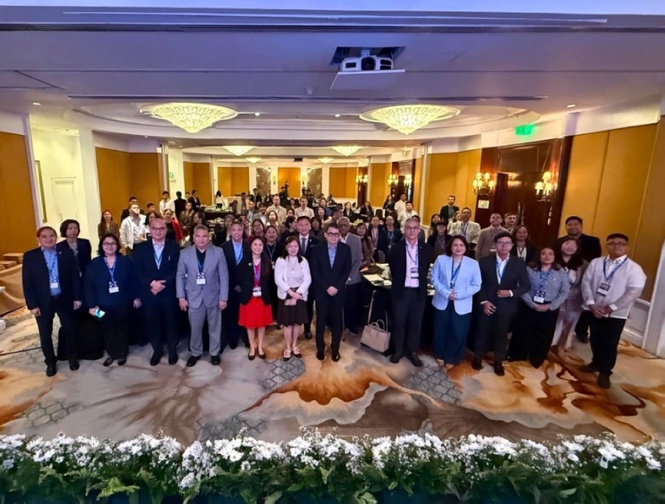
She placed natural capital at the center of the region’s development agenda when she delivered the keynote address at the Eco-Business and the United Nations Environment Programme (UNEP) Finance Initiative’s Unlocking Capital for Sustainability-Philippines on Aug. 19.
The event gathered policymakers, financial leaders and industry stakeholders to explore how capital can be mobilized for climate adaptation, biodiversity protection and sustainable growth.
The conversation comes at a critical moment. Climate change remains Southeast Asia’s top challenge, according to the ISEAS–Yusof Ishak Institute’s State of Southeast Asia 2026 Survey Report. Climate impacts are being felt through stronger storms, worsening floods, damaged livelihoods and rising recovery costs. If unaddressed, these could threaten as much as 35 percent of Asean’s combined gross domestic product (GDP).
As Asean chairman, the Philippines is positioning regional cooperation as a response to these challenges. “Our region’s economic future depends on aligning policy, finance, and implementation across borders from trade and energy grids to taxonomies and nature finance,” Teh said.
At the heart of her message was a call to redefine capital. Traditional economic models have often treated forests, oceans and other natural resources as limitless inputs for economic activity. But Teh argued that this approach risks undermining the foundations of prosperity.
“Our natural resources... are the primary, most fundamental form of capital we possess: Natural Capital,” she said. Healthy forests regulate water, store carbon and reduce disaster risks. Wetlands absorb floodwaters. Coral reefs protect shorelines. These ecosystems generate services that underpin every human and economic activity. “If we deplete this principal, we bankrupt our future,” Teh warned.
Investing in nature is a strategic investment in resilience, national stability and inclusive growth. Community-led agroforestry, sustainable fisheries and nature-based tourism can create livelihoods while restoring ecosystems. The Philippines’ proposed Just Transition Framework seeks to ensure that the shift toward a greener economy does not place unfair burdens on workers, poor households or vulnerable communities.
Scale of investment
According to the keynote, a just transition could increase the Philippines’ GDP by up to 10 percent by 2040 and 25 percent by 2050. It could reduce poverty and improve women’s participation in the labor force.
The scale of financing required is substantial. The Philippines estimates that achieving its national climate commitments will require about $72 billion in investments from 2020 to 2030. Meanwhile, environmental threats are projected to cost the country approximately P645 billion annually.
Meanwhile, implementing the Philippine Biodiversity Strategy and Action Plan requires an estimated $530 million each year, while current public spending covers only about one-fifth of that amount.
To close this gap, the DENR is advancing instruments such as biodiversity credits, marine protected area insurance, and public-private partnerships like GCash Forest and Together for Tamaraws.
When it comes to the economic potential of forestry, the DENR has identified 1.18 million hectares of potential investable forest land that could be developed through Sustainable Forest Land Management Agreements. Properly managed, these areas could generate approximately P4 billion in annual revenue and an estimated P38 trillion in cumulative production value from 2027 to 2052.
Teh stressed that this opportunity must not become a license for destructive development. Investment sites will be assessed for environmental conditions, climate risks, land status, community circumstances and business potential. Projects incompatible with forest protection will not be allowed.
Building investor confidence will require clear rules and credible information. The Philippines is working to harmonize sustainable finance taxonomies, strengthen corporate climate and nature disclosures, and develop bankable project pipelines that meet rigorous social and environmental standards.
For Asean, Teh proposed scaling nature-positive finance, strengthening domestic market instruments, and ensuring that Indigenous peoples, local communities and smallholders are direct partners and beneficiaries. She urged investors and financial institutions to increase blended finance for adaptation and nature-based solutions, work with local actors to develop investable projects, and adopt transparent nature-related disclosures.
Ultimately, Teh reminded us, “Capital is a tool, not a destination.” It must protect human dignity, secure livelihoods and restore the ecosystems on which the region depends. Her closing words underscored the spirit of the Philippines’ Asean chairship: “Hindi kami mag-iisa sa hamong ito... kailangan natin ang pagkakaisa at pagkilos nang magkakasama.”
The author is the founder and chief strategic advisor of the Young Environmental Forum and a subject matter expert at the Co-operative College of the Philippines. He completed a climate change and development course at the University of East Anglia (UK) and an executive program on sustainability leadership at Yale University (USA). You can email him at ludwig.federigan@gmail.com.