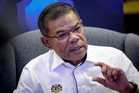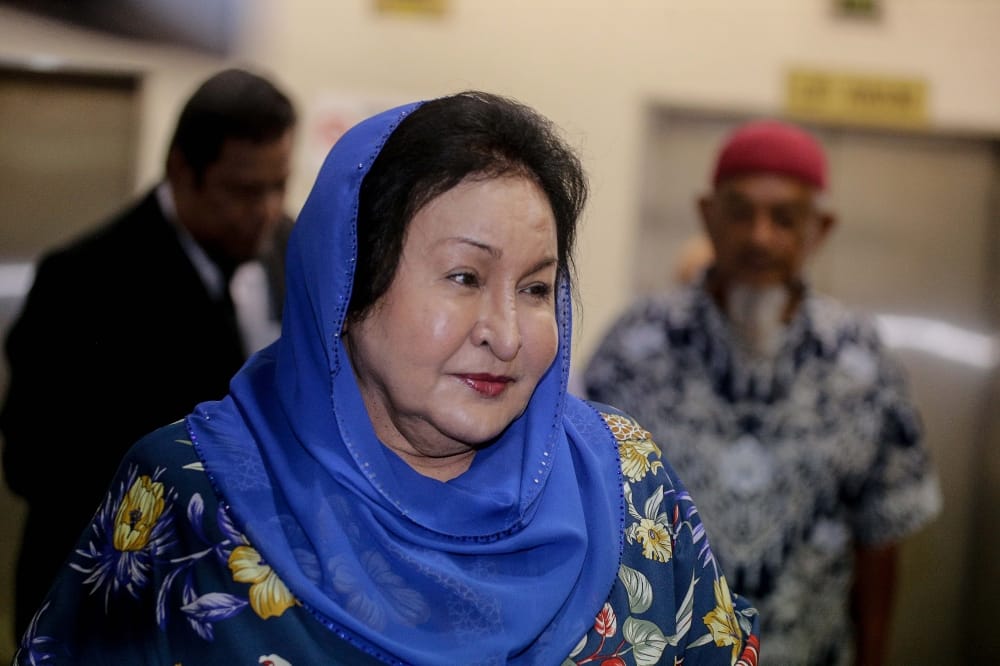
When the High Court ordered former Prime Minister Datuk Seri Najib Razak to serve the remainder of his prison sentence under house detention at his Jalan Langgak Duta residence, it sparked widespread national attention and intense public curiosity. Yet, amid discussions about the logistics of his transition out of Kajang Prison, a striking detail quickly emerged to challenge public assumptions about home comfort: his wife, Datin Seri Rosmah Mansor, will not be living with him. Instead of sharing the family home during this high-profile period, Rosmah is set to reside at her apartment complex in Pavilion, Kuala Lumpur, while Najib serves his sentence under strict legal isolation. This stark separation lays bare an unfamiliar facet of Malaysia's penal system, turning what many imagined as a comfortable domestic reunion into a tightly controlled institutional reality.
This unexpected arrangement forces us to look past the superficial comfort implied by the term "house arrest" and examine the rigorous legal boundaries governing a conditional pardon execution. According to clarifications by Wanita UMNO executive council member Datuk Nurulhidayah Ahmad Zahid, the Jalan Langgak Duta property has been officially gazetted as a prison extension, meaning standard correctional protocols apply fully within its walls. As outlined in reports by the Malay Mail, this setup strips away typical family cohabitation, substituting it with strict inmate rules, scheduled visitation hours, and authority-regulated provisions. To truly comprehend this unique legal moment, we must deconstruct the structural mechanics of home detention, analyze public perceptions of political family life, and explore what this separation signifies for the intersection of law and domesticity in Malaysia.
The Architecture of Isolation and Inmate Status
The public imagination often associates house arrest with luxury, freedom of movement, and familiar domestic companionship. However, the legal reality enforced by the courts and prison authorities shatters that illusion. Because Najib retains his official inmate status while completing his sentence slated until August 2028 following his conviction in the SRC International case the residence acts merely as an alternative containment facility rather than a sanctuary of domestic liberty. As detailed by NST, the gazettement of the property means that family members, including Rosmah and their children, cannot legally reside inside the perimeter compound with him.
This institutional framework transforms a private family home into a controlled environment governed by prison code. Meals, visitor logs, and daily communications are placed entirely under the jurisdiction of correctional officers. For legal scholars and institutional watchdogs, this uncompromising enforcement demonstrates that the state’s conditional pardon order though shifting the physical location of confinement does not dilute the penal weight of a corruption conviction. By ensuring that house detention mirrors the rigid boundaries of a correctional facility, the judiciary seeks to maintain public trust in the consistency and impartiality of Malaysia’s legal framework.
Cultural Perceptions of Family, Status, and Privilege
In Malaysian society, where familial ties and close-knit communal structures hold profound cultural significance, the physical separation of a high-profile couple during a domestic detention order has sparked intense public debate. Platforms like The Vibes highlight how online discussions quickly polarized over whether home detention constituted a form of preferential treatment or undue hardship. When initial rumors and assumptions suggested a comfortable family reunion, public skepticism flared regarding equity in the justice system.
However, the reality that Rosmah remains stationed at Pavilion while Najib serves his term alone introduced an unexpected human layer to the discourse. It subverts the narrative of elite immunity, reminding observers that state-imposed restrictions cut sharply across personal lives. Culturally, this situation forces the public to confront a complex dichotomy: the tension between sympathetic human reactions toward a political family enduring prolonged legal turmoil, and the institutional necessity of treating high-ranking figures with rigorous legal parity. When the glamour of political prominence crashes into the unyielding walls of prison regulations, public perception is forced to reckon with the sobering equality of legal consequences.
Institutional Boundaries and the Realities of Enforcement
The management of Malaysia’s first major high-profile house arrest case sets a crucial precedent for future legal interpretations. Media coverage compiled by outlets such as The Sun and local reporting emphasize that administrative transparency is vital to prevent misinformation from clouding public understanding. When speculation ran rampant on social media platforms regarding deliveries, visitor privileges, and daily routines, leadership figures stepped forward to clarify that standard prison procedures such as restricted visiting hours and state-regulated nutrition apply without exception.
This rigorous institutional oversight protects the credibility of the Ministry of Home Affairs and the Prisons Department. In an era where political decisions are instantly dissected across digital ecosystems, maintaining clear, unyielding enforcement protocols prevents perceptions of double standards. By establishing that even a former prime minister under house arrest must endure solitary confinement without his spouse sharing the premises, the system signals that statutory guidelines supersede personal status. Institutional integrity thus relies on these unbending rules, ensuring that justice is not only administered behind prison walls but maintained wherever the state dictates confinement.
Reframing the Future of Justice and Accountability
To push Malaysia's socio-political conversation forward, the unique circumstances surrounding Najib's house arrest and Rosmah's separate residence at Pavilion should prompt a deeper national reflection on how criminal justice is perceived and executed. Rather than viewing penal reform or alternative sentencing through a partisan lens, society must evaluate these mechanisms based on transparency, consistency, and rehabilitation. When legal frameworks are applied with clear, uncompromising boundaries separating convicted individuals from everyday domestic life it reinforces the principle that accountability applies universally, regardless of political legacy.
This evolution requires an informed public capable of looking past sensationalized headlines to understand the complex administrative reality of modern governance. Programs promoting legal literacy and civic education help citizens grasp the distinctions between executive pardons, judicial warrants, and correctional compliance. When the nation shifts its focus toward upholding institutional integrity and rule of law, Malaysia moves closer to a mature democracy where legal processes remain transparent, fair, and resilient against political noise.
What Do You Think? I’d Love to Hear Your Opinion in The Comments Section.
The stark image of Datuk Seri Najib serving his detention alone at Jalan Langgak Duta while Datin Seri Rosmah resides at Pavilion captures a defining chapter in contemporary Malaysian history. It illustrates that even within the familiar surroundings of a residential neighborhood, the unyielding reach of the law transforms homes into correctional boundaries. As the nation navigates these unprecedented legal frontiers, this moment stands as a powerful reminder that accountability, structure, and institutional rules remain paramount. The journey ahead demands respect for due process and a steadfast commitment to transparency, ensuring that justice continues to serve as the bedrock of the nation's future.
AM World (tameer.work88@gmail.com) is a content creator under the Newswav Creator programme, where you get to express yourself, be a citizen journalist, and at the same time monetize your content & reach millions of users on Newswav. Log in to creator.newswav.com and become a Newswav Creator now!
The User Content (as defined on Newswav Terms of Use) above including the views expressed and media (pictures, videos, citations etc) were submitted & posted by the author. Newswav is solely an aggregation platform that hosts the User Content. If you have any questions about the content, copyright or other issues of the work, please contact creator@newswav.com.