Air travelers could remain stuck paying elevated airfares even if oil and jet fuel prices fall, major U.S. airlines and industry analysts say.
Jet fuel costs spiked sharply after the outbreak of the war in Iran, dropped significantly in the spring, and then surged again over the summer months.
Such market instability makes forward planning difficult for commercial carriers and gives them reason to be cautious about reducing ticket rates, according to Brett House, an economist at Columbia Business School.
Jet fuel has risen even faster than crude oil during the conflict, driven by higher crude costs and tight supplies of the refined fuel that represents one of the airline industry’s largest operating expenses.
Although major U.S. airlines cut less profitable flights and raised fares and baggage fees, companies said higher passenger revenue initially covered only part of their soaring fuel costs.
Ticket pricing, however, has not moved in lockstep with fuel costs. The Argus U.S. Jet Fuel Index fell from an early April peak of $4.88 per gallon to a wartime low of $2.70 in June, yet average passenger fares remained elevated.
The average base fare, excluding optional fees for services such as checked bags and seat selection, rose from $405 in the final three months of 2025 to $428 in the first quarter of this year and to $436 in the April-June period, according to the Bureau of Transportation Statistics.

House attributed part of the disconnect between fuel prices and airfares to operational timing. Airlines typically decide several months in advance how many flights to operate and how many seats to offer, factoring in expected fuel and other operating expenses.
They begin selling tickets even earlier. While seat prices for a flight change continuously, airlines cannot charge more for tickets already sold if fuel prices suddenly spike.
"It’s not just the level of fuel costs that is a problem or a challenge for airlines," House said. "It’s also the volatility."
Travelers have seen few signs of relief so far as airlines adjust schedules and pricing for the rest of the year. In August, U.S. airfares stood 23% higher than a year earlier, according to the Labor Department. Meanwhile, jet fuel prices continued climbing this month, reaching $4.53 a gallon on Sept. 17, according to the Argus index.
At $4.30 a gallon on Friday, the average price across the four U.S. markets tracked by the index remained nearly double the 2025 average. Travelers searching for holiday flights are already seeing the highest airfares in a decade, travel-booking firm Hopper reported the same day.

Hopper, which tracks prices available in flight searches, estimated that during the previous week, a round-trip domestic fare averaged $402 for Thanksgiving travel and $452 for Christmas, up 31% and 23% from last year.
Financial pressure on airlines and passengers extends beyond the United States. Globally, jet fuel averaged about $99 a barrel on Feb. 27, the day before the war began, according to the International Air Transport Association’s Jet Fuel Price Monitor.
Prices more than doubled to $209 by early April, fell for nearly three months and reached $195 a barrel in mid-September following their renewed ascent, IATA said, citing data from S&P Global Energy Platts.
The renewed upward pressure on jet fuel prices originates from many of the same disruptions driving up diesel costs. Military conflict has curtailed refinery production and fuel exports from the Middle East, while Ukrainian strikes have damaged Russian refining facilities.
Because diesel and jet fuel are closely related products competing for refinery output, shortages in one fuel type exert additional pressure on the price and availability of the other.
IATA projects that fuel will account for nearly one-third of airline operating expenses this year, up from approximately a quarter in 2025.
By the time fuel prices jumped again, roughly 35% of United’s tickets for the final three months of the year were already booked, and the airline could not increase those fares retroactively, Chief Financial Officer Mike Leskinen explained. The carrier expects to recover its higher fuel costs through revenue over time, but not immediately, he said.
Speaking about the rising price of jet fuel at a Sept. 16 investor conference, Leskinen said, "I don’t actually care if it stays high. I just need it to stabilize."
Because airlines need time to recoup costs, travelers may keep paying for a fuel spike even as market prices fall. Jet fuel prices need to decline and stay down for airfares to fall on a sustained basis, said Stephen Treanor, a finance professor at California State University, Chico, who has studied airlines’ exposure to fuel price risk.
The speed with which jet fuel prices rose recently has complicated corporate forecasts for U.S. airlines. As recently as Sept. 10, JetBlue raised its expected average fuel price for the July-September period to $3.96 a gallon.
Prices continued climbing afterward, with the Argus U.S. Jet Fuel Index reaching $4.53 a gallon a week later and remaining above $4.25 with just days left in the quarter.
Every penny per gallon adds about $10 million to American Airlines' quarterly fuel bill, Chief Financial Officer Devon May stated. Speaking at the same investor conference this month, May estimated the latest increases would boost the carrier's fourth-quarter fuel costs by about $1 billion.
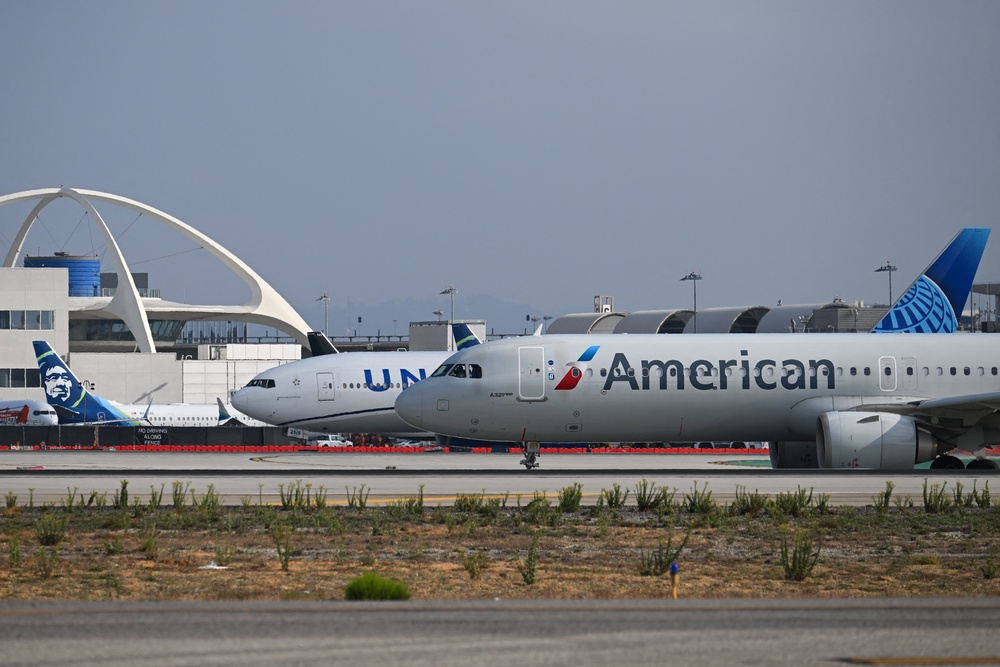
American, United and Southwest Airlines have said they are further pruning their flight schedules, particularly on less-profitable routes, because of higher fuel costs.
United, for instance, pulled some December flights and warned of further cuts in 2027 if fuel stays expensive. American said it expected slower growth next year than it anticipated a few months ago.
Travelers purchasing tickets at the last minute are paying a heavy price. The average same-day fare for a one-way domestic Allegiant Air flight jumped 21% in a week, to $280 on Sept. 18, according to a Deutsche Bank analysis of flight pricing. The comparable same-day American Airlines fare was $463, up 6%.
For travelers holding out for cheaper fares, the wait could outlast the war itself.
"The likelihood that fuel surcharges are going to be rolled back and airfares are going to be brought down is very low over the next few months," House said.
TfL to run London bus routes for first time in 17 years
Confessions of an Airbnb host: The 5 signs that you’re going to be an awful guest
IndiGo flight diverted to Heathrow minutes after take-off due to technical issue
Mount Etna volcanic ash suspends flights for third day running
World’s first Minecraft hotel to open in the UK – here’s what we know so far
London railway stations hit by travel chaos after fire damages signalling equipment