
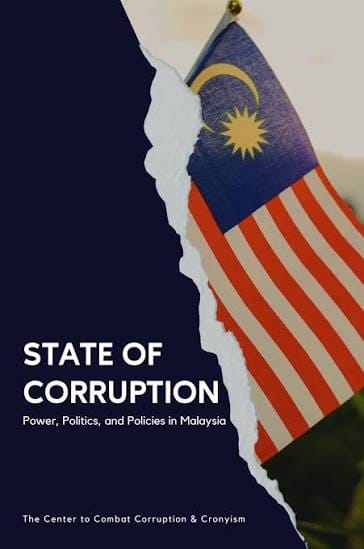
While public outcry against corruption has occurred, it is often more muted or sporadic compared to social or religious issues like the recent KL Water Festival which drew unusually strong and wild public reactions to it.
Why so?
Was it a cultural, political or psychological issue issue?
Are those public reactions genuine or was it `manufactured’?
The political elite often utilize social and religious issues to distract from political scandals, ensuring popular outrage is directed at moral threats rather than financial misconduct.
And cultural issues are often more emotionally charged, visible, and easier to condemn, whereas corruption is often seen as complex, systemic, and abstract, making it harder to organize direct public action against it.
A smokescreen.
A "smokescreen" will be created to shift topics from domestic crises to more emotive issues when their position is at risk.
The strategy often called "distraction politics is a frequently observed tactic used by political elites to manage public perception, maintain power, and divert attention from scandals involving corruption, mismanagement, or financial misconduct.
Politicians frame political crises around social, cultural, or religious issues so that they can shift the public focus from rational analysis of government performance to emotionally charged debates.
Politicians engineer or amplify public fear surrounding social or religious threats to distract from, say, misuse of funds or official incompetence.
These politicians knows that religious and social issues evoke strong emotions, which are often stronger motivators for public action than economic misconduct.
When accused of scandals, they will use religious piety cards, prayers, or public displays of faith to establish innocence and discredit critics.
Also attempts are sometimes made to racialize corruption, with politicians blaming other communities rather than addressing the systemic issues within their own ranks.
Politicians everywhere, always and never failed to use or engage their supporters as part of their political manipulation and distraction strategies.
The sad thing is that noticeably some leaders condemn immorality publicly while engaging in corruption, leading to a "cakap tak serupa bikin" culture.
Another first in the Malaysian context is the "orang kita" mentality where that corruption is often excused if committed by someone from the same political, ethnic, or religious group, whereas "non-conformist" behavior is viewed as an external threat.
We can only stop corruption if the government show they dont do selective prosecution.
The Kerajaan must show they do not tolerate corruption.
FLK (leekhean.foo@gmail.com) is a content creator under the Newswav Creator programme, where you get to express yourself, be a citizen journalist, and at the same time monetize your content & reach millions of users on Newswav. Log in to creator.newswav.com and become a Newswav Creator now!
The User Content (as defined on Newswav Terms of Use) above including the views expressed and media (pictures, videos, citations etc) were submitted & posted by the author. Newswav is solely an aggregation platform that hosts the User Content. If you have any questions about the content, copyright or other issues of the work, please contact creator@newswav.com.