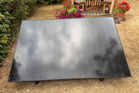
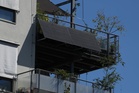
PUT SOLAR panels and a battery on your roof and the system already costs less than grid power. That is the case from Ping Mendoza, president and board member of the Philippine Solar and Storage Energy Alliance (PSSEA). In a country paying some of the region’s highest rates, it should be an easy sell. It hasn’t been.
At the 4th Asean Battery Technology Conference held in Malaysia, on a panel about building batteries at scale, Mendoza said the technology is maturing and batteries are about to take center stage. What he is less sure of is whether we can afford to deploy solar and storage widely enough. Afterward, I sat down to walk through why.
Batteries matter now, Mendoza said, because solar arrived faster than the grid could handle. Grid operators across Asia complain it rushed in too fast and generates only in daylight. Storage answers that. For Mendoza, it is also about security. We import most of our fuel, and we felt the latest price crisis early this year.
Part of why the math works is how much we already pay. When I asked about the 25 to 40 US cents a kilowatt-hour he cited, he broke it down. Mendoza put Meralco at around 16 pesos a kilowatt-hour, roughly under 30 cents, while far-flung areas on diesel gensets pay 40 to 50 cents. Those rates are averages, and plenty of local utilities charge more.
There is also a subsidy buried in the bill. In areas the national grid does not reach, served by the National Power Corp., consumers pay only part of the true cost, and the rest is spread across everyone else. A line on your Meralco bill already helps cover the cost of power in those diesel-run places.
So if the math is this good, why isn’t it happening faster? Two reasons, and neither is the technology.
The first is geography. It is cheaper to ship a battery from Shanghai to Manila than from Manila to another island, Mendoza added. Philip Lee of Green Tenaga, on the same panel, raised the fragmentation that comes with an archipelago. The places that would gain most, the islands and provinces, are the hardest to reach.
The second is the cost of money. Everything comes back to cost of capital, Mendoza said, and our lending rates run higher than in the West. Foreign investors could bring cheaper money, but that carries currency risk, and the peso needs confidence back. People got used to 50 to a dollar, and now it is past 60. Local banks have the cash and are stable. What they lack is a product built for this: a 10-year loan with a security package for solar and batteries, not an off-the-shelf one priced too high.
Even that reaches only so far. We are not really a bank country, Mendoza said, so fixing bank lending still misses most consumers. He sees a role for blended finance, philanthropic money paired with private capital, with Singapore becoming something of a hub. Solar fits the brief: national interest, energy security, jobs. He called it the country’s biggest opportunity, and said people are sleeping on it.
He also wants us to lead the next wave of regional investment, not wait for it, by working with our neighbors instead of competing project by project. One idea he raised through the regional solar association is a shared certificate, so an installer trained here could work at any battery or solar factory in the bloc. He wants money and projects to move across the region as freely as the workers.
I asked whether lowering the cost of capital is government’s job, since he had told the panel he wanted government to help or at least get out of the way. No, he said. There are many factors, including confidence and plumbing. Government has been good on energy policy, he said. The trouble is solar and storage keep getting treated as an energy question, how to make more electricity, when they should be a matter of national strategy. Middle East countries treated oil as their path to progress, and we should treat the sun the same way. We sit near the equator, have skilled technicians, and islands the grid will never reach.
His fix is not in Manila. Everyone frets about floods and gridlock, so push it the other way. Put the jobs in the provinces and solar and batteries across the countryside. “The path to prosperity is solar plus battery,” he said. In the off-grid areas the grid never reached, we already help pay for the power there.