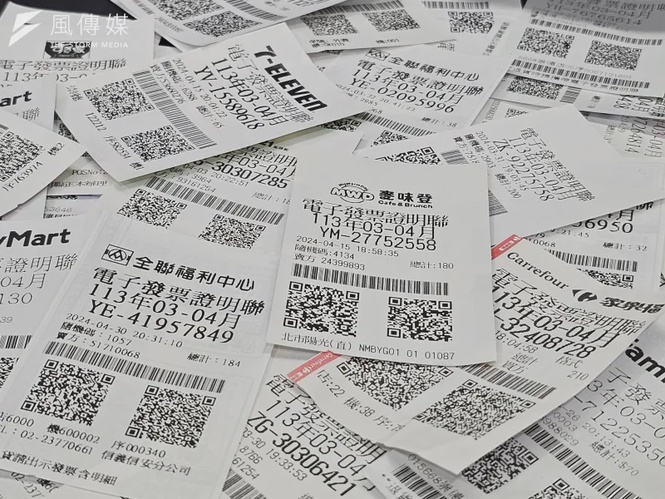
Buy a coffee at a convenience store or pay the bill at a restaurant in Taiwan, and the cashier will almost always ask the same question: do you want the receipt saved to a carrier. For years, the standard answer was simpler: people took the paper receipt home and held onto it in case its number matched the monthly lottery draw. These days, plenty of shoppers save it straight to a phone barcode and may never actually see what the receipt looks like at all. But why does every purchase in Taiwan generate a government-numbered receipt, called a uniform invoice, in the first place, and why does the government hand out prize money just to get people to ask for one? The answer goes back more than seven decades, and the lottery was never really the point.
Why Stores Have To Issue A Receipt At All
Taiwan's uniform invoice system dates back to December 12, 1950, when the Taiwan Provincial Government's finance department drew up regulations creating a standardized business invoice and a companion prize program, both taking effect January 1, 1951. According to Taiwan's National Development Council Archives Administration, the system existed for one core reason: to let the government actually see how much business a shop was doing, so it could collect business tax accurately.
Without a paper trail, a tax authority has little to go on beyond whatever revenue figure a business chooses to self-report. A uniform invoice fixes that by recording the date and amount of a sale every time one happens, giving the government an independently auditable record to check tax filings against. In its most basic form, the invoice in a shopper's hand was never really designed as a keepsake. It was a receipt built to prove one specific thing: that a transaction actually took place.
Why The Receipt Doubles As A Lottery Ticket
Requiring shops to issue invoices is one thing. Getting customers to actually care whether they receive one is another problem entirely. If a shop quietly skips issuing an invoice, that sale disappears from the record, and a customer who assumes the slip of paper is worthless has little reason to push back. Taiwan's solution was to build a very specific incentive directly into the system: make the invoice a lottery ticket.
Ministry of Finance archives show that when the uniform invoice system launched in 1951, the prize draw rolled out alongside it from day one, meant to use cash prizes to encourage people to actually request a receipt, which in turn boosted the pool of transactions the government could tax. Taiwan's National Taxation Bureau of Taipei still describes that as the program's purpose today: get consumers to ask for an invoice at the point of sale, which helps prevent tax evasion. The sequence surprises a lot of people once they hear it. The lottery wasn't invented first, with invoices tacked on as a side effect. The government needed people to demand invoices, and adding a chance to win money was the tool it built to make that happen.
How A Prize Draw Boosted Tax Revenue By 75 Percent
The strategy worked about as well as a tax authority could hope. Ministry of Finance historical records show business tax revenue jumped to more than NT$51 million in 1951, the invoice system's first full year, up roughly 75 percent from about NT$29 million the year before. The government leaned hard into promoting the new system at the time, even commissioning a jingle that spelled out the new social contract in song: shop owners should issue the invoice, and customers should ask for it. What began as a fairly dry tax document turned into part of daily life in Taiwan almost entirely because someone decided to attach a lottery number to it.
Why The Receipt Is Also Proof You Bought Something
Over time, the uniform invoice's role expanded well beyond helping the government audit sales or giving shoppers a shot at winning cash. Taiwan's Ministry of Finance tax portal notes that the invoice also functions as proof of purchase. If a customer buys something expired, damaged or defective, the invoice from that purchase can serve as documentation when requesting a return, exchange or other remedy.
Taiwan's current regulations on invoice usage lay out specific procedures for handling returns, exchanges and discounts after an invoice has been issued, and electronic invoices carry their own transmission and record-keeping process for the same situations. On an ordinary day, an invoice might just be a piece of paper that gets thrown out along with the rest of the receipts in someone's wallet. But if a product turns out to be faulty and a shop has no record of the sale, a shopper's word alone may not be enough to resolve the dispute. The store, date and amount recorded on an invoice give a transaction that would otherwise exist only between buyer and seller something independently verifiable to point back to.
Why Some Shops Don't Issue One At All
Anyone who has ordered breakfast at a small stall or grabbed a quick bowl of noodles in Taiwan has likely noticed that not every business hands over an invoice, and that isn't necessarily against the rules. Not every business in Taiwan is required to use the uniform invoice system. Under Article 32 of Taiwan's Value-Added and Non-Value-Added Business Tax Act, businesses selling goods or services are generally required to issue a uniform invoice within a set time frame, but businesses with special operating characteristics, along with small-scale operators, are legally permitted to use an ordinary receipt instead and are exempt from the uniform invoice requirement. So a shop that skips the invoice isn't automatically breaking the law, it depends on whether that business qualifies for the exemption. On the flip side, a business that is legally required to issue invoices cannot use "the invoice costs extra" as a justification for a surcharge. Taiwan's Ministry of Finance has been explicit on this point: posted prices already include business tax, and businesses are required to issue invoices accordingly.
How A Paper Receipt Became A Line Of Data On Your Phone
The uniform invoice looks nothing like it did in 1951. Paper slips have steadily given way to electronic invoices, phone barcodes and other digital carriers, and some people go an entire year without physically handling more than a handful of paper receipts. Under current rules, electronic invoice data is transmitted to the Ministry of Finance's e-invoice integration platform for record-keeping, and shoppers using a digital carrier can look up or receive their invoices through that system. For a growing number of people, the invoice has quietly shifted from a paper slip in hand to a line of transaction data stored on a government server. The format changed, but the invoice's core purpose never really left. So the next time a cashier asks whether the receipt should go to a digital carrier, that small, repeated ritual is actually the latest version of a system that has been running for more than seventy years.