
I’m mostly naked, save for a cotton sarong wrapped around my torso, when a monitor lizard ambles into my line of sight. Above my head, I can hear yellow-beaked hornbills rustling in the tree branches. Just a few moments earlier, I’d seen a romp of otters scuttle across a swamp in the far distance as I was rinsing off in an outdoor shower. They’re the sort of wildlife encounters I’d expect on a walking safari – but, in fact, I’m in an open-air spa pavilion in the middle of a rainforest in Langkawi, preparing for a massage.
Langkawi is an archipelago off the northwest coast of Malaysia, close to the Thai border, with rock formations dating back more than 550 million years. During the Ice Age, equatorial Southeast Asia (then known as “Sundaland”) was spared from freezing over. Because of this, the island’s plant and animal life had many more years to flourish compared to other parts of the world, leading to the mature, biodiverse rainforests of today.
After major government investment in the late 1980s, the island developed into a popular honeymoon spot for travellers from mainland Malaysia and Singapore. For Britons, however, Langkawi – just an hour’s flight from Kuala Lumpur – remains far less familiar than, say, Phuket or Bali. However, it’s long been on my bucket list.
Read more: This luxury Malaysian hotel might have Southeast Asia’s most incredible infinity pool
Langkawi first captured my imagination a decade ago. I was flipping through a travel magazine; it sounded so otherworldly and romantic, I vowed to one day visit with my future husband as a “grown-up”. Now happily married, the stars had finally aligned: my husband and I were travelling around Asia to see my extended family, and Langkawi made for the perfect detour after a few days in Kuala Lumpur.
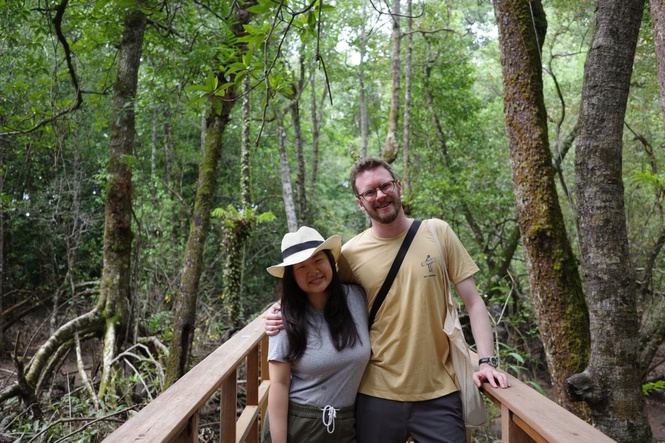
We spent our first morning at the foot of Mount Machinchang on the northwestern tip of the island, walking and meditating in the woods. The mountain plays an important role in Langkawi’s origin story. According to local folklore, a giant named Machinchang got into a fistfight here with another giant, Gunung Raya. During the brawl, objects were hurled across the island, giving several places their names: the town Kuah, Malay for “gravy”, is named after where a pot of sauce was spilled; Tanjung Cincin, or “Cape of the Ring”, is the spot where an engagement ring landed. Machinchang was ultimately struck down, his profile forming the mountain’s dramatic silhouette, which still resembles a sleeping man today.
Our guide also gave us a crash course on local flora and fauna during our session. This activity reminded me of forest bathing in Japan, but the Malaysian version also included Mandi Maul Hayat – a traditional ritual of submerging yourself in morning dew, or a body of water, as soon as you wake up – as a way of becoming more attuned to nature. Enter the water right foot first for better luck. Cooling down in the creek, with birdsong echoing through the trees, felt like the perfect way to quiet both our bodies and minds for the trip ahead.
Feeling thoroughly refreshed, we set off in search of one of Langkawi’s most famous inhabitants: the dusky leaf monkey. These grey-black primates are known for the distinctive white circles around their eyes, giving them an endearing, glasses-wearing look. While you can easily spot long-tailed macaques everywhere on the island – the cheeky brown monkeys that’d ransack your bags in search of food – dusky leaf monkeys are more elusive and shy. They keep to the treetops and are fiercely protective of their babies, which are born with a bright neon-orange coat.
Read more: There is a Bali beyond influencer’s Instagram reels – and it’s far more beautiful
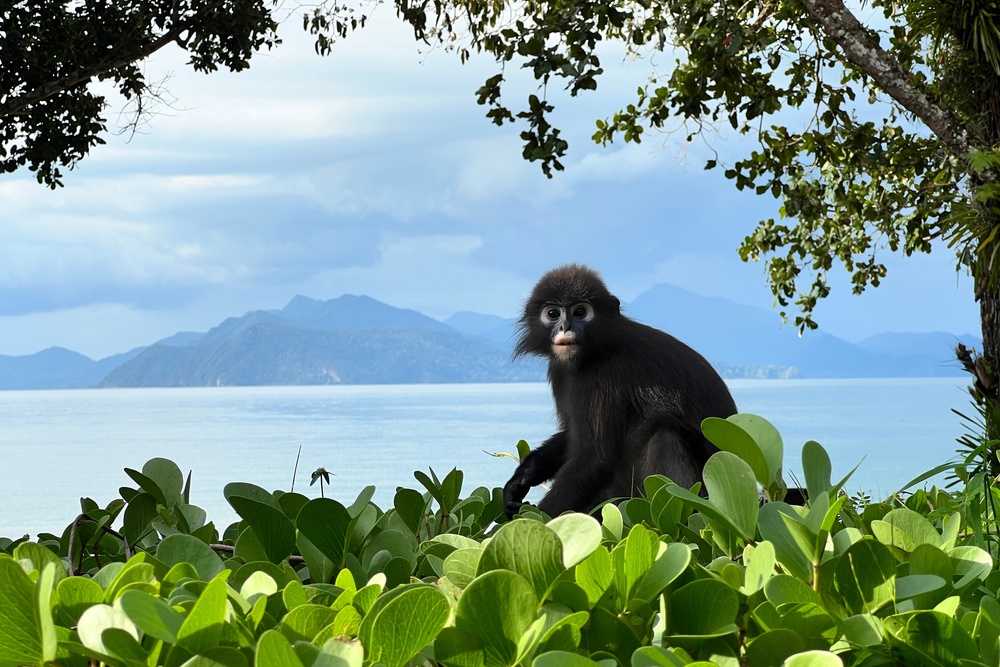
Our guide patiently led us through the dense foliage, up an elevated platform, and across a suspended rope bridge. Finally, we spotted one swinging between branches. Watching its scruffy little face peering curiously at us – as we stared back in equal wonder – was one of the most surreal moments on our trip.
One more conquest on our animal bucket list: the Brahminy kite. These majestic birds of prey are said to have given the archipelago its name; in colloquial Malay, Langkawi translates to “island of the reddish-brown eagle”.
The best place to see them is Kilim Karst Geoforest Park on the east coast; a maze of limestone cliffs and mangrove forests rising above emerald-green waters. Wanting to avoid crowded boat tours, I booked a private charter ride via Trip.com. It let us set our own pace and drift closer to the tangled, mature mangrove roots.
This was the spectacle my husband was most excited about, and it did not disappoint. From the boat, we watched as the kites began to circle overhead, then dropped suddenly toward the water to feed, their rust-coloured wings flashing against the green of the mangroves.
Nature is at the heart of Langkawi’s appeal, and few places capture that better than The Datai Langkawi on the northwestern edge of the island – as was proven when I encountered the otters, yellow-beaked hornbills and lizard during my spa trip.
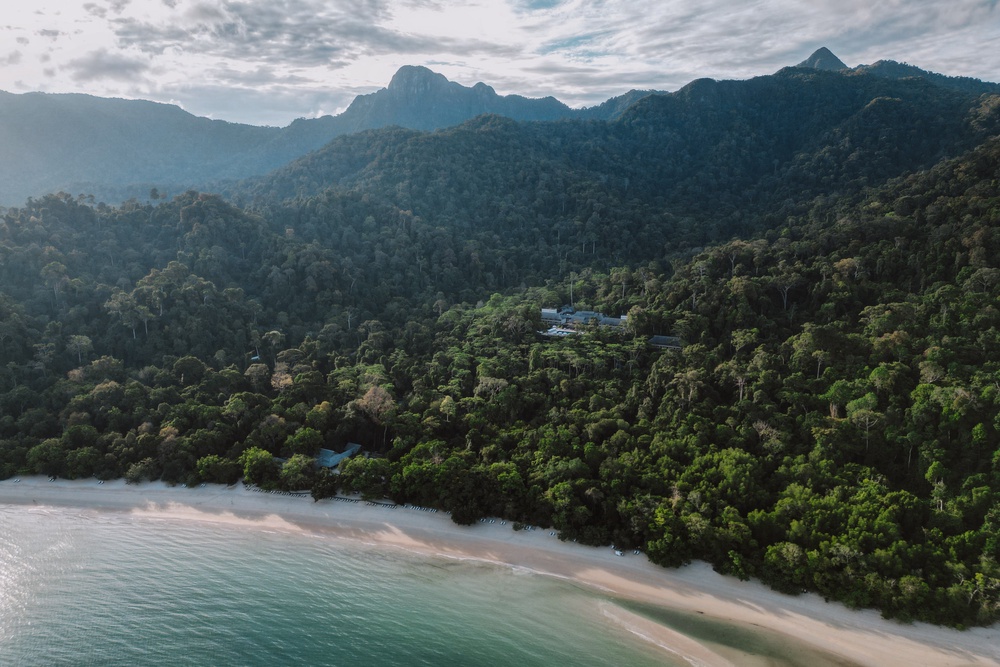
Seeing photos of this very hotel in that magazine article years ago first sparked my desire to visit Langkawi. Conceived in 1993 by visionary Australian architect Kerry Hill, the resort was designed to seamlessly blend into the surrounding habitat without disturbing it. Villas were built on stilts and carefully installed around the rainforest canopy to avoid chopping down trees. It’s so embedded in the landscape that, at night, we could hear civets, hornbills and monkeys walking on our roof.
Even the air here is fluttering with life; Langkawi is a veritable butterfly capital, home to 530 species (by contrast, the UK has 59). The resort employs a specialist to care for them, planting nectar-rich flowers and caterpillar host plants to draw them into the gardens. It also offers an app that lets guests identify species, including black-and-yellow Malayan birdwings and banded peacocks with striking teal stripes across their wings.
Through The Datai Pledge, a dedicated sustainability and conservation programme, the hotel folds environmental work into its everyday operations. Today, 96 per cent of the resort’s solid waste is composted, upcycled or repurposed. A team of naturalists lead guests on bird-watching excursions, marine biology courses and rainforest walks.
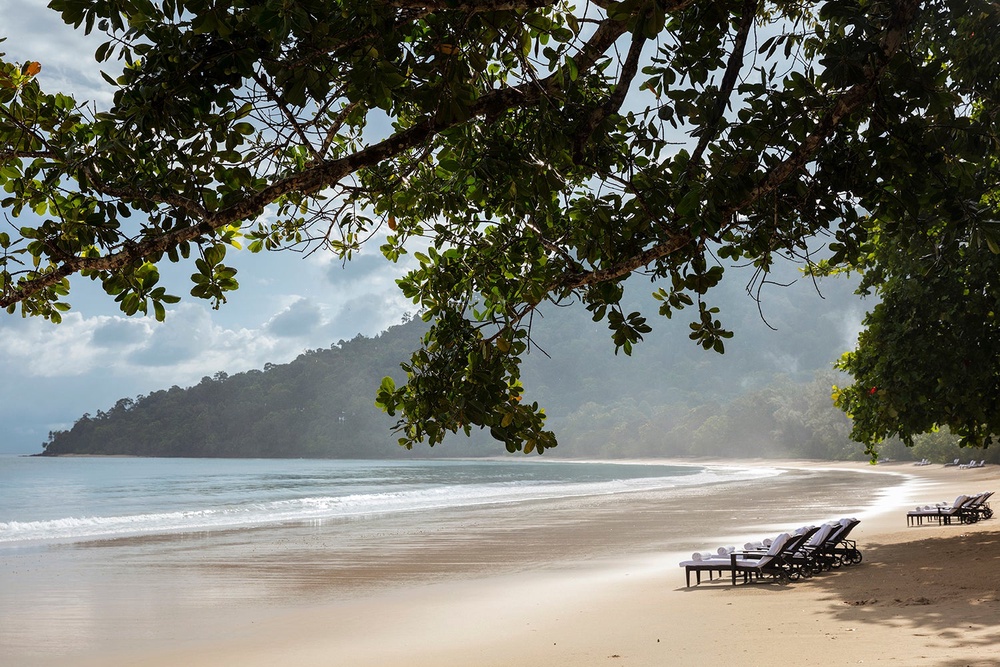
The best way to experience this carefully protected ecosystem is to simply sink your toes into the sand. The hotel borders Datai Bay, an immaculate stretch of powdery white sand and calm blue waters. We spent a happy afternoon away from our smartphones, strolling along the beach and paddleboarding (complimentary for hotel guests).
For a livelier side of Langkawi, we headed to Pantai Cenang, a beachfront further south of the island, constantly abuzz with tiki bars, backpacking inns and jet skis. The area is worth the detour for the street food alone. Our favourite was Keladi Cafe, overseen by a friendly local uncle and his two wandering kittens. The unassuming stall served up an incredible char kway teow (stir-fried flat rice noodles with egg and shrimp). We wolfed down the gloriously moreish meal on the sand as the sunset illuminated the coastline.
Throughout our stay, we met couples who return to the island year after year for wedding anniversaries, eventually bringing their growing families along. Walking back to our villa on our final night, listening to the hum of the ancient rainforest, I knew without a doubt that we would do the same.
Venus was a guest of The Datai Langkawi
Read more: This underrated Japanese city is perfect for escaping overtourism
How to do it
AirAsia X launched a new long-haul route between London Gatwick and Kuala Lumpur via Bahrain in August. Return flights start from £423.
Return flights between Kuala Lumpur and Langkawi start from £49. Use an Asia-focused OTA, such as Trip.com, to get the most comprehensive overview of the best domestic fares, including routes operated by local low-cost carriers such as Batik Air and Firefly Airlines.
Where to stay
Canopy deluxe rooms at The Datai Langkawi start at £588 per night. A once-in-a-lifetime jungle escape that blends seamlessly into a million-year-old rainforest, it offers a wide variety of activities, including nature walks, forest meditation sessions, Malaysian cooking classes and wellness rituals in its open-air spa pavilions.
Read MoreThe best islands in Thailand to visit for family holidays, yoga retreats and parties on the beach
This luxury Balinese beach hotel is everything a wellness escape should be
The world’s most romantic hotels to visit in 2026, from luxury cabins to lake-side spas
The best new cruise ships launching in 2026 and beyond
Inside the K-beauty boom – I went to Seoul to try the most viral treatments
This Vietnamese alternative to Phuket is a haven for island-hoppers