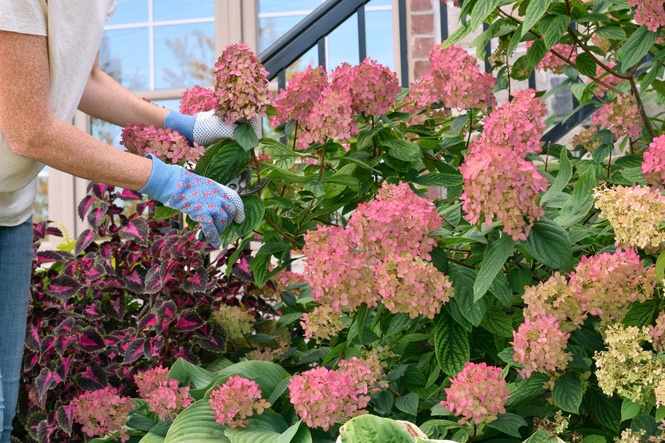
Those brown hydrangea blooms and bare-looking stems might be tempting you to reach for the pruning shears this November. After all, cleaning up the garden before winter feels like the responsible thing to do, especially when your shrubs look like they’ve finished their job for the year. But cutting back hydrangeas in the fall can quietly eliminate next summer’s flowers before they ever have a chance to open. The mistake is surprisingly easy to make because different hydrangea varieties follow completely different flowering schedules. Before you start trimming, there’s one important detail about your plant that could save you an entire growing season of disappointment.
Some Hydrangeas Are Already Preparing Next Year’s Flowers
Not all hydrangeas wait until spring to begin developing their next round of flowers. Bigleaf, oakleaf, mountain, and climbing hydrangeas generally produce their flower buds on stems that grew during the previous season. The University of Maryland Extension explains that these plants develop buds during summer and autumn, then carry them through winter until flowering begins. Those ordinary-looking stems may already contain the blooms you’re hoping to enjoy next year. Cutting them back in November can remove the buds entirely, leaving you with healthy green foliage but few or no flowers.
The Difference Between Old Wood and New Wood Matters
Gardeners frequently hear the terms “old wood” and “new wood,” but understanding them can prevent expensive pruning mistakes. Old wood refers to stems produced during previous growing seasons, while new wood develops during the current growing season. Hydrangeas that bloom on old wood rely heavily on preserving those existing stems, whereas new-wood varieties develop flower buds on fresh spring growth. The University of Connecticut’s hydrangea care guide identifies smooth and panicle hydrangeas as common new-wood bloomers that tolerate pruning during dormancy. If you don’t know which type you own, leaving the stems alone until you can identify the plant is generally the safer choice.
Bigleaf Hydrangeas Are Especially Easy to Prune Incorrectly
Those familiar hydrangeas with enormous blue, pink, or purple flower clusters are often bigleaf varieties, scientifically known as Hydrangea macrophylla. Many traditional cultivars form next year’s flower buds well before winter arrives, making fall pruning particularly risky. Rutgers Cooperative Extension advises gardeners to avoid cutting these plants back in summer or fall because doing so can remove developing flowers. If a shrub has become too large, significant size reduction is generally best handled shortly after flowering, before the next season’s buds develop. Waiting until November to reshape an overgrown bigleaf hydrangea may sacrifice the very blooms that make the plant worth growing.
Oakleaf Hydrangeas Have More to Offer Than Summer Blooms
Oakleaf hydrangeas are another variety that can suffer when gardeners prune too aggressively in autumn. Their cone-shaped flowers gradually fade as the season progresses, while their distinctive leaves often develop attractive red, burgundy, or bronze colors. Even after the leaves fall, the remaining flower heads and branching structure can provide visual interest throughout winter. The University of Vermont Extension identifies oakleaf hydrangeas as old-wood bloomers that may also lose flowering potential after severe winter damage. Unless the shrub has damaged or problematic branches, leaving it intact is often the most practical and attractive option.
Panicle and Smooth Hydrangeas Follow Different Rules
Not every hydrangea needs the same protection from fall pruning. Panicle hydrangeas, including many varieties with cone-shaped white flowers that turn pink as they age, bloom on new growth produced the following season. Smooth hydrangeas, such as the popular Annabelle types, also develop flowers on new wood. The University of New Hampshire Extension explains that these varieties can generally be pruned in late winter or early spring without removing established flower buds. Although fall pruning may be possible after dormancy, waiting until late winter gives gardeners more time to assess the plant’s structure and any weather-related damage.
Even Reblooming Hydrangeas Aren’t Completely Pruning-Proof
Some newer hydrangeas are advertised as reblooming varieties because they can produce flowers on both old and new wood. Popular series such as Endless Summer offer gardeners a second opportunity for blooms when older flower buds are damaged or removed. However, that doesn’t mean cutting the entire shrub back in November is consequence-free. Pruning these varieties can affect when flowering begins and how long the display lasts. Preserving healthy stems can help protect the earliest flowers, even when the plant is capable of producing additional blooms later.
Winter Damage Can Look Like a Pruning Problem
Sometimes a hydrangea fails to bloom even when the gardener hasn’t touched it with pruning shears. Cold temperatures, drying winds, and late spring freezes can damage flower buds on old-wood varieties. Winter injury is a common reason bigleaf hydrangeas develop foliage without producing flowers. Cutting back seemingly lifeless stems too early can make matters worse because healthy buds may not be obvious until spring growth begins. Waiting until the plant starts leafing out makes it easier to distinguish genuinely dead wood from stems that still have flowering potential.
Leaving Dried Flowers Can Actually Improve Your Winter Garden
There’s no rule requiring gardeners to remove every faded hydrangea bloom before the first snowfall. Dried flower heads can add texture and structure to an otherwise bare landscape, especially when frost highlights their delicate shapes. Gardeners who enjoy dried floral arrangements can also harvest mature blooms rather than discarding them. Hydrangea flowers generally dry best when they’ve already begun drying naturally on the plant. Leaving the remaining flowers in place can save cleanup time while preserving an attractive winter display.
A Simple November Inspection Is Better Than Heavy Pruning
Instead of automatically cutting back hydrangeas, spend a few minutes checking each shrub’s condition. Look for broken branches, obvious disease, rubbing stems, and other issues that may require attention. Remove clearly damaged or diseased growth when necessary, but avoid cutting healthy stems simply because they’ve lost their leaves. If you’re uncertain about the variety, take photographs of the flowers and foliage, then compare them with resources from your local cooperative extension office. Identifying the plant now allows you to plan appropriate pruning for next summer or late winter without risking unnecessary flower loss.
Sometimes the Best Gardening Decision Is to Do Nothing
Fall garden cleanup doesn’t have to involve cutting every shrub into a tidy shape. Hydrangeas are a perfect example of how understanding a plant’s natural growth cycle can save time, protect flowering potential, and prevent unnecessary replacement purchases. Old-wood varieties generally benefit from careful pruning after flowering, while new-wood varieties offer more flexibility during dormancy. If you’re unsure what kind of hydrangea is growing in your yard, postponing major pruning is usually a better investment than guessing.
Have you ever cut back a hydrangea in the fall and wondered why it didn’t bloom the following summer?
What to Read Next
7 Plants You Should Think Twice About Cutting Back in November
Your Neighbor Cuts Branches Off Your Tree — Who’s Responsible if It Dies?
How to Cut Back Leggy Annuals Before Composting Them
The post Why You Shouldn’t Automatically Cut Back Your Hydrangeas This Fall appeared first on Frugal Gardening.