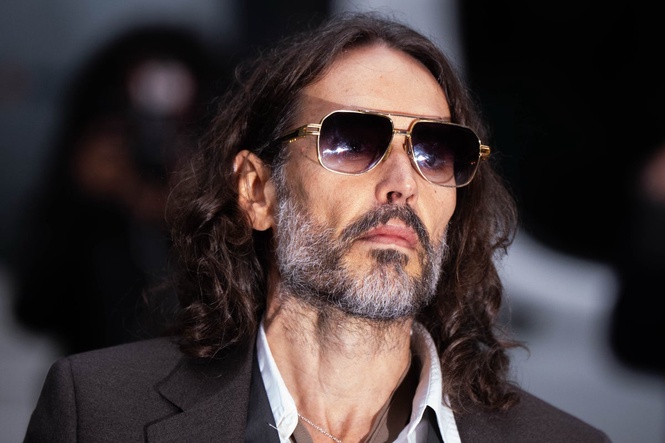
Russell Brand has been found guilty of one count of rape and three counts of sexual assault following a high-profile trial at Southwark Crown Court.
The comedian, 51, who denied all charges against him, was acquitted of two rape charges and a further accusation of attempted indecent assault.
A jury of eight men and four women took around nine hours to deliver their verdicts for each of the seven allegations against him.
After the verdicts were delivered, Mr Justice Bennathan told Brand that he faced a “significant custodial term”.
He is expected to be sentenced on Monday.
Follow our latest updates on the Brand verdict HERE
What is the punishment for rape?
The comedian could be facing a significant stretch in prison following his conviction for rape. According to Sentencing Council guidelines, the maximum punishment for rape is life in prison, although custodial sentences vary from four to 19 years depending on the circumstances of the crime.
Aggravating and mitigating factors, such as whether the victim was vulnerable or if the offender has any previous convictions, will also be taken into account by the sentencing judge.
The jury were told that Brand is of “previous good character”, despite his 30-year-old cannabis possession conviction, which they have been instructed to ignore.
After the verdicts were delivered, the judge told Brand the consequence is a “significant custodial term”.
Mr Justice Bennathan said: “You’ve been convicted of a number of offences including rape.
“The consequence of that is inevitably a significant custodial term.”
What is the punishment for sexual assault?
Punishments for sexual assault range from a community order to a maximum of 10 years in prison.
According to Sentencing Council guidelines, a judge must consider issues including levels of culpability and harm, such as whether the offending caused severe psychological harm.
What happens now he has been convicted of multiple offences?
Brand has been convicted of more than one offence, meaning the judge will have to apply a totality principle to his sentence calculation.
This means he must reflect all of the offending behaviour, considering overall harm and culpability as well as aggravating and mitigating factors, when deciding the punishment.
Sentences for multiple offences can be structured as concurrent, to be served at the same time, or consecutive, to be served one after the other.
If jailed, which prison will he be held in?
Prisoner categorisation and where they will be held is decided by prison service staff at the Ministry of Justice.
Men’s prisons are categorised from A, the highest security, to D, which are open prisons. Inmates are assessed according to their risk of escape, risk of harm to the public and the threat to the control and stability of the prison.
High-profile prisoners are sometimes held in Vulnerable Prisoner Units or segregated wings if prison staff believe they are at risk of being targeted by other inmates.