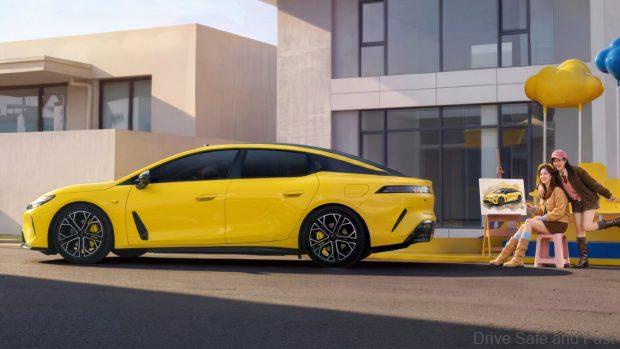
GAC Aion has officially launched the Aion Ray 7 in China, introducing a sleek, mid-to-large electric fastback sedan engineered specifically to capture younger, tech-focused buyers without breaking the budget.
The Aion Ray 7 is positioned as the inaugural model under Aion’s new youth-oriented product family—and the very first production vehicle to wear the marque’s redesigned corporate emblem. The Aion Ray 7 went on sale in China on 12 November 2026 across five distinct variants.
Official retail prices span from RMB 123,800 to RMB 153,800 (approx. MYR 75,821.06 to MYR 94,194.50), representing an aggressive RMB 5,000 price cut compared to the initial pre-sale figures announced on October 17. Massive launch incentives bring the pricing down further.
Huawei DriveONE Powertrain and Up to 702 km CLTC Range
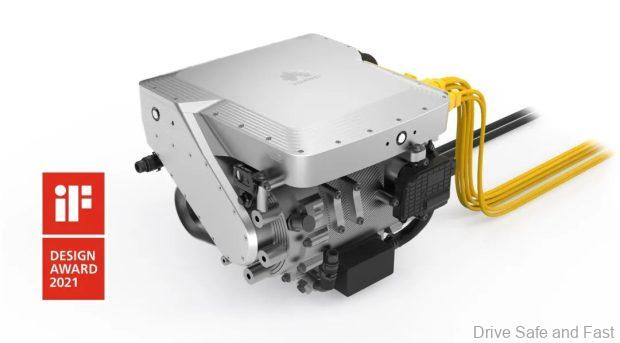
Every variant of the Ray 7 is rear-wheel-drive, motivated by a single rear-mounted Huawei DriveONE electric motor producing 180 kW (241 hp) and 235 Nm of torque.
Two Lithium Iron Phosphate (LFP) battery capacities are offered across the lineup:
- 530 km Standard Range: Utilizes a 45.58 kWh LFP pack supplied by Inpow, completing the 0–100 km/h sprint in 7.4 seconds.
- 702 km Long Range: Steps up to a 62.98 kWh LFP battery utilizing CATL cells, trimming the 0–100 km/h sprint to 6.9 seconds. Selecting an optional factory performance package reduces the long-range variant’s CLTC rating to 600 km.
Across both battery options, DC fast charging replenishes the pack from 30% to 80% state of charge in 21 to 22 minutes.
Chassis Engineering and Huawei Electro-Mechanical Brake-by-Wire
Dimensionally, the Ray 7 cuts an imposing, aerodynamic silhouette—measuring 4,960 mm in length, 1,900 mm in width, and 1,455 mm in height, riding on a generous 2,920 mm wheelbase with a low drag coefficient of 0.22 Cd. To deliver sharper handling dynamics than conventional budget EVs, Aion fitted a sophisticated front double-wishbone and rear five-link independent suspension layout, with the 702 km variants adding adaptive dampers. Crucially, the flagship trim debuts Huawei’s chip-level chassis architecture integrating unified drive and braking control alongside EMB (electro-mechanical brake-by-wire) hardware, whereas the remaining four trims utilize a conventional Onebox integrated braking system.
192-Line Huawei LiDAR and WeRide Robotaxi DNA
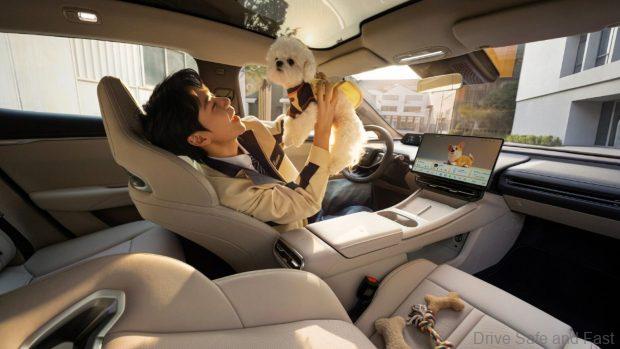
Advanced driver assistance is heavily prioritized across the upper tiers. Three variants—starting from RMB 133,800—come equipped with a roof-mounted Huawei 192-line LiDAR sensor integrated into a 27-sensor hardware array. Enabling point-to-point navigation assistance across both highways and complex urban streets, the system shares foundational perception and algorithmic architecture co-developed with autonomous driving specialist WeRide’s Level 4 robotaxis. Inside, the minimalist cabin centers around a floating 15.6-inch 2.5K central touchscreen powered by an automotive-grade Qualcomm Snapdragon 8295P cockpit processor. Smartphone integration is comprehensive out of the box, supporting both Apple CarPlay and Huawei HiCar.