

On 22 November 2024, PAS spiritual adviser Hashim Jasin claimed that PAS is better suited to lead Perikatan Nasional (PN), challenging the notion that Bersatu president Muhyiddin Yasin should remain the coalition’s prime ministerial candidate. Hashim highlighted PAS’s stronger position in Parliament as a key justification, pointing out that the party holds 43 seats in the Dewan Rakyat—18 more than its ally Bersatu. Bersatu, which initially secured 31 seats in the 2022 general election, now controls just 25 after expelling six MPs who declared support for Anwar Ibrahim’s unity government.
Hashim also emphasized PAS’s extensive nationwide grassroot as further evidence of its leadership credentials. “Although PAS only holds the deputy leadership role in PN, our track record in Parliament, community work, and overall contributions is more substantial,” he stated in a report by Utusan Malaysia. Despite PAS’s dominance within the opposition coalition, Bersatu Supreme Council member Wan Saiful Wan Jan told FMT it was unlikely that a PAS leader would lead PN into the next general election.
Meanwhile, PAS deputy president Tuan Ibrahim Tuan Man dismissed any doubts about Muhyiddin’s candidacy as PN’s prime ministerial nominee. Hashim, however, pushed back, insisting that Bersatu could not sideline PAS by unilaterally deciding such a critical matter. He stressed that any leadership decisions must be made through consultation and mutual agreement within the coalition. Looking ahead to GE16, Hashim argued that PN’s leadership structure should reflect the coalition’s current realities and the relative strengths of its constituent parties.
It’s clear that tensions are brewing within the PAS-Bersatu alliance. Pakatan Harapan (PH) Communications Director Fahmi Fadzil has suggested that the relationship between the two parties is becoming increasingly strained. He pointed to the ongoing dispute over PN’s “poster boy” or prime ministerial candidate and the recent dismissal of Bersatu representatives in the Perlis cabinet reshuffle as key flashpoints. This raises a pressing question: could the PAS-Bersatu alliance be heading toward a split?
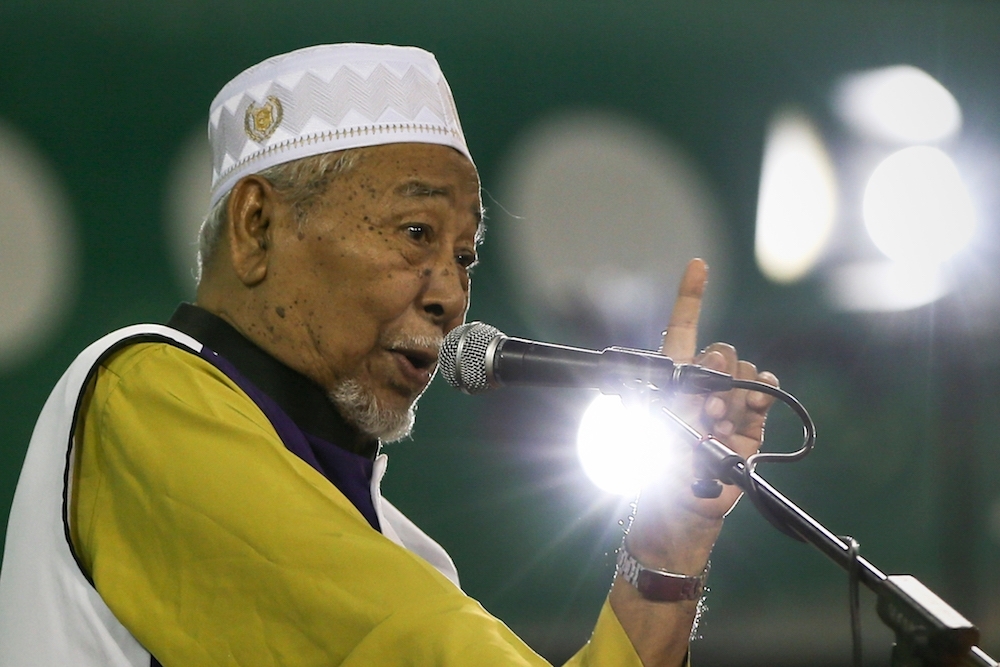
Rifts within Perikatan Nasional (PN) are not new, with rumors of a "cold war" between PAS president Hadi Awang and former eighth prime minister Muhyiddin Yassin circulating for some time. On February 1, Free Malaysia Today reported unnamed sources alleging tensions between Hadi and Muhyiddin, who is the current PN chairman. The fallout reportedly began when Muhyiddin reversed his decision to step down as Bersatu president, prompting PAS to consider its vice-president and Terengganu Menteri Besar, Datuk Seri Ahmad Samsuri Mokhtar, as the Opposition’s prime ministerial candidate for the next general election.
The report further claimed that Hadi and Muhyiddin had not been seen together since the PAS muktamar in October. Even their recent meetings on February 14 and 15 were said to be merely symbolic, with no significant progress made in resolving their differences. These rumors grew so persistent that PAS deputy president Datuk Seri Tuan Ibrahim Tuan Man publicly refuted them, calling the claims of a "cold war" between Hadi and Muhyiddin false.
"This information (the claim that Hadi and Muhyiddin was in a "cold war") is untrue," Tuan Ibrahim told Sinar Harian. He clarified that the one-on-one meeting at Hadi’s residence and another involving the coalition’s top leadership were focused on planning major events like the PN Convention. He dismissed the rumors as deliberate misinformation, stating, “I can confirm that the PN meeting went well and there were no issues between the leaders of PAS and Bersatu," he told Sinar.
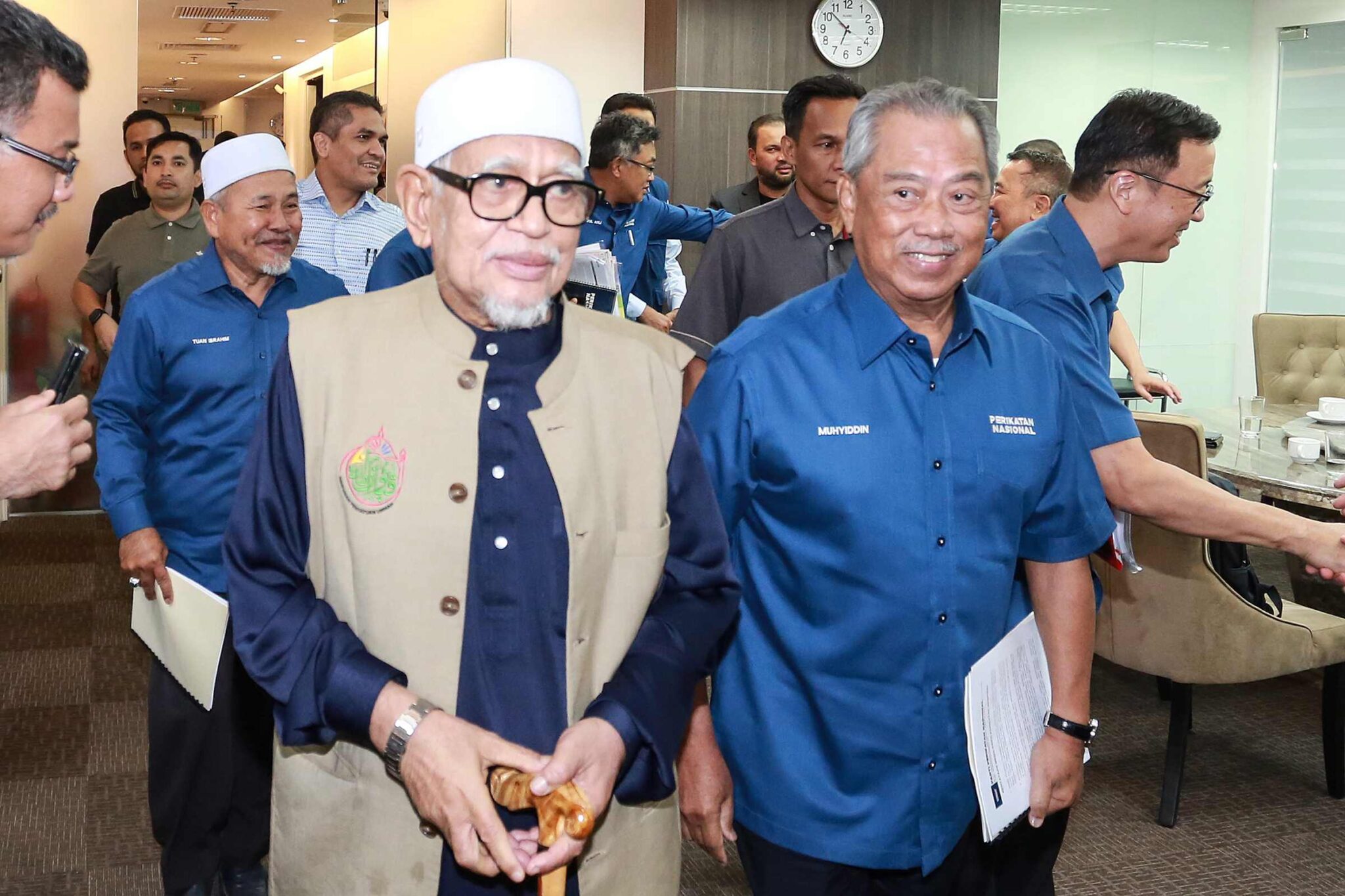
It’s clear that tensions within the PAS-Bersatu alliance have been simmering for some time, but when—or if—they will reach a breaking point remains uncertain. This brings us back to the question: is the alliance heading toward a split? In my view, not for now. Perikatan Nasional still shares a common adversary in PMX and Pakatan Harapan. As long as PMX and PH remain united and strong, PAS and Bersatu are likely to maintain their alliance. As the saying goes, "the enemy of my enemy is my friend"—a proverb that perfectly captures the dynamic of two parties uniting despite internal differences to confront a shared opponent.
For now, PAS and Bersatu will likely maintain a cordial relationship. However, the situation could change dramatically if Perikatan Nasional secures victory in GE16, set for 2028. If PAS emerges as the dominant party by winning the majority of seats, it is highly improbable that they would accept a Prime Minister from Bersatu. Given Bersatu’s current limited contributions—and the likelihood of this trend continuing—PAS may view it as unjust for Bersatu to claim the top leadership role. This disparity in influence and representation could spark significant tensions, potentially leading to a power struggle within the alliance.
In conclusion, the PAS-Bersatu alliance stands on a delicate balance, held together by a shared adversary but fraught with underlying tensions that could erupt at any moment. While the partnership may endure for now, the question remains: how long can a marriage of convenience outlast its contradictions? If GE16 shifts the power dynamics further in PAS’s favor, the coalition may find itself grappling with the very cracks it has worked so hard to paper over.
At the end of the day, it is all about power—who holds it, who wields it, and who feels entitled to it. For PAS and Bersatu, the alliance may serve a strategic purpose now, but their shared goal of defeating a common adversary cannot erase the deep-seated desire of each party to dominate. Power struggles are inevitable in a coalition where one side views itself as the stronger force and expects its influence to be reflected in leadership roles.
The brewing tension highlights a fundamental truth about political alliances: they are rarely built on mutual respect but rather on temporary alignments of interest. As GE16 approaches, the question isn’t just whether PAS and Bersatu can work together—it’s whether their thirst for power will ultimately tear them apart.
Aaron Colt is a content creator under the Newswav Creator programme, where you get to express yourself, be a citizen journalist, and at the same time monetize your content & reach millions of users on Newswav. Log in to creator.newswav.com and become a Newswav Creator now!
The User Content (as defined on Newswav Terms of Use) above including the views expressed and media (pictures, videos, citations etc) were submitted & posted by the author. Newswav is solely an aggregation platform that hosts the User Content. If you have any questions about the content, copyright or other issues of the work, please contact Newswav.
