
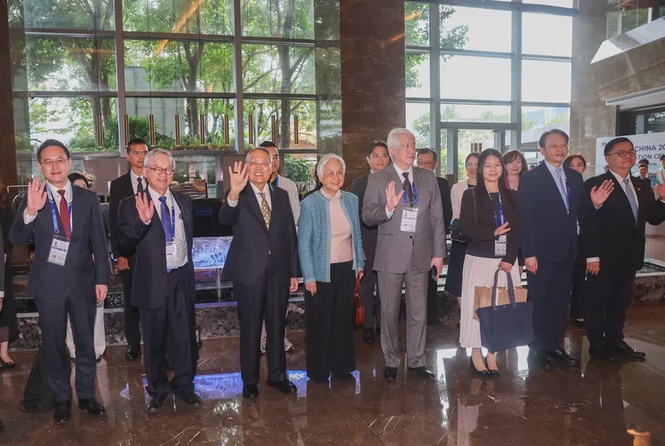
Taiwanese officials who attended China-hosted APEC meetings in Shenzhen lived on blank phones, nightly check-ins, and the assumption that someone was always listening, with one joking that a coffee wished for out loud in a hotel room would be there by the next day.
The Asia-Pacific Economic Cooperation (APEC) Economic Leaders' Meeting closed on November 19. Acer founder Stan Shih, whom President Lai Ching-te named as Taiwan's envoy, spent only about 30 hours in the southern Chinese city before flying home with his delegation on a China Airlines charter. Taiwan kept an unusually low profile throughout: the delegation was small, it skipped the international press conference Taiwan usually holds in the host city, and it held no briefing on its results after returning to Taipei.
Officials who took part in this year's long series of APEC meetings in China described to Storm Media what it took to get through them, and why Taipei chose to stay quiet.
Chinese Drivers And Sky Eye Cameras Tracked Taiwan's Officials
Chinese President Xi Jinping, China International Trade Representative and Vice Minister of Commerce Li Chenggang, and Chen Xu, chair of China's APEC Senior Officials' Meeting and president of the China Public Diplomacy Association, repeatedly said Beijing had staged more than 300 meetings and events for APEC 2026. By the time Shih arrived, more than 400 officials from 25 Taiwanese government agencies, several ministers among them, had already traveled to China for APEC business, Storm Media has learned.
Taiwan's Ministry of Foreign Affairs began briefing and coordinating with those delegates in August 2025, an official familiar with APEC affairs said. Beijing promised to guarantee their safety as long as they broke no local laws. But with measures such as Beijing's so-called "22 guidelines" on punishing what it calls "diehard Taiwan independence separatists" on the books, the official said, the power to interpret the law rests with China. Delegates were reminded again and again to watch what they said, because they could be watched or overheard almost anywhere.
Many of the cars Taiwanese officials used in Shenzhen were assigned by the city government's foreign affairs office, and the drivers were chosen by the Chinese side. Add China's near-ubiquitous "Sky Eye" camera network, officials said, and Beijing knew where Taiwan's people were at all times. Even the advance team that scouted hotels for Shih's delegation noticed no obvious tail, yet never doubted it was being tracked.
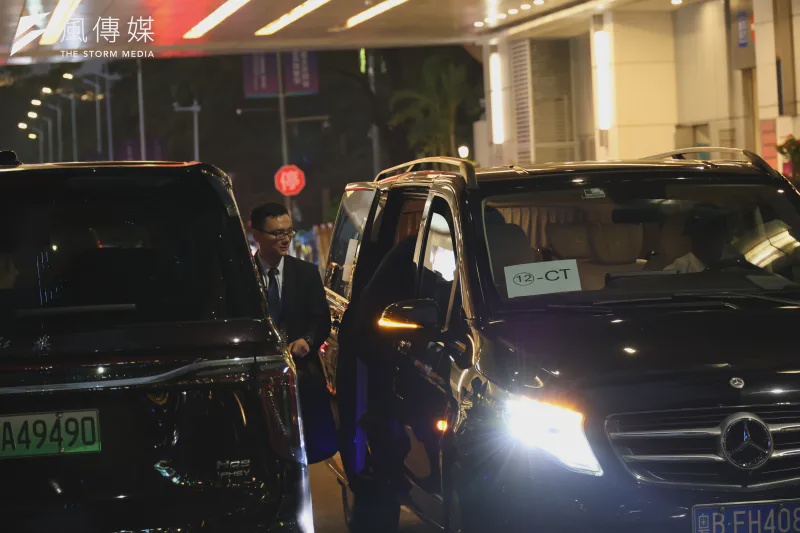
Officials Checked In Every Night And Stayed Indoors
Beijing told Taipei in advance that its people could conduct only APEC business in China. Taiwan's foreign ministry went further and advised staff to skip even a stroll through a night market for street food. In practice, Taiwanese officials shuttled between their hotels and the meeting venues and nowhere else.
Every day followed something like a school roll call, officials said. Delegates ate breakfast together in the morning, and by 10 p.m. each one reported in a group chat that they were back in their room. After that, nobody went out.
Being in the room did not mean being safe. Taiwan did not bother sweeping hotel rooms for listening devices, one official said, half joking. "Even if we found something that night, it wouldn't do any good. The next day, once you leave the room, it would probably just be put back."
Officials from some like-minded countries told their Taiwanese counterparts that even when they hung a "Do Not Disturb" sign on the door before leaving, they came back from meetings to find the room had been made up anyway. "It's obvious they simply don't care what you want," one of them said.
Storm Media and other Taiwanese news outlets staying in Shenzhen hotels had similar experiences. Some nights, reporters returned to find a bag of APEC promotional material waiting in the room, or a newspaper on the desk that had not been there on previous days.
One Taiwanese official who had attended meetings in China said he mostly avoided talking in his room at all, except for certain things he said very loudly. He would "make a wish" to the empty air, he said with a laugh, and when he came back the next day, the coffee sachets or drinks he had asked for would be sitting in the room.
Blank Phones, Temporary Accounts And Encrypted Calls Home
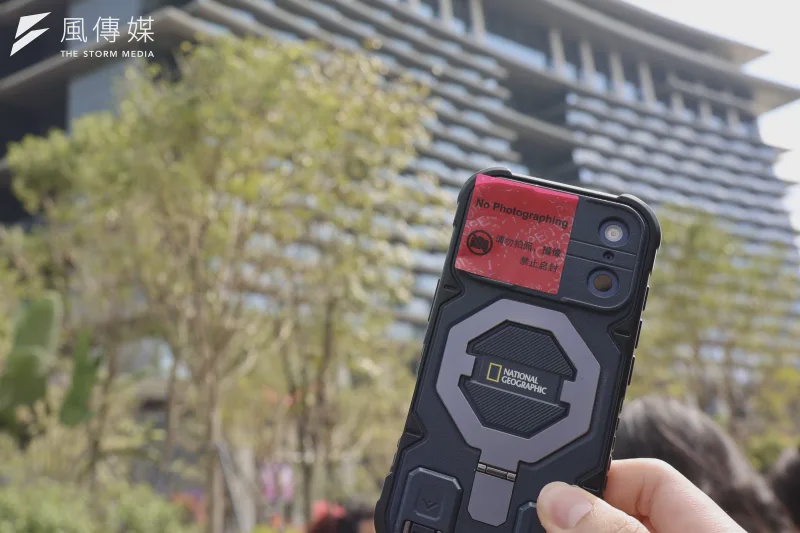
To guard against cybersecurity risks, nearly every Taiwanese government staffer at the meetings carried blank phones and computers from Taiwanese brands HTC and ASUS and set up temporary social media accounts just for the trip, Storm Media observed.
An official familiar with APEC affairs said everyone left their usual phones and computers in Taiwan. The blank devices they took to China stayed on their bodies the whole time and were wiped clean after they returned.
To keep the delegation connected, Taiwan's national security and foreign affairs teams consulted the Ministry of Digital Affairs and Chunghwa Telecom to make sure roaming would not be blocked in China. They also set up a VPN outside China in advance and rented Wi-Fi devices in Taiwan so messaging apps would keep working. Even then, contact with Taipei was limited to non-sensitive matters. Only a major emergency justified a call home on an encrypted phone.
Taiwan compared notes with the United States and other like-minded countries and found that, apart from some Southeast Asian nations, most took the same precautions, a Taiwanese official familiar with foreign affairs said. Many left every gift they received in China behind in their hotel rooms. Some foreign officials told Taiwan that if they had no choice but to contact their capitals on urgent business, they went to their own embassy or consulate, though even that was no guarantee of secure communication.
APEC's Consensus Rule Gave Taipei Leverage Over Beijing
Taiwan has no official government office in China. After consulting Beijing, the foreign ministry asked the Taiwan External Trade Development Council (TAITRA), which does have offices in China, to help with administrative work. Storm Media also saw staff from Taiwan's offices in Ho Chi Minh City, Singapore, and Japan in Shenzhen to support the delegation.
Since China began hosting APEC meetings in 2024, Taiwan has held more than 10 formal and informal consultations with the Chinese side, a member of Taiwan's APEC delegation said. Taiwan's participation went broadly smoothly, and China generally followed APEC precedent.
The member gave two reasons Beijing was willing to accommodate Taipei. Taiwan protested the moment anything looked wrong, and it held what the member called a trump card: APEC makes decisions by consensus. If China wanted its year as host to produce results, it had to resolve Taiwan's concerns first.
A change of personnel also helped, an official with knowledge of the talks said. China's previous APEC senior official was a "female wolf warrior," the official said, using the term for Beijing's combative diplomats, who was curt with Taiwan and quick to invoke "the greater national cause." The current senior official understands Taiwan's situation better and communicates in a calmer, more reasonable way.
Taiwan Kept The Name Chinese Taipei In English
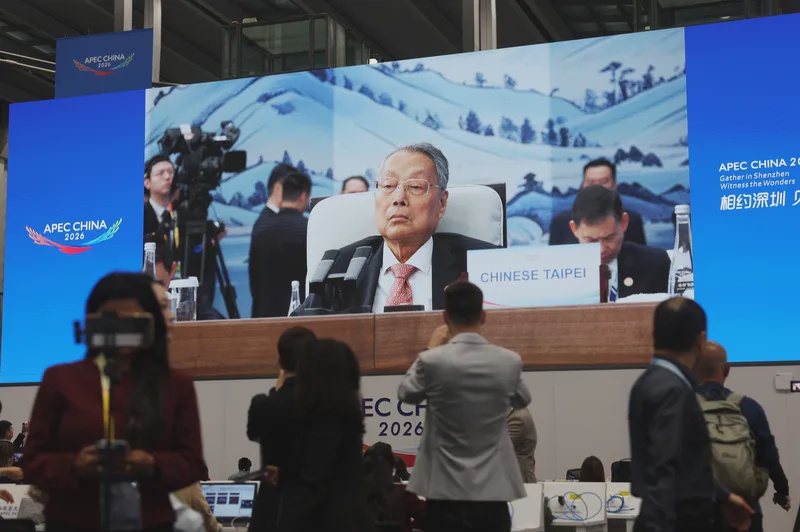
Taipei worried that Beijing, as host, would use printed materials or translation to belittle Taiwan. Taiwan's delegates raised the issue with China several times. APEC's official language is English, they pointed out, and the only members likely to need Mandarin interpretation were Taiwan, China, and Hong Kong, so there was no need to translate "Chinese Taipei," the name under which Taiwan takes part in APEC.
The reminders worked. Even when some APEC meetings were chaired entirely in Mandarin, the chair would switch to English to say "Chinese Taipei," and interpreters left the name untranslated, according to people familiar with the meetings.
China Turned The Shenzhen Declaration Into An Outlook
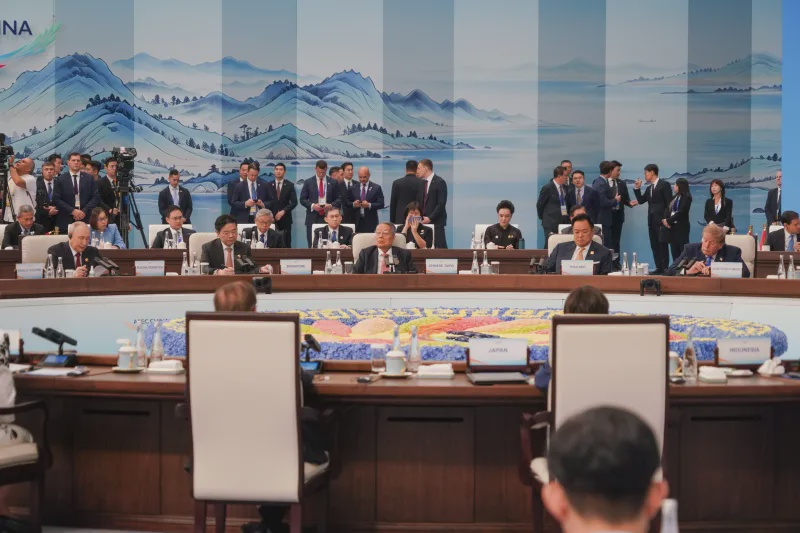
The summit's final document also told a story. China's state news agency Xinhua published it shortly after 9 p.m. on November 19, before Foreign Minister Wang Yi briefed reporters, under the title "Shenzhen Outlook." Peru's 2024 summit produced the Machu Picchu Declaration and South Korea's 2025 summit the Gyeongju Declaration. China's choice of "Outlook" over "Declaration" seemed to reflect, to some degree, how Beijing views the forum.
Only a week earlier, Beijing had still been using the old label. Asked at a regular briefing on November 13 what China expected from APEC, foreign ministry spokesperson Mao Ning said: "We look forward to all parties further building consensus and reaching a leaders' 'Shenzhen Declaration.'" On the evening of November 19, Mao arrived at the APEC media center in the Shenzhen Convention and Exhibition Center ahead of Wang to prepare for his news conference on the Outlook.
APEC economies held differing views on the change, a Taiwanese delegation official said. Neither kind of document is binding. But a declaration carries a degree of political commitment, formally stating shared positions, principles, and resolve. An outlook merely sketches a direction and a vision for cooperation, more like a guidance paper.
Even the weaker document was hard to finish. Drafting began on November 13, and China had aimed to reach consensus by November 17, but negotiators were still meeting late into the night on November 18. Members of Taiwan's delegation said the arguments were mostly over wording and concepts, such as whether to write artificial intelligence (AI) or superintelligence (SI), or over ideas China had put forward, and not necessarily over ideology.
Reporters Who Registered Through Beijing Got More Access
If Taiwan's delegation came through largely as planned, the Taiwanese press corps that followed it ran into trouble at every step, from registration and entry to reporting and departure.
China handled accreditation differently from past hosts, Storm Media found. It gave the press team of Taiwan's delegation a single login for the registration website, so Taiwanese media had to sign up through Taiwan's foreign ministry. But China's Taiwan Affairs Office (TAO), the Chinese government agency in charge of Taiwan policy, held a separate login, and many Taiwanese reporters based in China registered through it instead.
The difference showed on the ground. Taiwanese reporters who came through the foreign ministry, whether working on their own or on trips the ministry arranged, were often moved on by Chinese police and security staff even while wearing press badges outside the venues. Some reporters who registered through the TAO were offered extra interview opportunities, a source said. TAO staff even approached members of the foreign ministry group and offered to arrange other interviews in Shenzhen beyond coverage of the Taiwan delegation.
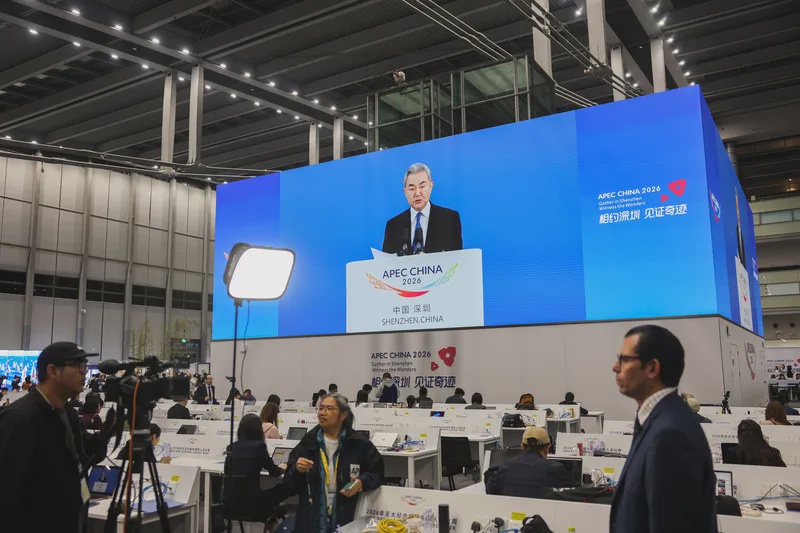
Security around the main venues was intense. Some areas that were never declared restricted zones were still closed to all media except eight official APEC partner outlets, Xinhua among them. Behind those doors, a foreign participant in the APEC Business Advisory Council (ABAC) and the CEO Summit said, chief executives and tycoons ate lunch standing up for several days, choosing between KFC and simple boxed meals of meat and vegetables. The media center, by contrast, served local specialties. Reporters may have chafed at the controls, but they ate better than the business leaders.
China also chose not to separate local and international media into different press centers, as South Korea and other hosts had done. A Taiwanese official familiar with APEC media arrangements said that choice served Beijing's "grand external propaganda" push. Storm Media found that volunteers around the venues steered journalists back to the media center, which offered little beyond press conferences arranged by the Chinese side, with questions set in advance, plus high-tech displays and city marketing tours. Chinese state media reporters waited for openings to interview foreign journalists and nudge them toward praising China.
Delegates Say Beijing's Attention Was On Trump And Putin
In 2024, China swore it would host APEC by the book, a Taiwanese national security official said. Yet this time, member economies felt Beijing's attention was fixed on Russian President Vladimir Putin and US President Donald Trump, and the program was a mess.
A Taiwanese official deeply involved in APEC said much of China's planning ignored normal procedure and the logic of how meetings work. Moving the annual joint meeting of foreign and trade ministers earlier and holding it by video, for example, made drafting the outcome document much harder, as Storm Media reported earlier.
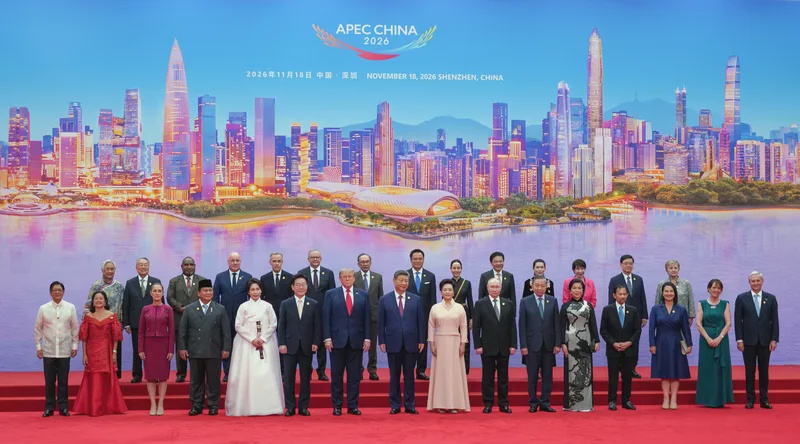
With Beijing centering leaders' week on Xi's fifth meeting with Putin, his third with Trump, and a summit of the US, Chinese, and Russian leaders, and treating APEC as a stage for its propaganda, Taiwan's quiet presence at the 2026 meetings was hardly a surprise.
You've read it. Now join the conversation — follow us on X, Facebook and IG. Editor: Penny Wang