According to Tasneem Essop, executive director of Climate Action Network and one of the 42,000 in-person attendees at the 31st UN Conference of the Parties on climate change, Cop31, it was “the worst Cop ever”. It is hard to disagree.
As Ms Essop observes, human life on the planet is in jeopardy and millions are already suffering the appalling consequences of climate change. Richer countries and oil-producing powers chose to block measures to curb greenhouse gas emissions and provide financial support to poorer nations suffering the worst effects of climate change. Blinded by vested interests, they refused to confront the consequences of their inaction.
It is certainly now a grim situation. Until recently, the climate scientists and public figures such as Sir David Attenborough and Al Gore have told us that, although the climate crisis was becoming an emergency, there was still time to avoid the worst consequences. With a determined effort, it was believed, a rise in global temperature of more than 1.5 degrees centigrade compared to pre-Industrial Revolution levels could be avoided.
Now, an overshoot to around 1.75 per cent is seemingly inevitable – and all the more so because of the lack of urgent action at Cop31.
Indeed, the point of the 1.5C target is that, beyond it, we start losing the planet as we have known it. It brings a substantially higher risk that the Earth’s fragile climate systems will be permanently altered, including those such as the Gulf Stream that makes life in places such as Northern Europe tolerable.
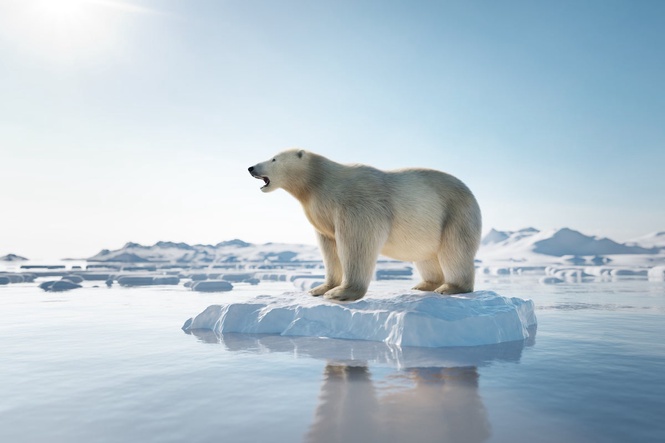
The dangers are familiar, but they are becoming reality: melting polar ice sheets raising sea levels and disrupting ocean currents; thawing permafrost in Siberia and elsewhere releasing vast quantities of greenhouse gases; and spreading desertification in sub-Saharan Africa, alongside the degradation of tropical rainforests.
Crop yields, pollination and supplies of clean water will all be severely affected. Together, these developments threaten to trigger irreversible changes to the planet’s natural systems. Even with advances in technology and AI, the scale of the disruption could overwhelm humanity’s ability to adapt, let alone reverse the damage.
For such plausible, near-future scenarios, some have chosen to blame the host nation, Turkey and the Australians charged with chairing the various negotiations. This is unfair. Like many recent Cop summits, at the diplomatic level, progress has been stymied by the lack of leadership shown by the world’s richest or most powerful economies – the oil producers, China and, in particular, the United States, which has long since abandoned the international arena on everything from vaccines to AI.
At Cop31 there was, in fact, broad agreement among many nations about limiting greenhouse gas emissions, protecting nature and “climate finance” – especially for those coastal and island nations, and their peoples facing partial or complete oblivion.
Others argue that the “governance” of Cop is fundamentally flawed. That too carries some truth. Anything that demands unanimity among 198 national entities is going to be a challenge, and, while the delegates have almost managed to extract something meaningful out of the circus, this time was different. The leader of the EU delegation, Darragh O’Brien, rightly objected to the complete absence of any reference whatsoever in the draft declaration to the two “F-words” – fossil fuels: “How ridiculous is that?”
Yet it is not difficult to see why climate change has been falling down the international agenda as quickly as the Earth is heating up. Since the heady, hopeful time a decade ago, when the Paris Agreement was signed, the world has had to face successive economic challenges, wars, and the Covid pandemic. The energy crises, ironically, may have done some good in cutting consumption and leaving market forces to force the pace on the transition from costly oil and gas to cheaper renewables.
It is not difficult to see why. People, especially voters in democracies, have more pressing concerns than the state of the planet in 2100, and their leaders inevitably follow suit.
But as extreme weather becomes more frequent and climate change threatens their way of life, they will come to realise that this is not a problem for future generations, but for their own lifetimes – and, crucially, for the next decade or two. The hope must be that this awakening does not come too late.
Read MoreTrump has the victory he wanted from Cop – now sit back and watch the world burn
The collapse of the Cop31 climate talks is the best outcome for the world
New ideas are needed to move beyond this annual Cop climate circus
Andy Burnham can find a clever way to make reparations work
The PM is right to start a conversation about the EU despite the dangers ahead
The Brexit reset is done. Now Britain must decide where it wants to end up