
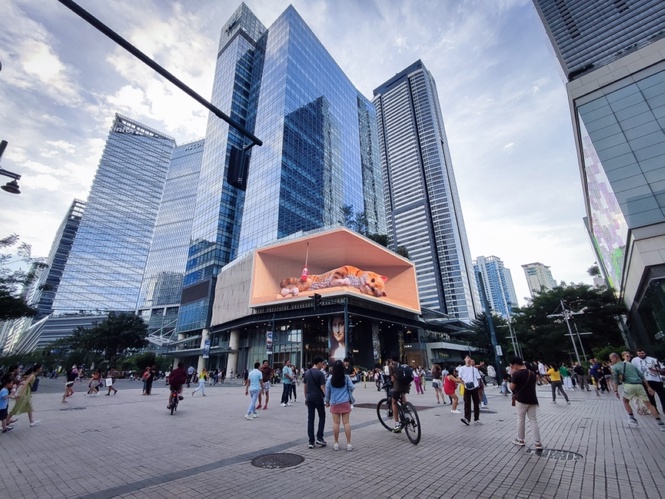
WHILE the Philippines has experienced economic growth and an increase in its officially measured urban population, the World Bank said in a report that the country had not sufficiently concentrated its population and economic activity in dense urban centers that can support more productive businesses and a wider range of employment opportunities.
“The Philippines has not urbanized much for decades and its correlation to economic growth is not so strong over time,” the World Bank said.
It added that the limited increase in the share of the population living in cities suggested that the country was not densifying enough to shift its economic structure toward a city-led growth model.
In the report, From Cities to Corridors: Unlocking the Philippines’ Urban Growth Potential, the multilateral lender said about 42 percent of Filipinos lived in dense urban areas or cities in 2025. This share is projected to increase to just 43.9 percent by 2050.
The expected increase of less than 2 percentage points over 25 years points to a slow shift toward a more city-centered economy, limiting the potential for urban areas to drive productivity, create jobs and support broader economic growth.
Uneven outcomes
World Bank Division Director for the Philippines Zafer Mustafaoğlu said the current urban landscape of the country showed “uneven outcomes.”
“While urbanization globally is closely linked with economic growth and poverty reduction, the Philippines has not fully leveraged these benefits, exhibiting slower densification compared to its regional peers,” Mustafaoğlu said during a media briefing on Tuesday.
The World Bank said the trend contrasted with Malaysia and Thailand, where the share of the population living in cities has climbed toward 60 percent over the decades.
It also expects Vietnam to nearly double its 1980 city share to be on par with the Philippines by 2050.
“Clearly, the archipelagic geography really has put the Philippines at a disadvantage,” World Bank Senior Urban Development Specialist Narae Choi said.
The report found that provinces with larger urban populations did not necessarily record faster economic growth between 2018 and 2023.
The World Bank said that cities could generate stronger growth when businesses and workers benefit from access to markets, infrastructure, transport, skills and a larger pool of customers and suppliers. Greater density can also make it easier to provide public services and connect workers to employment opportunities.
However, these benefits depend on whether urban areas have the infrastructure, institutions and economic links needed to support productive activity.
Broadly unchanged
Mustafaoğlu cited Metro Manila as an example, as it remains a powerful economic engine, generating more than 31 percent of national gross domestic product (GDP).
“Yet its contribution to national growth has been broadly unchanged since 2000, while growth in output per worker has slowed,” Mustafaoğlu said.
By comparison, 17 highly urbanized cities outside the capital accounted for around 11 percent of GDP.
“The opportunity is to enhance Metro Manila’s productivity, and to further enable other urban centers across the country to contribute to the next phase of growth,” he added.
The World Bank highlighted opportunities to strengthen connections among urban centers in Mindanao, including Davao, Tagum, General Santos and Polomolok, as well as other cities and surrounding localities with potential for growth.
In the Visayas, the report pointed to the importance of connecting interior cities and municipalities to coastal economic hubs and strengthening links among islands.
Such investments would allow urban centers to function as parts of larger regional economies rather than as isolated local markets.
“If pursued with disciple and sequencing, this transition can unlock higher productivity, better services and more jobs across the country,” Mustafaoğlu said.