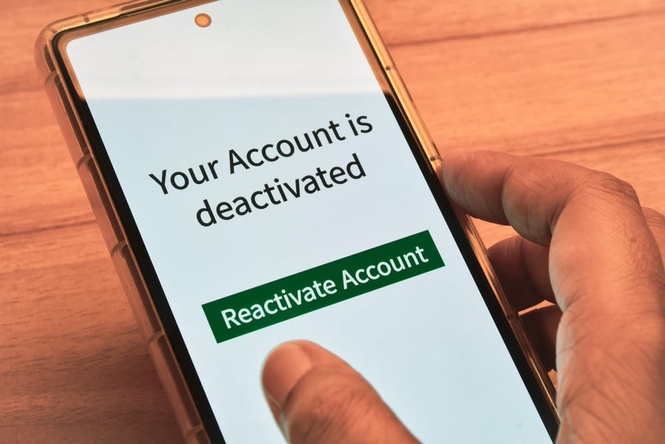
A bank account can have money in it, earn interest, and still get treated like it has fallen off the face of the earth. Leave it untouched long enough, and your bank may start charging an inactivity fee. Eventually, the account could even end up in the state’s unclaimed property system. It’s an odd arrangement. Customers generally assume that leaving money alone is harmless. After all, nobody expects a bank to complain because an account holder isn’t asking for anything. But some financial institutions charge customers for doing precisely that.
An inactivity fee, sometimes called a dormant account fee, can gradually reduce an account balance. The rules depend on the bank, the account agreement, and applicable state laws. Knowing when the clock starts ticking can prevent an old checking or savings account from becoming an unexpected expense.
Your Money Can Sit There, But Your Account Can’t Always Sit Quietly
Banks generally define inactivity through customer behavior, not the amount of money in an account. If you stop making qualifying transactions for a specified period, the institution may classify your account as inactive or dormant.
That doesn’t necessarily mean the account has no money. A savings account with several thousand dollars could qualify if its owner stops making deposits, withdrawals, or other qualifying contact. Meanwhile, a checking account with a much smaller balance could remain active through regular transactions.
The definition varies considerably between financial institutions. Some banks consider an account inactive after several months. Others wait a year or longer, depending on the account type and their policies.
For example, U.S. Bank’s deposit account agreement describes dormant checking accounts after 12 months and savings accounts after 24 months without qualifying customer-initiated activity or communication. Its agreement also provides for dormant account fees, subject to account exclusions and state restrictions. That’s one bank’s policy, not a nationwide timetable.
And there’s an easily overlooked detail: routine automatic activity might not count. A recurring transaction or an interest payment doesn’t necessarily satisfy a bank’s definition of customer-initiated activity. Someone who assumes an occasional automatic deposit keeps an account active could discover otherwise.
The Fee Can Arrive Before the State Gets Involved
An inactivity fee and an abandoned-property transfer are two different things. Unfortunately, people sometimes discover the first while worrying about the second. A bank may begin charging a dormant account fee after the period specified in its agreement. Depending on the institution, the charge could occur monthly or follow another schedule. The fee generally comes directly out of the account balance, so customers might not notice the gradual reduction.
The federal Consumer Financial Protection Bureau explicitly recognizes dormant account fees as permissible charges, even on accounts advertised as free. Its guidance explains that a free account can still carry certain charges, including dormant account fees, overdraft fees, and ATM fees.
Consider a hypothetical savings account with $800 that nobody has touched for years. If its agreement permits a $5 monthly inactivity fee, the account could lose $60 over 12 months. Leave it alone longer, and the balance keeps shrinking.
The bank doesn’t necessarily close the account immediately. It may continue holding the money while applying the disclosed charges. However, the account could eventually qualify as abandoned under state unclaimed-property laws.
When Does the State Get Your Money?
This is where an ordinary forgotten account can become a much bigger administrative headache.
Every state has unclaimed-property laws that govern when financial institutions must transfer abandoned funds to the state. Generally, states look for a period without customer-initiated activity or contact. The applicable period commonly falls between three and five years, although the specific deadline depends on state law.The process is called escheatment. Despite the intimidating name, it doesn’t mean the government simply takes ownership of the money. The state holds the funds as unclaimed property, and the rightful owner can generally file a claim to recover them.
Before transferring an account balance, banks usually attempt to contact the account holder. Depending on state requirements, that might involve sending a letter to the last known address or publishing information about the account holder. A bank may also charge an inactivity or escheatment fee if its agreement and applicable law permit it.
Think about someone who opened a savings account years ago for a particular purpose, then changed banks after moving. The old account still exists, but the owner no longer checks its statements. If the bank’s correspondence goes to an outdated address, an important warning could disappear into someone else’s mailbox.
Eventually, the balance might leave the bank and enter the state’s unclaimed-property system. Finding it later can require paperwork, identity verification, and patience.
What Your Bank Must Tell You Before Charging
Banks cannot simply invent an inactivity fee and start taking money without regard to disclosure requirements.
Under federal Truth in Savings rules, financial institutions must disclose applicable account fees and the conditions that trigger them. The Federal Deposit Insurance Corporation explains that these disclosures must identify fees that institutions may impose and how those charges work.
That means the account agreement and fee schedule deserve more attention than a quick glance during account opening. Look for terms such as inactivity fee, dormant account fee, maintenance charge, and abandoned account fee. Check how the bank defines qualifying activity, how long the account must remain inactive, and how frequently it assesses the charge.
Federal rules also address changes to account terms. Regulation DD generally requires at least 30 calendar days’ advance notice when a bank changes a disclosed term in a way that could adversely affect customers. The notice must identify the effective date. Certain exceptions apply, including situations where the original agreement already describes an automatic change triggered by a specified event.
So, a bank introducing a new fee and a bank applying an existing, properly disclosed fee aren’t necessarily following the same notification requirements. If an unfamiliar charge appears, ask the bank when it classified the account as dormant, which transactions count toward activity, and where the agreement authorizes the fee. Request the relevant account disclosures if necessary.
Keeping an Old Account From Becoming a Financial Ghost
The easiest solution is to avoid leaving accounts completely unattended. An occasional qualifying transaction or direct communication with the bank may keep an account active, depending on its policies. However, don’t assume that checking the balance through a mobile app resets the inactivity clock. Some institutions distinguish between simply viewing an account and making a qualifying transaction. Ask the bank which activities count before relying on a routine login.
Old accounts also deserve a little housekeeping. Update your mailing address, email address, and phone number whenever your contact information changes. Banks may send dormant-account warnings through channels that no longer reach you if your records are outdated.
If an account no longer serves a purpose, consider closing it rather than letting it linger. Check for automatic payments, pending deposits, linked accounts, and outstanding transactions first. A forgotten account can create complications if a bill payment still depends on it.
An Account You Forgot Shouldn’t Become a Fee You Never Expected
An inactivity fee isn’t necessarily a sign that your bank has done something wrong. Financial institutions can impose these charges when their agreements and applicable laws allow them. But customers shouldn’t have to discover the rules through a steadily shrinking balance.
An old savings account, a backup checking account, or money set aside for a future purchase can easily slip off someone’s financial radar. A quick review of forgotten accounts could reveal fees, outdated contact information, or money approaching an abandoned-property deadline.
Banks are happy to hold deposits, but some expect customers to demonstrate a little ongoing interest in the relationship. Apparently, even money needs to check in occasionally.
Have you ever discovered a fee on an account you rarely use? Was it an inactivity charge, or something else entirely?
You May Also Like…
Your Bank Freezes Your Account — What Happens to Your Bills?
Digital Dollar Discussions Are Raising New Concerns About Privacy and Banking
Why a Bank’s Highest CD Rate May Not Be Its Best Deal
Your Bank Offers a 0% Loan — Which Fees Should You Check?
Federal Reserve Approves Banco Santander Application Affecting U.S. Banking OperationsThe post Your Bank Charges an Inactivity Fee — When Can That Happen? appeared first on The Free Financial Advisor.