European cardiologists just published the most serious food warning in years, and Malaysians, your midnight Maggi just made the list.
Malaysian cardiologists have been quietly worried about our diet for years, and now their European counterparts just put it in writing for the whole world to see.
This is How Malaysians Usually Eat
Let me paint a picture that will feel very familiar.
It is 11pm. You just got home from work, or maybe from mamak with the boys. You are not quite hungry enough for a full meal but not quite fine to sleep on an empty stomach either. So you boil some water, tear open a packet of Maggi, crack an egg in, and call it dinner. Perfectly reasonable. Deeply Malaysian.
Or maybe it is a Tuesday morning and breakfast is a packet of Milo, two slices of toasted white bread with kaya from a jar, and a handful of cream crackers. Lunch is a packed nasi lemak from the petrol station with vacuum-sealed anchovies and sambal from a commercial paste. Dinner is fast food because everyone at home is too tired to cook. Supper is keropok in front of the television.
Sound familiar? Because for a huge chunk of Malaysians, that is not an occasional bad day. That is the week.
We are a nation that genuinely loves food, and we are proud of it. But somewhere between our rich culinary heritage and the demands of modern life, convenience crept in and quietly replaced real cooking for many of us. And that convenience almost always comes in the form of ultra-processed food.
Wait, What Exactly Is Ultra-Processed Food?
This is where people usually say "surely not everything I eat is ultra-processed" and then slowly realise that yes, quite a lot of it is.
Ultra-processed foods are not simply food that has been cooked or preserved. They are industrial formulations made primarily from substances extracted from food, such as refined oils, starches, added sugars, and protein isolates, combined with additives like artificial flavours, colours, emulsifiers, and preservatives. The goal is cheap production, long shelf life, and maximum palatability. In other words, they are engineered to be difficult to stop eating.
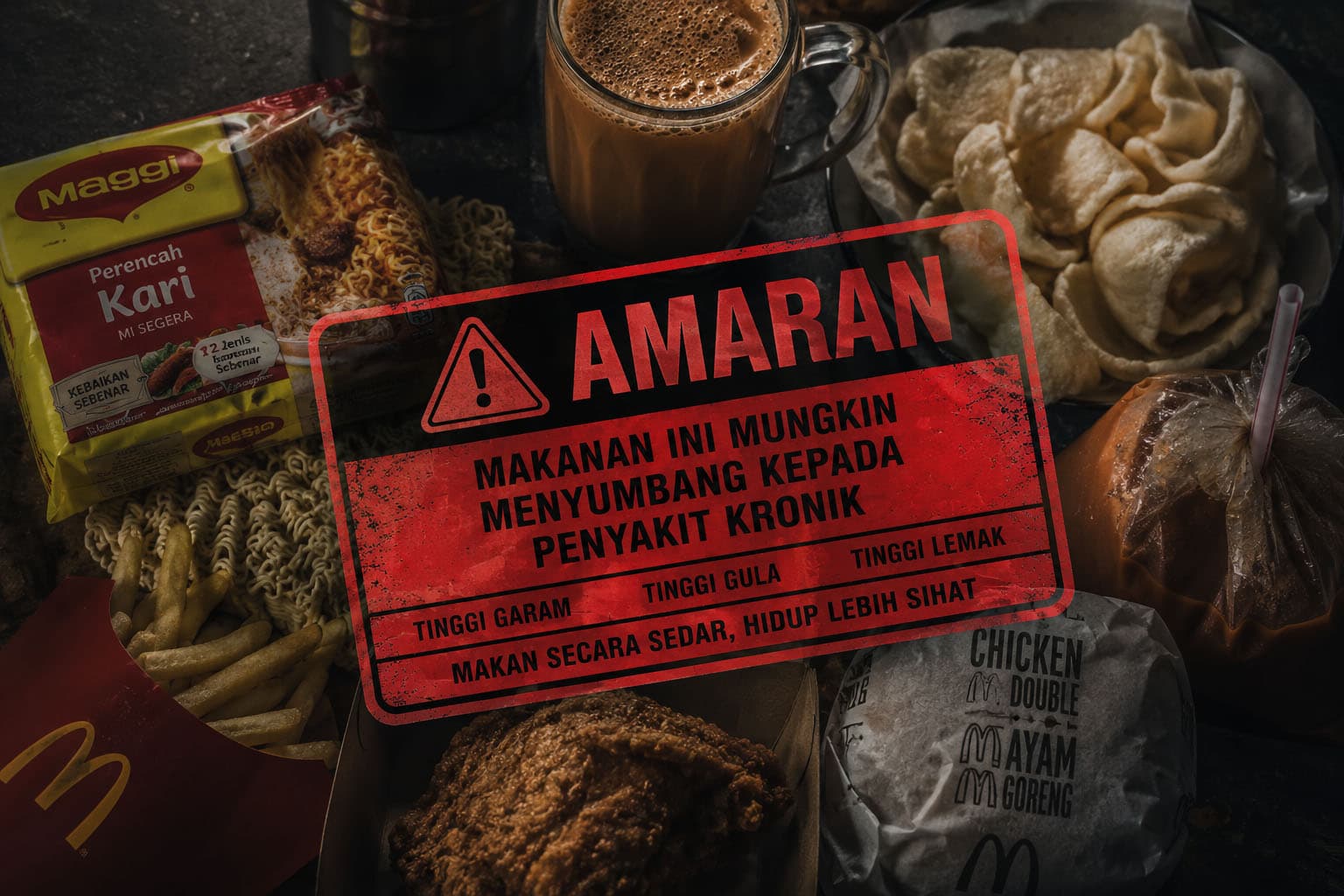
The list includes instant noodles, packaged biscuits, carbonated drinks, chicken nuggets, sausages, flavoured yoghurts, breakfast cereals, commercial bread, fast food, and pretty much anything that comes in a crinkly packet with an ingredient list you need a chemistry degree to understand. Teh tarik made with non-dairy creamer counts. So does the condensed milk in your morning coffee. The curry that came from a commercial paste packet at the mamak counts too.
This does not mean every Malaysian meal is a health disaster. It means a significant portion of what many of us eat daily has drifted from real food into its industrial cousin, and that drift has consequences.
Now Here Come the Numbers
The European Society of Cardiology published a major clinical consensus statement on May 7, 2026, pulling together every available piece of research on ultra-processed food and cardiovascular disease. This is not a wellness blogger's opinion piece. This is a formal statement from one of the most respected cardiology bodies in the world, published in the European Heart Journal.
The findings are not subtle. Adults who consume the most ultra-processed food have up to a 19% higher risk of heart disease, a 13% higher risk of atrial fibrillation, and up to a 65% higher risk of dying from cardiovascular disease compared to those who eat the least. High UPF consumption is also directly linked to obesity, type 2 diabetes, high blood pressure, and chronic kidney disease.
The cardiologists behind the statement are now calling on doctors worldwide to formally ask their patients how much ultra-processed food they consume and to give clear guidance on cutting it down. Which means your next clinic visit might involve your doctor side-eyeing your Grab Food order history.
Why Malaysians Should Take This Personally
Here is where the picture gets uncomfortable close to home.
Non-communicable diseases account for 72% of all deaths in Malaysia, with heart disease sitting right at the top alongside diabetes and cancer. Around 30% of Malaysian adults live with hypertension. Our diabetes rates are among the highest in Southeast Asia.
And our eating habits are making this worse. A study on Malaysian young adults found that ultra-processed foods contribute nearly 39% of total daily calorie intake, and nearly 75% of participants had poor overall diet quality. That is three out of four young Malaysians building a foundation for future health problems one convenient meal at a time.
The cruel irony is that Malaysian food, in its traditional and home-cooked form, is actually well-balanced. Rice with ulam, grilled fish, fresh vegetables, sambal made from scratch, a bowl of soup. That is genuinely good eating. The problem is not our cuisine. The problem is how far we have drifted from cooking it properly in favour of shortcuts that carry a hidden long-term cost.
So What Should You Actually Do About It?
Nobody is asking you to throw out your entire kitchen and start growing your own vegetables in the backyard. The advice from cardiologists is more practical than that.
Prioritise home-cooked meals made from real, minimally processed ingredients as often as you reasonably can. That means actual vegetables, fresh protein like fish, eggs, or unprocessed meat, whole grains, and fruit. When you do eat out, lean toward food stalls that cook from fresh ingredients rather than commercial pastes and frozen components.
Small swaps compound over time. Cook your Maggi with actual vegetables and a real egg rather than eating it plain. Choose teh o over teh tarik a few days a week. Pick a banana over a packet of biscuits for a snack. Eat one more home-cooked meal per week than you did last month.
You do not have to be perfect. You just have to be slightly more intentional than you were before.
My Take
I will not pretend I am above all of this. There are weeks where the kitchen is basically decorative furniture and the Grab app deserves a loyalty card. Midnight Maggi has saved me from going to bed grumpy more times than I can count, and I genuinely do not regret most of it.
But the science on this is getting hard to dismiss. When the European Society of Cardiology formally tells doctors to make ultra-processed food part of every clinical conversation with heart patients, that is a signal worth paying attention to. This is not fear-mongering. This is decades of research being consolidated into actionable medical advice.
The Malaysian diet at its best is genuinely one of the most delicious and nutritious in the world. We just need to find our way back to more of the real version of it, one meal at a time.
Your heart is counting on you. And so, frankly, is your future self who would like to still be around to complain about the price of teh tarik in 2046.
Kamarul Azwan (k.azwan@gmail.com) is a content creator under the Newswav Creator programme, where you get to express yourself, be a citizen journalist, and at the same time monetize your content & reach millions of users on Newswav. Log in to creator.newswav.com and become a Newswav Creator now!
The User Content (as defined on Newswav Terms of Use) above including the views expressed and media (pictures, videos, citations etc) were submitted & posted by the author. Newswav is solely an aggregation platform that hosts the User Content. If you have any questions about the content, copyright or other issues of the work, please contact creator@newswav.com.