If you had your first heat pump installed during spring or summer, it’s spent the past few months doing the easy part. It’s handled hot water on demand and very little else. But autumn is when it starts doing the job you actually bought it for.
That first cold snap is also when new owners discover the things that perhaps nobody mentioned on installation day: how the controls behave when the weather turns, what the outdoor unit does when frost forms, and why running a heat pump the way you ran your old gas boiler tends to cost more rather than less.
A couple of hours of preparation now can save you a winter of guesswork. Here are seven things worth doing before the heating goes back on.
1. Test the heating out before you need it
The worst time to discover a fault is the first properly cold morning of the year, when every local engineer is already booked. Pick a mild September afternoon and run the heating for an hour or two.
Walk round the house and check each radiator warms up evenly. Cold patches at the top usually mean trapped air and a quick bleed sorts it. Listen for gurgling in the pipework. Check the system pressure gauge sits where your installer left it. Then run a full hot water cycle and confirm the cylinder reaches temperature in the time you’d expect.
The same logic applies to your first annual service, which usually falls around 12 months after commissioning. Many manufacturers make an annual service a warranty condition, so it’s worth checking yours and booking while installers still have autumn slots.
2. Clear the space around your outdoor unit
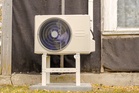
Heat pumps work by pulling warmth out of the outside air, which means the outdoor unit needs a steady flow of air across it. Anything blocking that flow makes the system work harder for the same result.
Summer growth is the usual culprit. Check for:
- Shrubs, climbers or hedges that have spread across the front or sides of the unit
- Garden furniture, bins or bikes stored against it over the warmer months
- Leaf build-up underneath, which becomes a bigger problem through October and November
- A blocked condensate drain, which can freeze and back up in cold weather
Most manufacturers ask for clear space around the unit and above it, and your installation manual will give the exact figures. Leave it in open air rather than boxing it in or screening it off.
3. Find out what flow temperature you're running
Flow temperature has more influence on your running costs than almost anything else you can adjust, and most owners would struggle to name theirs.
It's the temperature of the water your system sends to the radiators. Heat pumps get more efficient as that figure comes down, which is why a well-designed system might run at 35C to 45C where a gas boiler would have pushed 70C or more. The trade-off is that lower flow temperatures warm the house more gradually, so the system needs to run for longer to hold the same room temperature.
Finding your figure is usually straightforward. Most heat pumps display the current flow temperature on the unit's own controller, and manufacturer apps typically show it alongside the outdoor temperature and the target you're set to. It's worth looking at both together on a cold day and again on a mild one.
Some installers set a fixed flow temperature on the high side to guarantee comfort on the coldest day of the year. That's a reasonable safety margin, and it also means the system runs hotter than it needs to for most of the heating season, including the mild autumn weeks when 35C would do the job.
Weather compensation solves this by adjusting the flow temperature automatically as the outside temperature changes, keeping it low on mild days and raising it only when the weather demands it. Ask your installer whether it’s enabled and what curve you're set to. If it’s switched off, ask why. Every degree you can take off the flow temperature while staying comfortable improves efficiency.
4. Unlearn your gas boiler habits
Gas boilers heat fast and hard in short bursts, so most of us learned to programme them for a couple of hours morning and evening. Heat pumps hold a steady temperature instead, and the habits that suited a boiler work against them.
A deep overnight setback is the main one. Dropping the target by five degrees means the system has to claw it all back in the morning, which pushes flow temperatures up exactly when you want them down. For most homes, the better approach is:
- Set a target temperature and leave the system to hold it
- Use a shallow setback overnight, a degree or two rather than five
- Open thermostatic radiator valves fully in rooms you use, so the system can run at a lower flow temperature across the whole house
- Give it a week before judging the results, since a house takes time to settle into a new pattern
Leaving the heating on costs less than repeatedly recovering from cold.
5. Check your direct debit before winter sets it for you
This is the one that catches most first-winter owners out, and it has nothing to do with the heat pump itself.
A system installed in spring has spent the summer heating water. Your electricity consumption over those months reflects hot water and household use, and heating adds substantially to it from November onwards. Any direct debit calculated from a summer baseline is likely to be well short of what you'll actually use by December, and the shortfall arrives as a January statement that makes the heat pump look far more expensive than it is.
Three things worth doing this month:
- Take a meter reading now, so you have a clean marker for the start of the heating season
- Check what your direct debit is based on, particularly if it was set at installation or when you switched supplier
- Review it again in November, once you have a few weeks of real heating data
Most suppliers, Octopus Energy included, show daily and half-hourly consumption in their apps, which makes the seasonal jump easy to see as it happens. Adjusting the payment upwards in November spreads the cost across the winter. Waiting until January concentrates it.
6. Move your heating and hot water into the cheap hours
Autumn is a sensible point to review your tariff, and this year the timing matters more than usual. The energy price cap rises 4 per cent to £1,723 a year from 1 October, and the increase lands almost entirely on gas. Ofgem puts the rise in gas bills at 8 per cent, while households that don't use gas see less than 1 per cent.
The reason is a temporary removal of VAT from domestic electricity bills, running from 1 October 2026 to 31 March 2027. Ofgem estimates the cap would have been around £45 higher without it. For a household heating with a heat pump, that covers exactly the months you'll use the system most, and it reverses at the end of March.
The bigger opportunity is time-of-use pricing. Specialist heat pump tariffs, including Cosy Octopus, offer several cheap windows through the day alongside a peak period in the late afternoon. The savings come from scheduling: heating the hot water cylinder and giving the house a boost during the cheap windows, then coasting through the expensive hours on stored heat.
That scheduling needs decent controls to work reliably. A smart thermostat or a manufacturer app that lets you set different targets at different times of day will do it.
7. Learn what normal looks and sounds like
Plenty of first-winter callouts turn out to be a system behaving exactly as designed. Knowing what to expect saves worry and phone calls.
Defrost cycles are the main one. When the outdoor temperature drops close to freezing, frost forms on the unit’s coil and the heat pump periodically reverses to melt it. You’ll hear the fan change note, see steam rising off the unit, and find a puddle or a patch of ice underneath. The cycle lasts a few minutes and then heating resumes. In damp weather close to freezing, it can happen fairly often.
Lukewarm radiators are also normal. At a flow temperature of 40C, a radiator feels warm to the hand where a boiler-fed one felt hot. The room still reaches temperature, and it gets there gradually.
Long run times fit the same pattern. A heat pump that runs steadily for hours is doing exactly what it should. Short, frequent cycling is the behaviour worth flagging to your installer, along with heavy ice build-up that stays put, a repeated fault code, a sudden change in noise, or a system that struggles to hold temperature on a cold day.
What should you expect from your first heat pump winter?
Your first winter is also your best opportunity to raise a design problem. Your installer sized the system against a heat loss calculation for your property, and that calculation gets tested properly the first time the outdoor temperature drops below freezing. If the house struggles to reach temperature on a genuinely cold day, that’s a conversation to have with your installer while the installation is recent, the paperwork is current and the workmanship warranty is live.
Keep a rough record through November and December: which rooms lag, what the flow temperature was doing, what the weather was. Specifics carry far more weight than a general sense that something feels off.
It’s worth spending an afternoon on draughts too, since a heat pump running low and slow rewards a well-sealed house more than a boiler ever did.
The steepest part of the learning curve comes in the first fortnight. Do the groundwork in September, get comfortable with the controls before you need them, and the rest of the season looks after itself.
Read MoreStop treating your heat pump like a boiler: The settings that could be costing you money
You can now get £2,500 towards an air-to-air heat pump – but is one right for your home?
Still heating your home with oil? You could now get £9,000 towards a heat pump
We installed a heat pump – here’s what I learned
Stop treating your heat pump like a boiler: These settings could be costing you money
You can get £2,500 towards an air-to-air heat pump – but is one right for your home?