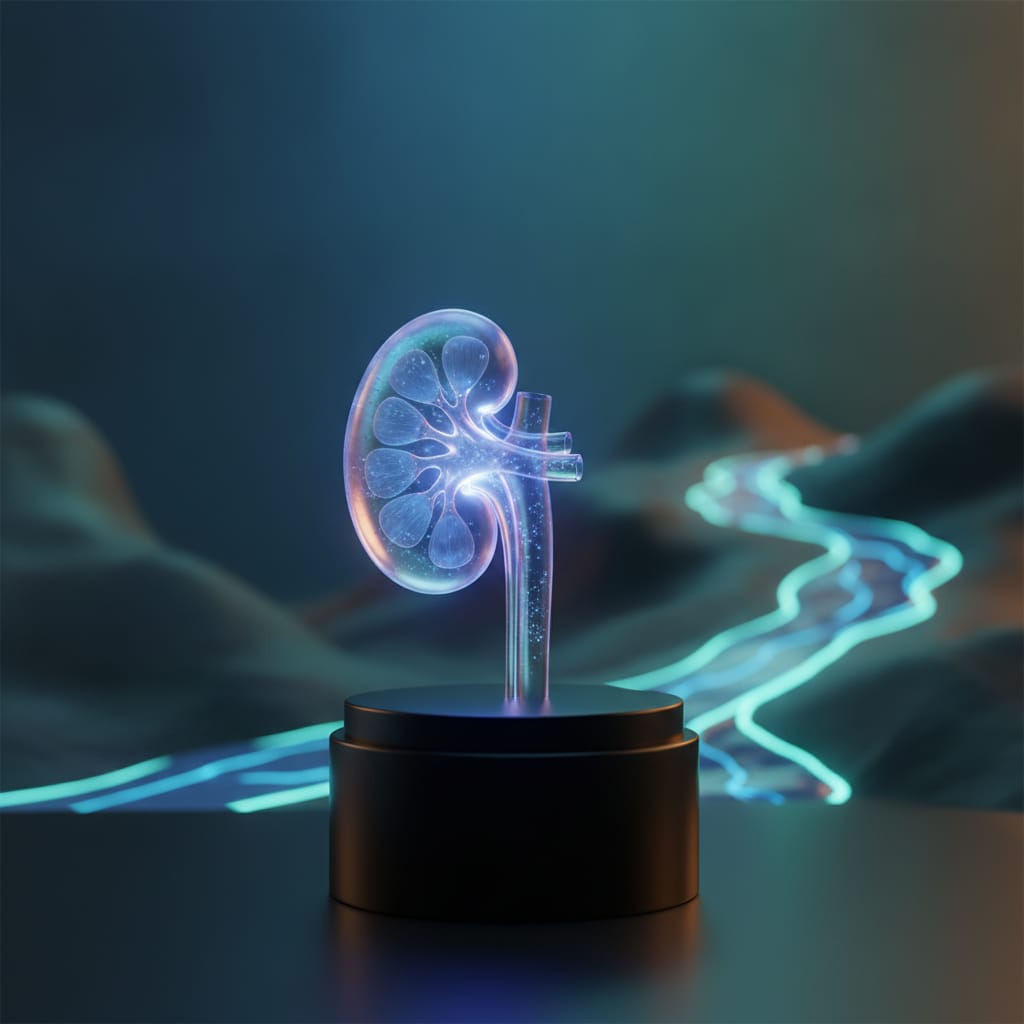
When was the last time you thought about your kidneys?
For most of us, probably never.
Unlike your heart, you can’t feel them beating. Unlike your lungs, you don’t notice them every time you take a breath. They quietly get on with their job every minute of every day without asking for attention.
Yet these two fist-sized organs, tucked away just below your ribs on either side of your spine, are among the hardest working parts of your body. Every day they filter around 180 litres of blood, removing waste products, balancing salts and minerals, controlling fluid levels, helping regulate blood pressure and even producing hormones that help make red blood cells and keep your bones healthy.
It’s quite remarkable really.
The problem is that because our kidneys work so efficiently, we tend to ignore them. Unfortunately, kidney disease is another one of those conditions that often develops silently. By the time symptoms appear, a significant amount of kidney function may already have been lost.
As a pharmacist, I’ve spoken to many people who were shocked to learn they had kidney disease. They felt perfectly well. Some only found out after a routine blood test, while others discovered it when being investigated for something completely unrelated.
It raises an important question.
How can an organ be struggling without making you feel ill?
Why kidney disease is so quiet
Our kidneys have a remarkable reserve capacity.
Even if part of their function is lost, the remaining healthy tissue works harder to compensate. In the early stages, this means there may be no obvious signs that anything is wrong.
That sounds like good news, but it can also be misleading.
Many people assume that feeling well means everything is working perfectly. Unfortunately, that isn’t always the case.
Kidney disease can slowly progress over many years without causing pain or obvious symptoms.
This is why doctors rely on simple blood and urine tests rather than waiting for symptoms to develop.
What causes kidney disease?
In many countries, including Malaysia and the UK, the two biggest causes are surprisingly familiar.
High blood pressure and Type 2 diabetes.
If you’ve read my previous articles, you’ll recognise both of these. They don’t just increase the risk of heart attacks and strokes. They can also damage the tiny blood vessels inside the kidneys.
Imagine a coffee filter that’s used every day for years. Eventually it begins to wear out. Something similar happens to the kidneys when they are exposed to years of high blood pressure or poorly controlled blood sugar.
Other causes include certain inherited conditions, kidney infections, autoimmune diseases, kidney stones that repeatedly block the urinary tract and, in some cases, long-term use of medicines that can affect kidney function.
One group of medicines worth mentioning is anti-inflammatory painkillers such as ibuprofen, diclofenac and naproxen. Used occasionally by most healthy people they are generally safe, but taking them regularly, particularly in people with existing kidney disease, dehydration or heart failure, can increase the risk of kidney damage.
It is always worth asking your pharmacist or doctor if you’re unsure whether a medicine is suitable for you.
What symptoms should you look out for?
The honest answer is that early kidney disease often causes none.
As kidney function declines, people may notice tiredness, swollen ankles, puffiness around the eyes, itchy skin, muscle cramps, nausea, loss of appetite or needing to pass urine more frequently at night.
Some develop breathlessness because excess fluid builds up in the body.
Others notice nothing until routine blood tests reveal a problem.
This is exactly why regular health checks are so important, especially if you have diabetes, high blood pressure or a family history of kidney disease.
How do doctors check your kidneys?
Thankfully, the tests are straightforward.
A blood test measures a waste product called creatinine. From this, the laboratory calculates something called the estimated glomerular filtration rate, or eGFR. Don’t worry about remembering the name. Think of it simply as a measure of how well your kidneys are filtering your blood.
A urine test is equally important. It looks for protein leaking into the urine.
Healthy kidneys keep protein in the bloodstream where it belongs. If protein starts appearing in urine, it can be an early sign that the kidneys are becoming damaged, sometimes even before blood tests become abnormal.
Together, these two simple tests can identify kidney problems long before symptoms develop.
Can kidney disease be treated?
That depends on the cause.
Some forms of kidney disease can improve if the underlying problem is treated.
Others cannot be reversed, but they can often be slowed down significantly.
Controlling blood pressure is one of the most effective ways of protecting the kidneys. Keeping diabetes well managed is equally important.
Stopping smoking, maintaining a healthy weight, exercising regularly and eating a balanced diet all make a difference too.
In recent years, newer diabetes medicines have also been shown to protect the kidneys in many patients, even beyond their effects on blood sugar. This has been one of the biggest advances in kidney care for quite some time.
The earlier kidney disease is detected, the greater the opportunity to slow its progression.
Do you need to drink gallons of water?
This is one of the most common questions I hear.
Many people believe the more water they drink, the healthier their kidneys will become.
The truth is a little more balanced.
Most healthy adults should drink enough to stay hydrated, especially in hot weather or when exercising. For most people, your thirst and the colour of your urine are good guides.
However, drinking excessive amounts of water won’t magically improve healthy kidneys, and for people with advanced kidney disease or heart failure, too much fluid may actually cause problems.
As with many things in medicine, more isn’t always better.
Looking after your kidneys
The good news is that many of the things that protect your kidneys are exactly the same things that protect your heart and brain.
Keep your blood pressure under control.
Manage diabetes well if you have it.
Avoid smoking.
Stay physically active.
Maintain a healthy weight.
Take medicines exactly as prescribed and avoid unnecessary long-term use of anti-inflammatory painkillers unless advised by your healthcare professional.
Most importantly, don’t skip routine health checks if you are at higher risk.
A final thought
One thing I often tell patients is that your kidneys are like the maintenance team in a large building.
You rarely notice them when everything is working properly. The lights stay on, the water runs, the heating works and life carries on as normal.
But when the maintenance team starts to struggle, problems gradually begin to appear throughout the building.
Our kidneys quietly keep the whole body in balance every single day. They ask for very little in return.
Perhaps the best way to repay them is not by waiting until they complain, but by looking after them long before they have a reason to.
Until next time, stay curious, stay informed and, above all, look after your health. It is one investment that will always pay dividends.
The Daily Durian (zaynp100@yahoo.com) is a content creator under the Newswav Creator programme, where you get to express yourself, be a citizen journalist, and at the same time monetize your content & reach millions of users on Newswav. Log in to creator.newswav.com and become a Newswav Creator now!
The User Content (as defined on Newswav Terms of Use) above including the views expressed and media (pictures, videos, citations etc) were submitted & posted by the author. Newswav is solely an aggregation platform that hosts the User Content. If you have any questions about the content, copyright or other issues of the work, please contact creator@newswav.com.