
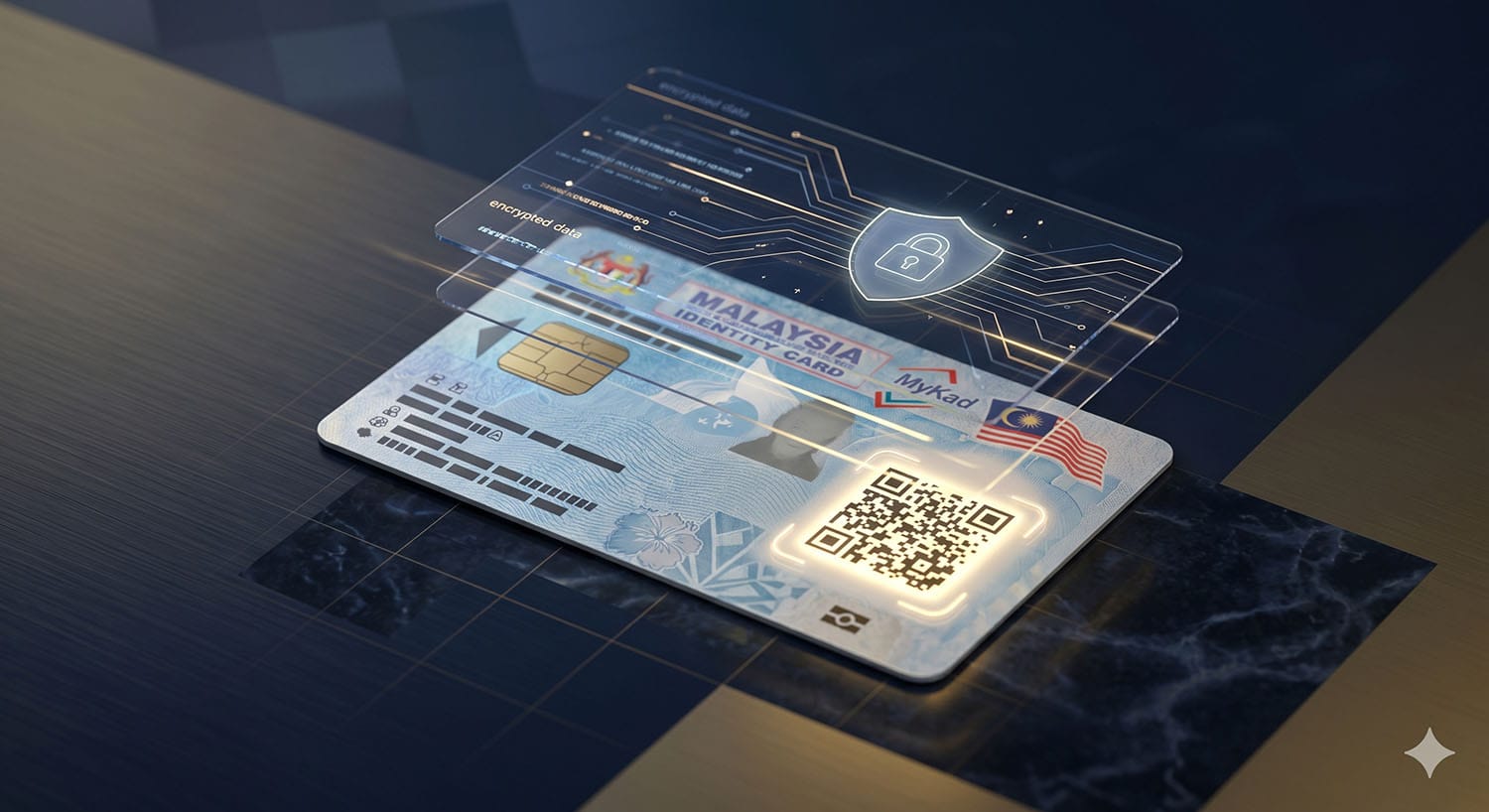
If you carry a MyKad (and unless you are not Malaysian, you do), then what the Home Ministry announced today is actually worth paying attention to. Starting June 2026, the government will begin rolling out enhanced security features on the new MyKad and passport. And by September, the National Integrated Immigration System, better known as MyNIISe, will be fully implemented nationwide.
On paper, this sounds like a routine government upgrade. But dig a little deeper and there are a few things here that I think deserve more than just a headline skim.
What is actually changing on your MyKad
The new MyKad is getting a QR code, a more advanced chip, stronger encryption, and upgraded anti-forgery elements including laser engraving and improved security printing. The same upgrades apply to the MyTentera and MyPoCA, which are the identity cards for military and police personnel. The passport is also getting a redesign alongside it.
Home Minister Saifuddin Nasution announced this at the ministry's monthly assembly today, framing it as a significant milestone in streamlining national identity management and ensuring smoother movement of people across borders.
The QR code thing, though
I will be honest. When I first read about the QR code feature, my immediate reaction was: great, so now anyone with a phone can scan my IC? That is not exactly a comforting thought.
But after reading further, it appears the QR code verification is meant to work through an authorised system, likely the MyDigital ID app, rather than being a free-for-all scannable code that anyone on the street can point their camera at. If that is the case, the privacy concern is less severe than it first sounds. The feature is designed for authorities and verified parties to confirm authenticity, not for random people to pull up your personal details at the mamak.
That said, I think the government owes Malaysians a much clearer explanation of exactly how this QR verification works and who has access to it. Saying "enhanced security features" is not enough. People will worry, and they should be given the full picture upfront.
The 4-phase rollout: no need to panic
According to earlier statements from the Home Ministry, the transition to the new MyKad will happen in four phases. June 2026 kicks off phase one, which is just production and supply of the new cards. You will only be required to switch over in the fourth and final phase, the date for which has not been announced yet. Your existing MyKad remains valid until then.
So no, you do not need to queue up at JPN next month. The government has also promised to give six months notice before any mandatory switch takes effect. For once, they are actually telling people not to panic, which I appreciate.
MyNIISe: the part most people are ignoring
Beyond the MyKad itself, the bigger infrastructure play here is MyNIISe. This is a new integrated immigration system that will cover all entry points nationwide by September, replacing the existing setup. The goal is a more efficient, digitally streamlined border crossing experience for both Malaysians and visitors.
If it works as intended, this should mean faster processing at airports and land borders. Whether it actually delivers that or becomes another government IT project that goes sideways on launch day is something we will only know in September.
About that passport ranking
Saifuddin mentioned that the Malaysian passport is currently the "third most trusted" in the world, which sounds impressive. I went and checked. Based on the 2026 Henley Passport Index, Malaysia actually sits at 9th place globally, with visa-free access to 180 destinations. Singapore leads at 1st, followed by Japan and South Korea at joint 2nd.
To be fair, "most trusted" and "most powerful" are different measurements. The Henley Index is purely about visa-free destinations, which is a function of diplomacy more than document security. The minister was likely referring to international confidence in the document itself, which is a separate metric.
But here is the more interesting question: could a more secure, harder-to-forge Malaysian passport eventually help push us up that Henley ranking? Indirectly, possibly. A passport that is difficult to forge builds credibility with other governments, which supports the kind of bilateral conversations that lead to more visa-free agreements. It will not happen overnight, but it is not a completely unreasonable ambition either.
Would number one be achievable? Singapore has held that spot for years. Getting there would require a lot more than a new chip and a QR code. But climbing further up from 9th? That I think is genuinely on the table, if the government plays the long game well.
Kamarul Azwan (k.azwan@gmail.com) is a content creator under the Newswav Creator programme, where you get to express yourself, be a citizen journalist, and at the same time monetize your content & reach millions of users on Newswav. Log in to creator.newswav.com and become a Newswav Creator now!
The User Content (as defined on Newswav Terms of Use) above including the views expressed and media (pictures, videos, citations etc) were submitted & posted by the author. Newswav is solely an aggregation platform that hosts the User Content. If you have any questions about the content, copyright or other issues of the work, please contact creator@newswav.com.
