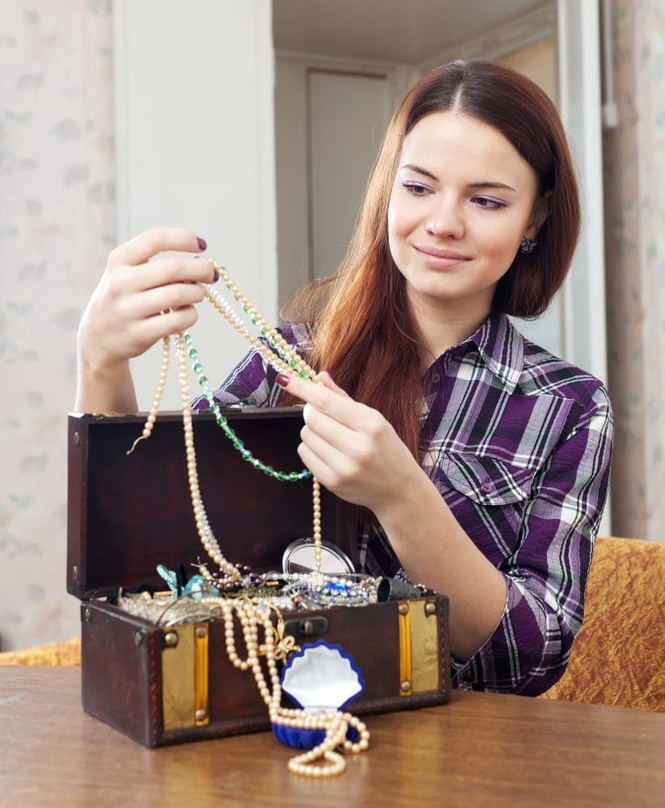
Your mother’s diamond ring goes to your sister, while you and your brother inherit other belongings from the family estate. Everyone agrees that the ring has sentimental value, but then someone mentions an old insurance appraisal showing it’s worth $15,000. Suddenly, questions emerge about whether the inheritance was fair and whether the other siblings should receive additional money. Family jewelry can become one of the most contentious parts of settling an estate because its emotional significance and financial value rarely match. Before disagreements turn into permanent family divisions, it’s important to understand who actually determines what inherited jewelry is worth.
The Will Usually Determines Who Receives the Jewelry
When a parent leaves specific jewelry to one child in a valid will, that instruction generally controls how the item is distributed through the estate. A mother might leave her engagement ring to her eldest daughter while dividing the remaining assets equally among all three children. That arrangement doesn’t automatically entitle the other siblings to additional compensation for the ring’s value. However, the precise language of the will matters, particularly if it requires equalizing distributions or dividing all assets by value. State inheritance laws, trusts, surviving-spouse rights, and other legal considerations can also affect the outcome.
The Executor Doesn’t Get to Invent a Value
The person responsible for administering the estate generally oversees identifying, safeguarding, and valuing estate property, subject to applicable law. That doesn’t mean an executor can simply declare a diamond necklace worth $500 because they want to give it to a particular sibling. For example, California’s probate court guidance instructs estate representatives to identify valuable items individually, including expensive jewelry. Other states have their own inventory and appraisal requirements, and some require qualified appraisals for assets whose value cannot readily be established. When valuable jewelry is involved, obtaining an independent professional appraisal is often the most defensible way to document its worth.
An Old Insurance Appraisal Can Be Misleading
One of the biggest sources of inheritance disputes is confusion about the different ways jewelry can be valued. A ring insured for $15,000 isn’t necessarily worth $15,000 if the family sells it tomorrow. Jewelers of America explains that insurance replacement appraisals estimate the cost of replacing an item, while fair market value reflects what an item would sell for under ordinary market conditions. Fair market value is generally the relevant standard for estate appraisals, although specific legal requirements can vary. That distinction matters because siblings comparing inheritance amounts could be working with numbers that measure entirely different things.
A Professional Appraiser Can Settle the Financial Question
For valuable inherited jewelry, families should consider hiring an independent appraiser experienced in estate valuations rather than relying exclusively on a retail jewelry store. The American Gem Society emphasizes that appraisal values depend on the purpose of the evaluation and recommends qualified professionals who can document their findings. An appraiser may examine gemstone quality, metal content, craftsmanship, condition, designer markings, and comparable market sales. Families should specify that they need a fair market value appraisal for estate purposes, rather than an insurance replacement estimate. A written report creates a clearer basis for discussions and can help prevent accusations that one sibling received preferential treatment.
What Happens When One Sibling Gets the Most Valuable Piece?
Suppose three siblings are supposed to divide a $90,000 estate equally, including a necklace independently valued at $12,000. If the will allows the necklace to count toward one sibling’s share, that person might receive the necklace plus $18,000 in other assets, while the other siblings each receive $30,000. However, that calculation assumes the estate has $90,000 available for distribution after applicable expenses and obligations, and that the governing documents permit this arrangement. If the necklace was specifically left to one sibling as an additional gift, the distribution could work differently. The executor should follow the will and applicable law rather than imposing an equal division that the parent never requested.
Sentimental Value Doesn’t Create a Legal Price Tag
A grandmother’s wedding band might mean more to one sibling than an expensive diamond bracelet, even if the bracelet has a much higher market value. Families sometimes confuse emotional attachment with financial entitlement, particularly when jewelry has been passed down for generations. A sibling who cared for an aging parent might also believe they deserve a particular heirloom because of the time and effort they contributed. Those feelings are understandable, but they don’t necessarily establish a legal right to the item. Separating the emotional conversation from the legal distribution process can make it easier to discuss both concerns respectfully.
Can You Challenge the Jewelry Appraisal?
An appraisal isn’t necessarily beyond question, especially if it contains outdated information, questionable gemstone identification, or an unexplained valuation. Beneficiaries concerned about the amount assigned to inherited jewelry can request supporting documentation and discuss obtaining a second independent appraisal. Whether they can formally object to the valuation depends on state law, the estate’s governing documents, and the procedural stage of administration. For instance, the Ohio State Bar Association explains that jewelry and other property without readily ascertainable values may require qualified appraisals during estate administration. If the dispute involves substantial money or suspected misconduct, consulting a probate attorney may be more productive than arguing directly with family members.
Selling Inherited Jewelry Can Create Tax Consequences
Receiving inherited jewelry generally isn’t itself treated as federal taxable income, but selling it later can produce a taxable gain. The IRS explains that the tax basis of inherited property is generally its fair market value on the date of the deceased owner’s death, subject to certain exceptions. For example, if a necklace has an inherited tax basis of $8,000 and is later sold for $11,000, the $3,000 difference may represent a taxable capital gain before considering selling expenses or other adjustments. An old insurance appraisal doesn’t automatically establish the appropriate tax basis, making accurate estate documentation important. Keeping the appraisal, inheritance records, and eventual sales receipts can help beneficiaries calculate and report any taxable gain.
Parents Can Prevent These Arguments Before They Begin
One of the most effective ways to avoid inheritance disputes is to address valuable family jewelry while parents are still able to explain their wishes. They can prepare an inventory with photographs, obtain appropriate appraisals, and identify which pieces should go to particular family members. An estate-planning attorney can help document those wishes in a legally effective will, trust, or other instrument permitted under state law. Parents should also clarify whether specific jewelry gifts are intended to count toward an equal inheritance or are additional gifts to individual beneficiaries. These conversations may feel uncomfortable, but they can prevent misunderstandings that become far more painful after a death.
Protecting Family Relationships Matters More Than Winning the Argument
Inherited jewelry can carry decades of memories, which makes disputes about its financial value particularly emotional. The person legally entitled to an heirloom isn’t always the person who feels the strongest connection to it, and those differences can be difficult to reconcile. A transparent inventory, qualified appraisal, and clear explanation of the estate documents can help establish what is legally required. When siblings disagree, mediation or legal guidance may offer a less destructive path than prolonged accusations and resentment.
If your parents left a valuable family heirloom to one sibling, would you expect the inheritance to be financially equalized, or should their wishes take priority?
What to Read Next
Your Parents Gave Your Sister $100,000 for a House — Should That Count Against Her Inheritance?
A $300,000 Inheritance Sounds Life-Changing — Until You Need It to Fund 20 Years of Retirement
The Inheritance Talk: 5 Ways to Ask Your Parents About Their Will Without Sounding Greedy
The post Your Parents Leave the Family Jewelry to One Sibling — Who Decides What It’s Worth? appeared first on Budget and the Bees.