
The fragile tapestry of trust in modern governance is unraveling globally, leaving citizens to question the true motivations of their leaders. From the systemic corruption trials rocking South American capitals to the profound public skepticism surrounding lobbying ethics in Western democracies, a universal anxiety has taken root: do the systems built to protect the public instead protect the elite? In Malaysia, this global crisis of confidence finds its lightning rod in the high-stakes corridors of the Kuala Lumpur High Court. For a society still recovering from the financial and psychological trauma of pandemic-era lockdowns, accountability is no longer an abstract legal concept it is an emotional necessity.
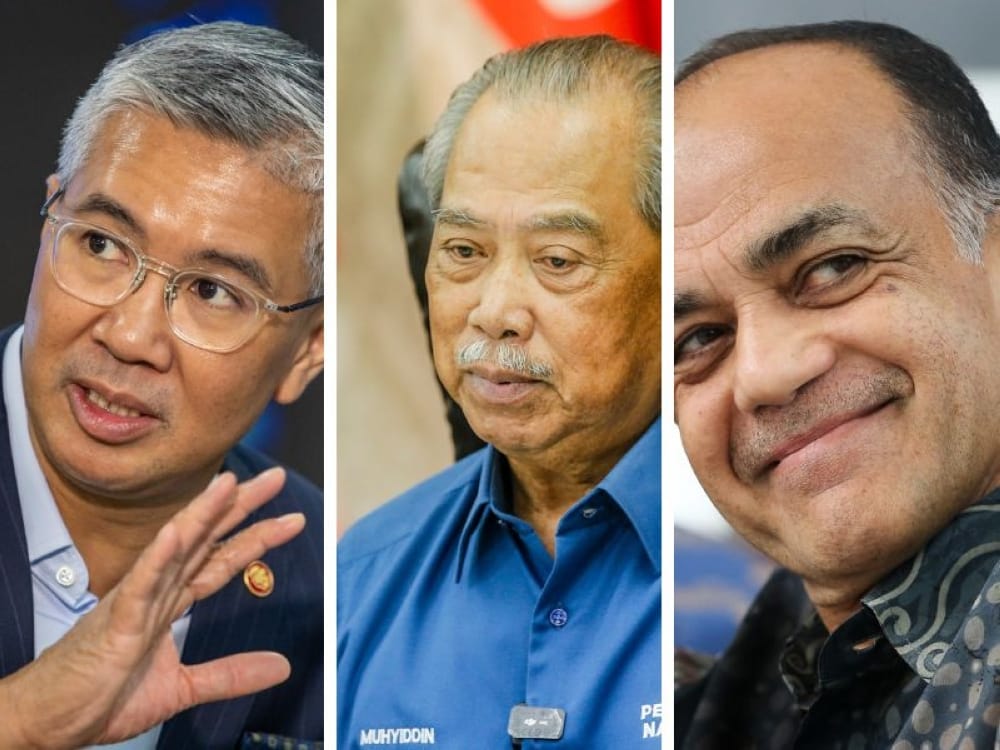
Against this backdrop of heightened public scrutiny, a pivotal moment in Malaysian political history is set to unfold. The announcement that former Finance Minister Datuk Seri Tengku Zafrul Abdul Aziz will take the stand on July 6, 2026, as the 11th prosecution witness in the graft and money laundering trial of former Prime Minister Tan Sri Muhyiddin Yassin, has sent shockwaves through the nation’s political landscape. As reported by The Star, Deputy Public Prosecutor Datuk Wan Shaharuddin Wan Ladin confirmed this timeline to High Court Justice Noor Ruwena Md Nurdin, signaling the commencement of a deeply intense legal chapter. This confrontation represents more than a routine courtroom procedure; it is a profound collision between past executive allies that tests the boundaries of institutional loyalty and personal accountability.
The Genesis of Jana Wibawa: A Lifeline Transformed Into a Liability
To understand the weight of Tengku Zafrul’s upcoming testimony, one must look back to the dark days of the COVID-19 pandemic. Under Muhyiddin’s administration, the Economic Stimulus Implementation and Coordination Unit introduced the Jana Wibawa programme an initiative explicitly designed to fast-track government contracts to Bumiputera contractors to prevent widespread economic collapse during nationwide movement control orders. It was framed as an urgent lifeline for a struggling domestic economy.
However, the prosecution alleges that this vital economic safety net was manipulated for political and personal gain. According to detailed trial coverage by Free Malaysia Today, Muhyiddin faces four counts of using his position as Prime Minister and Bersatu president to solicit RM225.3 million in bribes from three corporate entities Bukhary Equity Sdn Bhd, Nepturis Sdn Bhd, and Mamfor Sdn Bhd alongside businessman Azman Yusoff. Furthermore, the Pagoh MP faces three counts of money laundering involving an additional RM200 million, allegedly funneled directly into Bersatu’s party coffers.
For the average Malaysian reader who lived through the harsh economic anxieties of 2020 and 2021, the unfolding details of this trial evoke a complex mixture of disappointment and frustration. The contrast between citizens dipping into their retirement savings to survive and the alleged movement of hundreds of millions of ringgit through elite political channels forms the emotional core of public outrage surrounding the case.
The Corporate Blueprint: Inside the Evidence Grid
The trial has steadily built its narrative foundation by examining institutional and corporate architecture. Prior to the announcement regarding Tengku Zafrul, the court heard extensive testimony from Companies Commission of Malaysia (SSM) assistant registrar R. Harshini, who served as the 10th prosecution witness. As documented by Sinar Daily, Harshini’s role was to verify the corporate records, directorships, and shareholding structures of the key entities tied to the scandal, including Mamfor Sdn Bhd, Nepturis Sdn Bhd, Sutracom Sdn Bhd, and KCJ Engineering Sdn Bhd.
This corporate verification serves as the structural framework for the prosecution's case. By establishing the precise legal identities and financial networks of these firms, the state seeks to demonstrate exactly how public infrastructure funds were allegedly diverted. For observers, this methodical approach highlights that high-level corruption rarely relies on simple, direct transactions; instead, it frequently operates through complex corporate layers that require diligent institutional analysis to uncover.
The Finance Minister’s Dilemma: Technical Governance Versus Political Alignment
When Tengku Zafrul takes the witness stand in July, his presence will highlight a deep tension inherent in Malaysian governance: the intersection of corporate technocracy and party politics. Appointed as Finance Minister during a time of intense political volatility, Zafrul was widely viewed as a non-partisan technocrat brought in from the banking sector to steady the nation's financial course.
Yet, as the trial forces a retrospective look at the finance ministry’s internal mechanics, his lengthy witness statement which defense counsel Datuk Amer Hamzah Arshad noted they are awaiting with high anticipation, as recorded by Malay Mail promises to reveal how financial policy was executed under immense executive pressure. The prosecution has committed to delivering this extensive statement to the defense by late June, setting the stage for a thorough and meticulous cross-examination.
Analytically, Zafrul’s position reflects a systemic vulnerability within the structure of Malaysia's cabinet system. When a prime minister exerts discretionary authority over major economic initiatives, a finance minister often finds themselves balancing institutional compliance with political realities. The upcoming cross-examination will likely focus on whether the fast-tracking of Jana Wibawa projects followed standard Treasury instructions, or if the gravity of the pandemic was used to bypass established checks and balances.
Institutional Fatigue and the Battle for Judicial Expediency
A prominent subtext of recent court proceedings is the growing impatience of the judicial system with procedural delays. Justice Noor Ruwena issued a firm directive to the prosecution team, explicitly stating that the state must conclude its case by September 14, 2026. The judge’s reprimand followed a prosecution request to vacate a scheduled hearing date due to a witness taking leave for the Aidiladha holiday, as detailed by Astro Awani.
"I hope this case is given priority like other cases. This is a high-profile case. People are watching and it should be given priority," Justice Noor Ruwena emphasized, noting that prolonged legal uncertainty also unfairly impacts the accused's freedom of movement and political responsibilities.
This judicial assertiveness addresses a broader social malaise in Malaysia: a widespread public weariness with prolonged political trials that seem to linger indefinitely in the legal system. By setting a strict deadline and scheduling an intensive 29 days of hearings stretching across the post-July landscape, the High Court is attempting to restore public confidence in the efficiency and impartiality of the rule of law.
Cultivating a New Political Culture: The Broader Implications for Malaysia
Beyond the immediate legal fates of Muhyiddin Yassin and the testimonies of Tengku Zafrul, this trial is shaping the future of Malaysia’s political culture. For decades, patronage politics functioned as an unspoken element of economic development, frequently justified as a necessary tool for wealth redistribution and ethnic equity. The scrutiny applied to the Jana Wibawa programme suggests a shifting paradigm one where the methods of economic empowerment are subjected to the same ethical standards as any other public expenditure.
This shift presents a substantial challenge for contemporary political coalitions. The trial serves as a stark reminder that administrative actions taken during a crisis will eventually be evaluated under the clear light of legal accountability. It forces a reassessment of executive privilege, signaling to current and future leaders that "emergency terms" or "extraordinary circumstances" do not grant immunity from institutional oversight.
What do you think? I’d love to hear your opinion in the comments section.
As the month of July approaches, Malaysia finds itself at a significant crossroads. The testimony of a former Finance Minister against his former Prime Minister is a rare and solemn event that reflects both the challenges and the resilience of the nation's democratic institutions. It highlights a system attempting to process internal conflict through institutional mechanisms rather than backroom political compromises.
For citizens watching from coffee shops in Johor to office towers in Kuala Lumpur, the true measure of success for this trial will not be judged solely by a verdict of guilt or innocence. Instead, it will be measured by whether the process provides genuine transparency, unvarnished truth, and a renewed commitment to clean governance. Malaysia has proven resilient through numerous political shifts, but its future stability relies on establishing a foundation where the law applies equally to all, regardless of status or title.
Do you believe this historic trial will genuinely redefine accountability and clean up money politics in Malaysia, or will it ultimately be viewed through the cynical lens of political strategy? How should future governments balance the urgent need for fast-tracked economic aid during crises with the absolute necessity of strict anti-corruption oversight? Let's get a meaningful discussion going below.
AM World (tameer.work88@gmail.com) is a content creator under the Newswav Creator programme, where you get to express yourself, be a citizen journalist, and at the same time monetize your content & reach millions of users on Newswav. Log in to creator.newswav.com and become a Newswav Creator now!
The User Content (as defined on Newswav Terms of Use) above including the views expressed and media (pictures, videos, citations etc) were submitted & posted by the author. Newswav is solely an aggregation platform that hosts the User Content. If you have any questions about the content, copyright or other issues of the work, please contact creator@newswav.com.