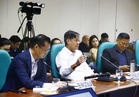
SEN. Francis Pangilinan said zero tariffs on Philippine agricultural exports to Japan could create more opportunities for Filipino farmers.
Pangilinan, chairman of the Senate Committee on Agriculture, Food and Agrarian Reform, joined Sen. Erwin Tulfo in advancing the proposal.
It was raised during the Philippine Senate delegation’s official visit to Japan, which coincides with the 70th anniversary of Philippine-Japan friendship.
During the visit, Pangilinan said that the country should not focus solely on domestic food production but also work toward opening larger international markets for Filipino farmers and fisherfolk.
“We cannot focus all our resources on being food producers alone. We also need to pour in all our efforts into opening bigger markets for our farmers so they can have better and bigger opportunities to improve their livelihoods, increase their incomes, and secure their and the country’s future,” he said.
Pangilinan said greater access to Japan could encourage investments in local agricultural production, processing and value-adding activities, generating economic opportunities for farmers, workers and small businesses throughout the agricultural supply chain.
He underscored the global competitiveness of Philippine agricultural products, citing bananas, mangoes, pineapples and coffee as among the commodities with strong export potential.
“With the quality and abundance of our agricultural products, our farmers and fisherfolk should not be limited to supplying food within the country. They should also become participants in the global food supply chain because our products, such as bananas, mangoes, pineapples, coffee and many others, are world-class,” he said.
However, the senator emphasized that making the Philippines a stronger exporter would require sustained government assistance and trade policies that allow local products to compete more effectively in international markets.
The proposed tariff exemptions seek to cover certain agricultural commodities under the Japan-Philippines Economic Partnership Agreement (JPEPA), which provides for the reduction or elimination of tariffs on more than 90 percent of goods traded between the two countries.
Pangilinan said expanding export opportunities must go hand in hand with policies that enable Filipino farmers and fisherfolk to benefit directly from international trade.
The Philippine Senate delegation, led by Senate President Sherwin Gatchalian, met with Japanese government and parliamentary officials, including Prime Minister Sanae Takaichi, former prime minister Fumio Kishida and Japanese Senate President Masakazu Sekiguchi.
The delegation held engagements with the Japan International Cooperation Agency, the Japan-Philippines Parliamentary Friendship League, the Japan-Asean Inter-Parliamentary Exchange Group and other institutions to explore ways to strengthen bilateral cooperation.
Japan is a major destination for Philippine agricultural exports, particularly bananas. In 2024, the Philippines shipped approximately $635 million worth of bananas to Japan, accounting for more than 1.1 million metric tons and maintaining its position as the country’s leading banana supplier. The existing trade relationship underscores the potential for expanding shipments of other Philippine agricultural products, including mangoes, pineapples, coffee and other high-value commodities.
However, despite the JPEPA, which took effect in 2008, certain agricultural products continue to face tariffs and other market restrictions. The agreement provides preferential trading arrangements, including tariff reductions and exemptions, but concessions vary depending on the commodity. Fresh bananas, for example, have continued to face import duties in Japan, prompting Philippine agriculture officials to seek their removal.
In October 2025, Agriculture Secretary Francisco Tiu Laurel Jr. raised the issue with Japanese officials, seeking the elimination of tariffs on fresh Philippine bananas and improved market access for pomelo. He noted that banana tariffs could reach 18 percent, potentially affecting the competitiveness of Philippine shipments against suppliers from other countries.
Apart from tariff barriers, Philippine agricultural exporters must also comply with Japan’s stringent food safety, phytosanitary and quarantine requirements. This makes investments in modern farming practices, postharvest facilities, cold-chain infrastructure, processing and product certification essential to ensuring that more Filipino farmers can participate in the export market.
The Philippine Statistics Authority reported that agricultural exports reached $9.25 billion in 2025, a 19.3-percent increase from the previous year’s $7.75 billion. However, the country continued to record an agricultural trade deficit of $11.12 billion, underscoring the need to strengthen domestic production while expanding opportunities for locally produced commodities in international markets.